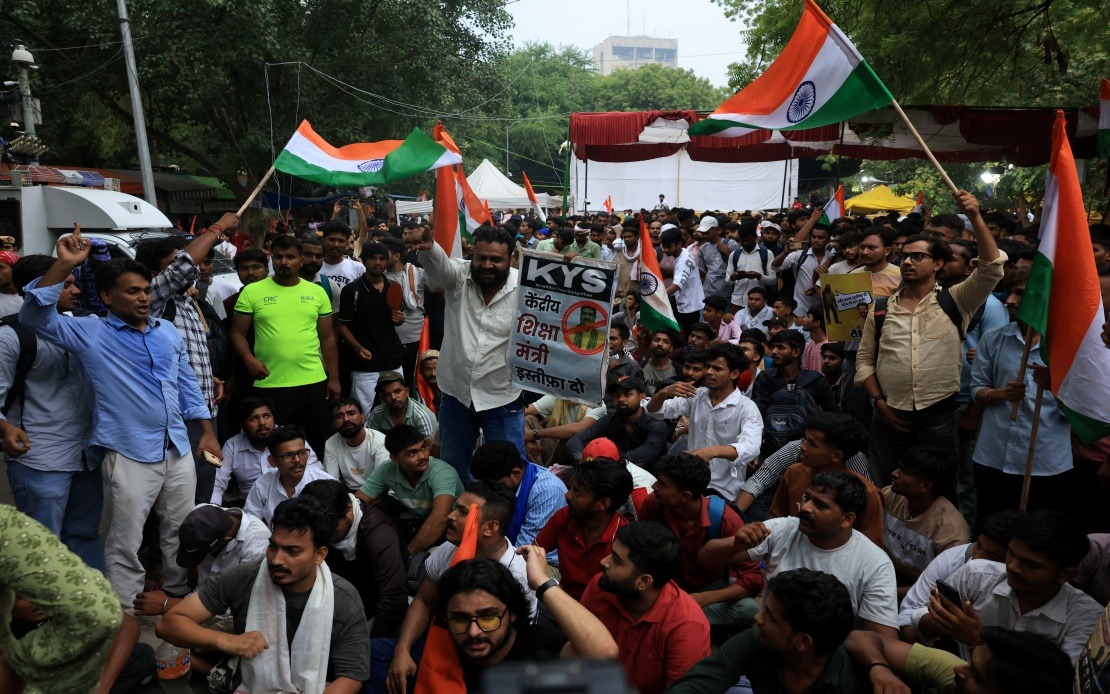
Thousands of demonstrators took to the streets of New Delhi on Monday in a coordinated push to press their demands for sweeping changes to India's academic structure, triggering a forceful police response as the nation's lawmakers gathered for the Monsoon Session. The "Sansad Chalo" march—literally translating to "march to parliament"—saw participants attempting to breach police cordons and advance toward the parliament building itself, leading authorities to deploy crowd-control tactics to maintain order and prevent the rally from reaching its intended destination.
The protest action underscores growing discontent among young Indians regarding the current state of the education system, which campaigners argue requires fundamental restructuring to better prepare students for contemporary economic and social challenges. The movement organising the demonstration is relatively new but claims to have amassed millions of followers across digital platforms, reflecting how modern protest movements increasingly leverage social media to build momentum and coordinate action outside traditional institutional channels.
According to reports from local media, tensions escalated significantly as demonstrators refused to disperse and instead pushed against the police barricades that had been strategically positioned to contain the crowd. The authorities had previously announced restrictions on public gatherings in sensitive areas of the capital, yet the protesters proceeded with their march nonetheless, demonstrating the determination of a generation increasingly willing to challenge state authority on matters they view as essential to their future prospects.
The timing of the protest—coinciding with the opening day of parliament's Monsoon Session—was clearly deliberate, designed to maximise visibility and pressure legislators to prioritise education reform on the parliamentary agenda. Prime Minister Narendra Modi was present at the parliament complex during the session's commencement, and security personnel facilitated his departure via convoy as police worked intensively to manage the crowd dynamics in surrounding areas, preventing any potential escalation.
For Malaysian observers, the Indian situation reflects broader patterns of youth activism emerging across South Asia, where younger generations feel increasingly disconnected from institutional frameworks they believe fail to serve their interests. Education reform movements have gained particular traction in recent years as young people grapple with questions about curriculum relevance, examination-focused learning systems, and the gap between academic qualifications and employability in rapidly evolving job markets.
The deployment of crowd-control measures during a protest focused on systemic reform raises important questions about the balance between public safety and freedom of assembly, issues that resonate throughout the region. India's robust democratic traditions typically permit protest activity, yet the police response here suggests heightened sensitivity around securing parliament and maintaining public order during legislative sessions, particularly when dealing with large, mobilised crowds.
Security arrangements across New Delhi's strategic locations were substantially reinforced following the protest, signalling the scale of the mobilisation and authorities' determination to prevent similar demonstrations from disrupting parliament's functioning. This security tightening reflects concern about the movement's growth potential and capacity to mobilise supporters, given its substantial online presence and appeal to digitally-native youth demographics.
The substantive focus on academic reform itself warrants examination, as India's education system has long faced criticism for emphasising rote learning, examination performance, and conventional credentials while allegedly neglecting critical thinking, practical skills, and vocational preparation. These complaints echo across South and Southeast Asia, where education policymakers struggle to modernise systems designed for earlier economic eras while facing resource constraints, teacher shortages, and political resistance to change.
The "Sansad Chalo" movement's emergence and apparent success in mobilising substantial numbers demonstrates how India's younger population increasingly views democratic participation as necessary to influence policy direction on issues directly affecting their life prospects. Unlike previous generations that might have relied primarily on ballot-box influence, today's youth are willing to take to streets to communicate urgency and conviction regarding systemic problems they perceive as inadequately addressed through normal political channels.
As India's Monsoon Session proceeds, parliament faces implicit pressure to engage seriously with education reform proposals, though whether legislators will translate street-level activism into concrete policy changes remains uncertain. The momentum generated by Monday's demonstration may persist if the movement maintains organisational capacity and continues mobilising supporters through digital networks, particularly if modest legislative responses fail to address core grievances.
For Malaysia and other regional neighbours, India's experience provides instructive lessons about youth-driven political engagement and the challenges facing education systems attempting to balance traditional academic rigour with contemporary skill requirements. The sophistication displayed by this movement in leveraging social media while maintaining street-level activism suggests that education reform will increasingly become a focal point for youth political mobilisation across Asia.

