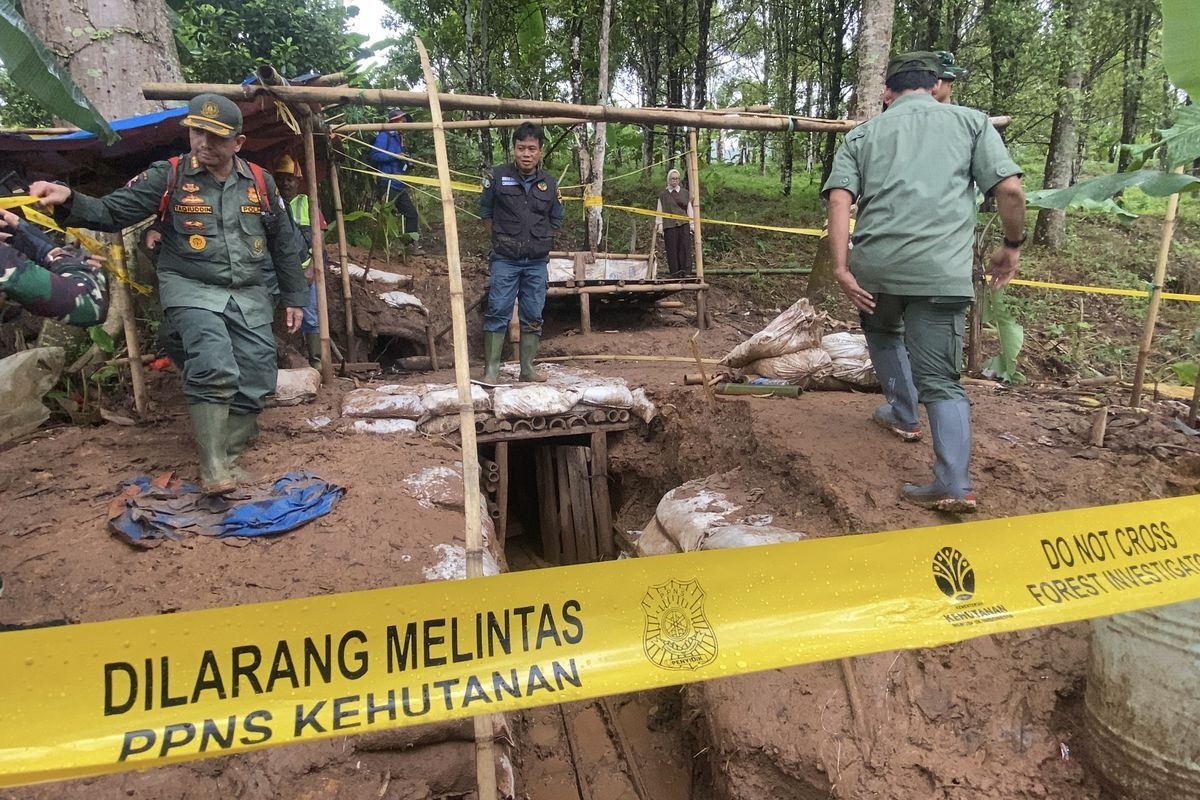
Indonesian authorities have escalated enforcement action against illegal gold mining by formally charging 24 foreign nationals as criminal suspects in a major operation centred on the Maluku region. The energy ministry announced the charges on Thursday, marking a significant step in tackling what officials say has become an entrenched problem of unauthorized precious metal extraction involving international participants. The criminal charges signal mounting governmental determination to combat the practice, which has plagued Indonesia's resource-rich eastern provinces for years.
According to energy ministry official Jeffri Huwae, the suspects allegedly directed construction of extensive supporting infrastructure for the illicit mining enterprise around the Gunung Botak area. This included building access roads and establishing processing facilities—suggesting an operation that went far beyond simple artisanal extraction and represented organized, capital-intensive illegal activity. The scope of infrastructure development indicates the operation functioned as a sophisticated enterprise rather than opportunistic small-scale mining, requiring coordination and substantial resources to establish.
Indonesian law prescribes severe penalties for such violations, with maximum prison sentences reaching five years for those convicted. This potential punishment underscores the seriousness with which the government treats illegal resource extraction, though enforcement has historically faced challenges in Indonesia's remote eastern regions. The sentencing framework exists to deter participation in such schemes, though its effectiveness depends on consistent prosecution and conviction rates that remain unclear.
The charges against foreign nationals specifically align with reporting from the state news agency Antara, which identified 24 Chinese nationals operating in the Gunung Botak zone. These individuals reportedly worked under sponsorship arrangements with the local company PT Harmoni Alam Manise, suggesting collusion between foreign operators and domestic entities that may have provided legal cover or facilitating services. This pattern of foreign-local partnerships in illegal mining has emerged repeatedly across Southeast Asia, complicating enforcement efforts that must address both expatriate operators and enablers within country borders.
A concerning element of the case involves the fugitive status of half the suspects. While twelve foreign nationals have been detained, the ministry confirmed that another twelve remain at large and beyond Indonesian jurisdiction. This geographic dispersal presents substantial challenges for prosecution and suggests either flight prior to enforcement action or continued operation outside Indonesian territory. The escape or absence of these individuals raises questions about investigative capabilities and intelligence gathering in remote mining areas, particularly given the sophistication required to orchestrate infrastructure development across regional borders.
Beyond the foreign nationals, Indonesian authorities have also named two local citizens as criminal suspects, indicating recognition that domestic actors played enabling roles. These domestic suspects likely facilitated operations through providing local connections, permits, equipment, or land access—elements essential for foreigners to establish mining infrastructure in unfamiliar terrain. Their inclusion in charges reflects official understanding that illegal mining cannot succeed without local complicity, adding complexity to the prosecution and suggesting potential corruption or coercion within regional administration.
The Maluku operation represents merely the latest manifestation of broader patterns of foreign-led illegal mining activity across Indonesia. The archipelago's geographical extent, significant mineral reserves, and enforcement capacity limitations have created persistent opportunities for organized illegal extraction. Previous cases have documented Chinese nationals involved in similar activities, most notably the arrest of four Chinese suspects in the Senggi district of Papua last year. These recurring incidents suggest networks may be shifting operations between regions or replicating successful models, adapting to enforcement pressure through geographic dispersion.
The environmental and social dimensions of this illegal mining merit consideration for regional observers. Beyond the criminal activity itself, illegal mining operations cause substantial habitat degradation, water pollution, and displacement of indigenous communities in ecologically sensitive areas. The Maluku region, situated between the Indian and Pacific Oceans, encompasses biodiverse ecosystems where unregulated extraction poses risks to fish stocks, coral systems, and terrestrial biodiversity. Local communities often lack capacity to resist such operations or seek compensation for resource depletion and environmental harm.
From Malaysia's perspective, this Indonesian enforcement action carries relevance to regional security and resource governance. The involvement of organized foreign mining operations demonstrates how cross-border criminal networks exploit regulatory gaps and geographical challenges common across Southeast Asia. Malaysian authorities monitoring illegal mining activities—whether within Sabah and Sarawak or involving Malaysian persons abroad—should note patterns evident in the Maluku case: partnerships between foreign operators and local enablers, use of corporate structures to mask illegal activity, and dispersal of operations across jurisdictional boundaries. These tactics appear consistent across the region.
The energy ministry's public announcement of charges, while welcome for transparency, leaves significant gaps in publicly available information. The specific nationalities of all suspects beyond the reported Chinese individuals, the quantity of gold allegedly produced, and details of PT Harmoni Alam Manise's relationship to the scheme remain undisclosed. These details would provide context for understanding operation scale and the depth of corporate involvement in facilitating illegal activity. Malaysia's own experience with illegal mining enforcement suggests that information gaps can allow networks to reconstitute themselves even after high-profile arrests.
Moving forward, the effectiveness of Indonesia's prosecution effort will depend on coordinating with foreign governments to apprehend fugitive suspects, ensuring conviction of detained individuals despite potential evidentiary challenges, and disrupting the economic incentives that make such operations attractive. Given commodity price cycles affecting gold's market value, prosecution alone may prove insufficient without simultaneously addressing demand from smelters and refineries willing to process illegally sourced gold. Regional cooperation on supply chain oversight—an area where ASEAN has made limited progress—could complement enforcement actions by making illegal gold less marketable.
The broader significance of this case extends to Indonesia's capacity to enforce resource sovereignty in its eastern provinces, where state presence remains comparatively weak. Success in prosecuting both foreign principals and local facilitators could establish deterrents and demonstrate governmental commitment to resource control. Conversely, if many suspects ultimately escape or face lenient treatment, the precedent would suggest that organized illegal mining remains a viable enterprise in the region. For Malaysian observers and policymakers tracking regional security and resource governance, the Maluku case illustrates both the sophistication of transnational mining networks and the enforcement challenges that persist across Southeast Asia.

