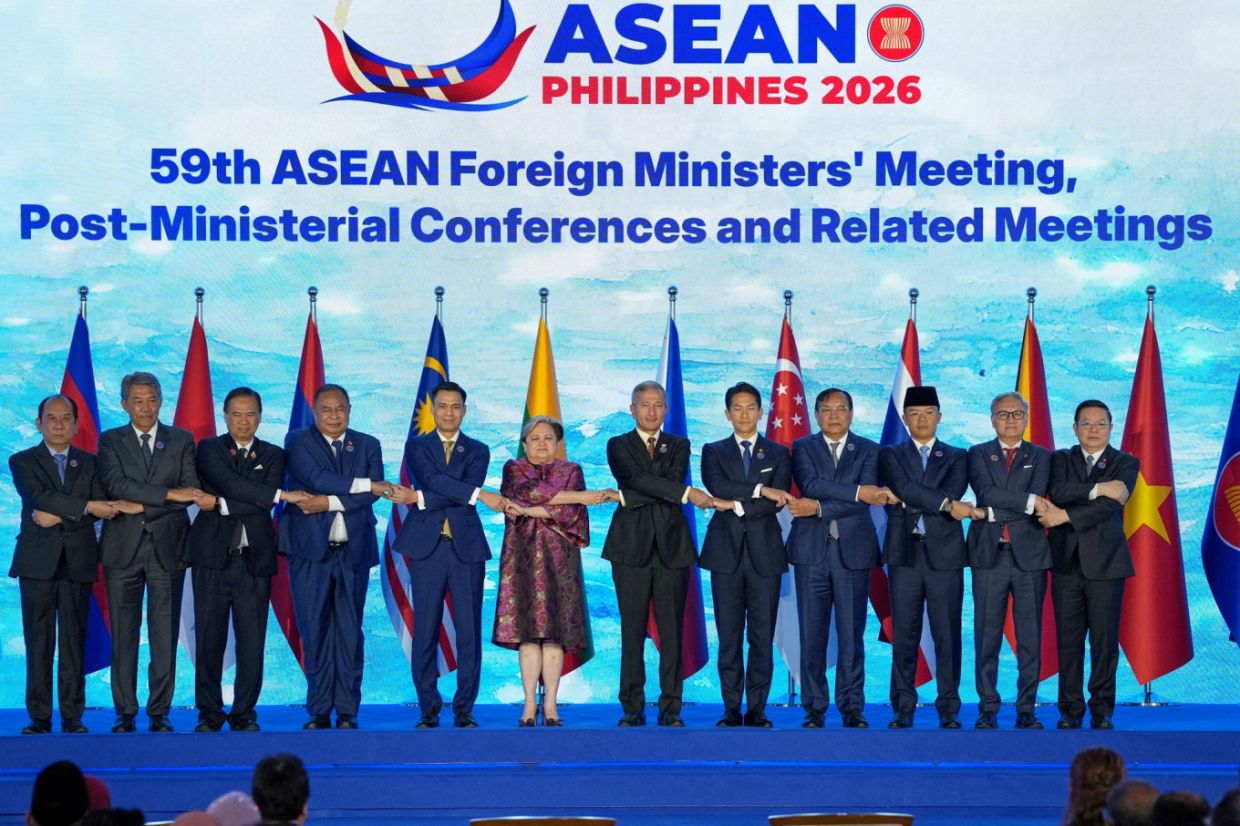
Indonesian Foreign Minister Sugiono has issued a pointed challenge to Asean, demanding that the 10-nation grouping stop making promises and start delivering tangible results. Speaking Tuesday at the 59th Asean Foreign Ministers Meeting in Manila, Sugiono framed the moment as a critical juncture for the bloc's credibility, warning that a series of cascading global crises—particularly the escalating conflict in the Middle East—have exposed both the urgency of regional cooperation and Asean's structural weaknesses in responding to external shocks. The gathering of diplomats from all member states signalled the beginning of what promises to be an intensive diplomatic cycle, with substantive negotiations on Wednesday to include dialogue with external powers including the United States, China and Russia.
The timing of Sugiono's remarks carries particular weight given recent institutional achievements. In May, Asean successfully amended its charter to admit Timor-Leste as its 11th member state, marking the first expansion since Vietnam joined in 1995. Yet rather than celebrating this milestone, the Indonesian minister reframed the question facing Asean's leadership: having demonstrated the capacity for institutional evolution, could the bloc now demonstrate the same commitment to fulfilling its foundational obligations? His stark formulation—"Can Asean deliver on its promises?"—suggested frustration with a pattern of lofty declarations unmatched by concrete implementation, a criticism that has shadowed the organisation throughout its 57-year history.
The Middle East conflict has injected new urgency into Asean's deliberations by exposing vulnerabilities in the bloc's economic resilience and strategic autonomy. Disruptions to shipping through the Strait of Hormuz have sent ripples through Southeast Asia's energy markets and supply chains, prompting immediate concerns about inflation, currency stability and the potential destabilisation of essential services. Beyond these immediate economic anxieties lies a more subtle but consequential strategic problem: as member states scramble to secure alternative energy sources and raw materials, several have deepened their dependence on China. Philippine import figures tell the story vividly—solar panel shipments from China more than doubled in the first five months of 2024 compared to the equivalent 2023 period, reflecting a deliberate strategic pivot driven by supply chain disruptions elsewhere.
This energy dependency shift has profound implications for Asean's negotiating position on the South China Sea, an issue that consumed significant attention during Tuesday's closed-door sessions. The Code of Conduct, a proposed framework intended to govern behaviour in one of the world's most strategically important maritime zones, has languished in negotiation for nearly a quarter-century. Sugiono's invocation of the 24-year waiting period was clearly designed to galvanise action, yet the underlying problem is more intractable: member states facing energy shortages and economic pressure may lack the leverage—or the collective will—to press Beijing for meaningful concessions on maritime rules. A region bound by agreed-upon regulations, Sugiono argued, would inherently possess greater resilience than one controlled by the exercise of raw power. However, transforming this principle into binding commitments requires Asean members to prioritise collective strategic interests over immediate bilateral advantage, a calculus that becomes increasingly difficult when individual nations confront pressing economic challenges.
The joint statement that emerged from Tuesday's discussions attempted to balance concern with constructive engagement, acknowledging the Middle East conflict's economic spillovers whilst emphasising Asean's commitment to mitigating socio-economic impacts on vulnerable populations. The diplomatic language reflected a genuine consensus that the bloc must project unity and purpose, yet it also masked significant divisions about how to operationalise this solidarity. Some member states have advocated for expanded fiscal coordination and joint purchasing mechanisms, whilst others fear that deeper integration could constrain their policy autonomy. For Malaysia and other economies heavily exposed to international energy and commodity markets, the challenge is particularly acute: the disruption of familiar supply relationships forces immediate adjustment, yet hasty bilateral deals with alternative suppliers risk locking in long-term dependencies that undermine Asean's collective bargaining power.
The Myanmar crisis added another dimension to the credibility test facing Asean. The Five-Point Consensus, adopted in April 2021 as the bloc's roadmap for peace in Myanmar, has achieved minimal concrete progress despite repeated iterations and countless special envoy missions. Ministers convened a dedicated retreat session to assess implementation, emerging with what Philippine Foreign Secretary Theresa P. Lazaro described as "progressive" positions. Yet Lazaro's own remarks betrayed the underlying frustration: the ministers had merely agreed to review how progress is measured and to consider possible reforms to the special envoy mechanism, with completion targeted for November's leaders' meeting. This amounts to scheduling yet another conversation about a problem that has remained intractable for more than three years, a pattern that exemplifies Asean's tendency to convert substance into process.
The institutional rigidities that constrain Asean's effectiveness deserve attention. The consensus-based decision-making model, designed to protect smaller members from domination by larger powers, has become a mechanism for obstruction. Member states with divergent interests and strategic alignments—Vietnam and the Philippines drawing closer to the United States; Thailand and Laos maintaining closer ties with China; Singapore balancing multiple partnerships; Indonesia attempting to position itself as a bridge—find it nearly impossible to generate binding commitments on contested issues. Sugiono's invocation of Asean's charter, with its emphasis on respecting sovereignty and non-interference, inadvertently highlights the contradiction: a commitment to territorial integrity and political autonomy logically limits the bloc's capacity to impose consequences on any member state that violates agreed principles.
For Malaysian policymakers and business leaders monitoring these developments, several implications warrant close attention. Malaysia's geographic position on the South China Sea, substantial energy-sector investments, and economic exposure to Middle Eastern trade make it acutely sensitive to both the substantive issues under discussion and Asean's capacity to manage them effectively. The slowdown in Code of Conduct negotiations directly affects Malaysia's security interests and maritime claims. Simultaneously, Malaysia's diversified energy portfolio and relatively sophisticated financial markets provide more flexibility than some regional peers, yet this advantage erodes as regional instability worsens and as Asean's collective voice weakens in international forums.
The concluding sessions of this diplomatic gathering, beginning Wednesday with dialogue partner engagement, will test whether the multilateral framework can generate concrete outcomes or whether Asean will continue its established pattern of aspirational statements unmoored from implementation. Indonesian pressure for accelerated progress on the Code of Conduct, Myanmar negotiations and regional economic resilience has set a higher bar than Asean typically attempts to clear. Whether member states possess the political will to match their rhetoric with substantive commitments—particularly when doing so requires sacrificing short-term bilateral advantage for long-term collective strength—remains the central question animating these conversations. The stakes extend beyond Asean's institutional credibility; they encompass the fundamental question of whether Southeast Asia can shape its own strategic destiny or whether it will instead be shaped by the competing interests of external powers.

