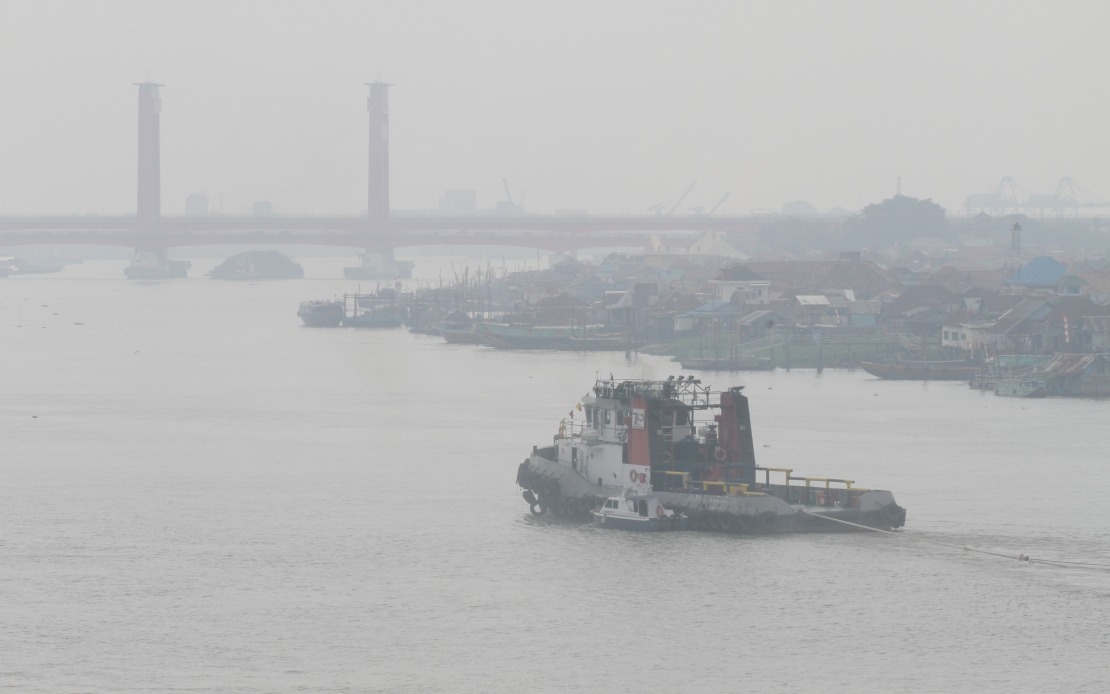
Indonesia has formally confirmed its engagement with Malaysia in addressing the transboundary haze crisis, with both nations prioritising weather modification initiatives in border regions as part of a comprehensive response strategy. The coordinated effort marks an escalation in bilateral cooperation following serious air quality degradation across Sarawak and multiple states in Peninsular Malaysia, driven by extensive forest and land fires ravaging West Kalimantan's landscape.
The severity of the current crisis is evident in the air quality readings being recorded across the region. Sarawak has experienced particularly acute pollution, with the Air Pollutant Index climbing to 195 in certain localities—approaching the very unhealthy threshold of 201 and above. This deterioration extends beyond Sarawak's borders, affecting air quality in Kuala Lumpur, Selangor, Penang, Kedah, and Perak, signalling that the haze phenomenon has become a regional emergency demanding immediate action from multiple stakeholders.
Berton Panjaitan, Acting Head of the National Disaster Mitigation Agency (BNPB) Data, Information, and Disaster Communication Centre, outlined the scope of bilateral discussions between Jakarta and Kuala Lumpur. Beyond weather modification operations, the two governments have committed to strengthening cooperation across prevention mechanisms, real-time monitoring systems, and coordinated firefighting support. The emphasis on weather modification reflects the two nations' recognition that cloud-seeding and related atmospheric interventions represent viable tools for mitigating smoke concentration and improving air quality across affected populations.
A significant breakthrough in the operational framework came through Malaysia's successful negotiation of airspace access. Environment Minister Arthur Joseph Kurup secured Indonesia's explicit permission for Malaysian aircraft to conduct cloud-seeding operations within Indonesian airspace, removing a potential diplomatic obstacle to rapid implementation. This permission represents a pragmatic shift from standard protocol, enabling Malaysia to take proactive measures rather than waiting for Indonesian-led interventions to prove effective.
The bilateral engagement intensified following formal discussions on August 24 between Malaysian Natural Resources and Environmental Sustainability Minister Datuk Seri Arthur Joseph Kurup and Indonesian Environment Minister Jumhur Hidayat. These high-level talks produced concrete commitments to intensify both prevention and active firefighting measures. Malaysia simultaneously conveyed its readiness to deploy firefighting assets should Indonesia formally request such support, establishing a framework for rapid deployment if the situation demands direct intervention.
While Jakarta has not yet submitted an official request for direct firefighting assets including water-bombing operations, Indonesian officials have indicated flexibility regarding future cooperation. The cautious approach reflects diplomatic sensitivities around sovereignty and established protocols, yet both governments recognise that escalation mechanisms remain available should the haze deteriorate further. This measured positioning allows for operational expansion without triggering political complications.
The Malaysian diplomatic mission in Pontianak has emphasised the exceptional nature of this year's haze event. Following two years without severe transboundary haze incidents in 2024 and 2025, the current outbreak represents a sharp reversal. The consulate has mobilised its resources to protect Malaysian nationals, focusing on the health and safety of 577 registered citizens in West Kalimantan, most engaged in expatriate employment across the region. Coordinated health protocols include mask distribution, shifting educational activities online, and restricting non-essential outdoor movements.
The broader historical context demonstrates Malaysia's previous commitment to supporting fire mitigation efforts in Indonesian territories. In 2023, the Pontianak consulate contributed six water pumps to the West Kalimantan Governor's Office, signalling an established pattern of practical assistance that transcends bilateral diplomatic channels. This track record underscores Malaysia's vested interest in reducing fire occurrence rather than merely managing downstream consequences.
For Malaysian policymakers and regional observers, the current crisis underscores persistent vulnerabilities in the transboundary air quality regime. Despite technological advances and bilateral frameworks, West Kalimantan continues to produce catastrophic smoke events at irregular intervals. The reliance on weather modification represents an acknowledgment that traditional firefighting and prevention measures have proven insufficient to prevent large-scale haze episodes. This reality points toward the necessity of deeper structural interventions, including landscape management, agricultural practice reform, and strengthened Indonesian enforcement mechanisms against illegal burning.
The implications for Southeast Asian regional architecture are substantial. Transboundary haze has historically strained ASEAN solidarity, yet the Indonesia-Malaysia coordination model potentially offers a template for issue-specific bilateral cooperation that bypasses the consensus-building challenges of multilateral forums. The success or failure of weather modification initiatives in this instance will likely influence how other ASEAN nations approach shared environmental crises with their neighbours.
From an operational standpoint, the effectiveness of cloud-seeding operations depends on atmospheric conditions, timing, and resource allocation. Malaysia's permission to conduct these operations within Indonesian airspace removes bureaucratic delays, yet coordination challenges will persist regarding decision-making authority, cost-sharing, and performance metrics. Both governments will need to establish clear protocols defining when cloud-seeding begins, which agencies hold operational control, and how results will be evaluated against agreed benchmarks.
The human dimension remains central to this crisis. Respiratory health impacts, school disruptions, and economic effects from reduced outdoor activity impose tangible costs on Malaysian citizens and businesses. The Malaysian consulate's focus on protecting registered nationals reflects the government's acknowledgment that diplomatic coordination must translate into measurable improvements in daily living conditions. Failure to achieve tangible air quality improvements within weeks could generate public pressure for more aggressive interventions, including formal requests for Malaysian firefighting assets deployment.
Moving forward, the bilateral framework established between Indonesia and Malaysia may require expansion. If weather modification operations prove insufficient, the question of direct Malaysian firefighting support will resurface with greater urgency. Both governments appear positioned to escalate cooperation pragmatically, yet the ultimate solution depends on Indonesia's capacity to control source fires within its territory—a challenge that extends far beyond weather modification technology or Malaysian assistance.

