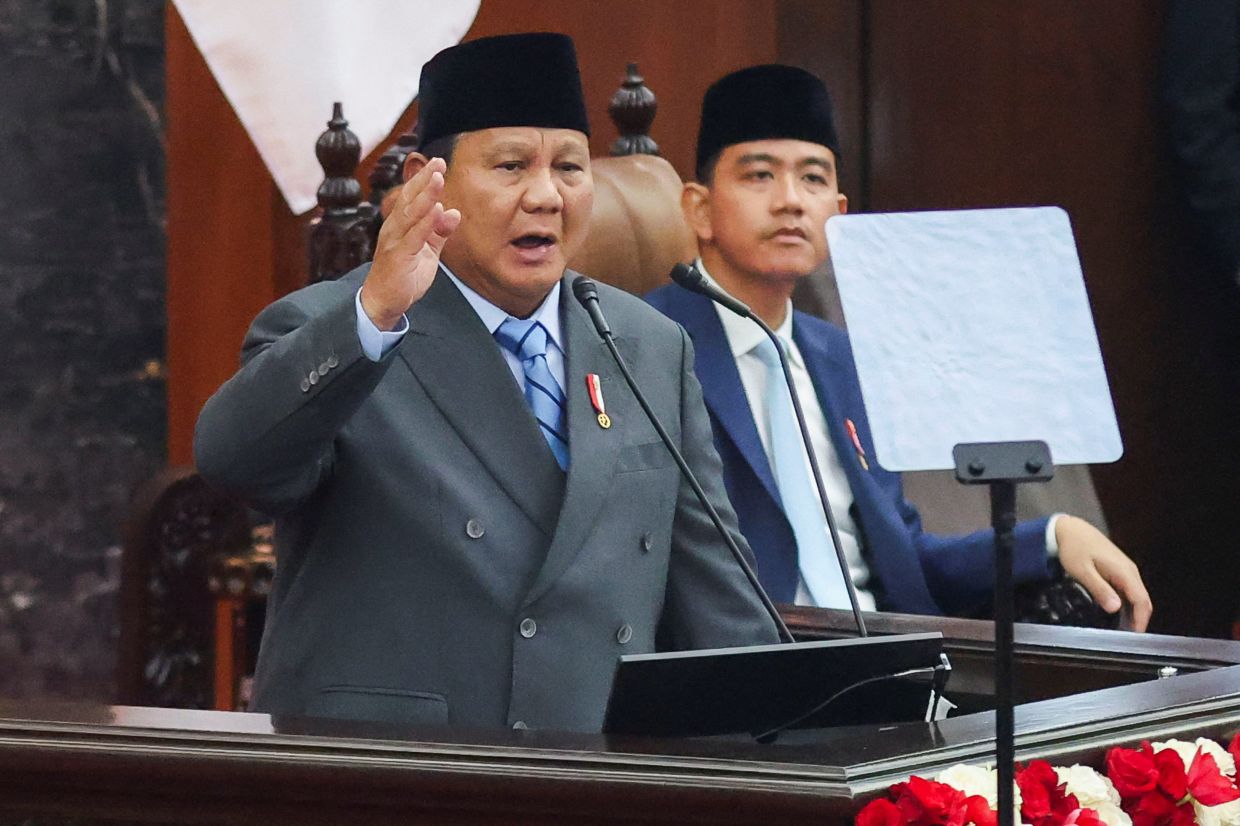
Indonesia's government is embarking on what President Prabowo Subianto describes as potentially the world's largest corporate restructuring, planning to close more than 750 state-owned enterprises by the end of this year as part of a sweeping effort to eliminate endemic waste and mismanagement. The announcement, made during his state of the nation address to parliament on Friday, represents an extraordinary reckoning with the sprawling bureaucratic apparatus that has long plagued Southeast Asia's largest economy, revealing a startling discovery that the state controls far more enterprises than previously acknowledged.
The scale of the challenge became apparent only after the establishment of Indonesia's Danantara sovereign wealth fund last year, which was tasked with cataloguing and managing state assets. When officials began their systematic review, they uncovered an astonishing 1,074 state-owned enterprises across the archipelago—a figure that shocked even senior government officials who had estimated the number at between 300 and 400. This discrepancy alone underscores the loose grip authorities have maintained over public sector operations and the fragmented nature of state asset management that has persisted for decades. The revelation prompted the government to move aggressively, with 290 enterprises already shuttered and plans to reduce the total to fewer than 300 by December 31, leaving only those deemed productive and capable of generating genuine value.
Prabowo's characterisation of the problematic enterprises paints a picture of systemic dysfunction that extends beyond mere inefficiency. He described how many state firms routinely reported inflated profits while simultaneously claiming losses, a pattern that suggests widespread accounting manipulation and governance failures. These organisations operated without meaningful oversight or accountability, he explained to lawmakers, functioning as though they bore no responsibility to the nation or its people. The enterprises in question have been draining public resources through unnecessary overhead expenses including inflated management salaries, excessive allowances for directors and commissioners, costly real estate leases, and extravagant business travel budgets that bore no relation to productive output.
The financial impact of this consolidation effort has already proven substantial, with authorities calculating that the closures have freed up approximately 50 trillion rupiah—equivalent to more than USD 2.8 billion—in annual overhead costs alone. The government targets savings exceeding 70 trillion rupiah for the current year as the restructuring accelerates. These savings represent capital that can be redirected toward essential public services and infrastructure development. More significantly, the remaining and reorganised state enterprises have begun demonstrating improved financial performance, with profits surging over 75 per cent to reach 326 trillion rupiah last year, suggesting that focusing on genuine productivity rather than nominal headcount can yield substantial returns.
Beyond the administrative restructuring, Prabowo has proposed addressing the underlying corruption that enabled such dysfunction to flourish unchecked. He floated the idea of establishing a special ad hoc court to investigate the management decisions and board conduct of state enterprises over the past three decades, a move that could expose years of misallocation and fraud. However, recognising the need for cooperation from those involved in past failures, he simultaneously proposed offering a form of amnesty for individuals willing to admit wrongdoing and facilitate recovery of misappropriated assets. This carrot-and-stick approach reflects the political calculation required to pursue accountability without triggering institutional collapse or provoking obstruction from entrenched interests.
Indonesia's vulnerability to corruption remains a significant structural challenge despite decades of reform efforts. The nation scored only 34 out of 100 on Transparency International's 2025 Corruption Perceptions Index, placing it among the more graft-prone countries in Asia-Pacific. The persistence of corruption, combined with rising living costs driven partly by global oil price pressures stemming from Middle East tensions, has fuelled public anger and protest movements. Citizens increasingly view mismanagement of state resources as directly responsible for their economic struggles, and government action to tackle wasteful enterprises represents an effort to rebuild public confidence through visible demonstration of commitment to fighting waste and dishonesty.
Prabowo's flagship free school meals initiative, a cornerstone policy intended to address childhood malnutrition, has itself become a flashpoint for criticism regarding implementation efficiency and suspected corruption in procurement. Despite concerns, the president remains committed to the programme but acknowledged Friday that it requires substantial improvements in administration and oversight. He invoked the stark reality that roughly one in four Indonesian children suffer from stunting, a condition reflecting severe malnutrition and limited development potential, to justify continued investment in the nutritional intervention even as he promised better management and reduced costs.
The restructuring of state enterprises unfolds against the backdrop of Indonesia's broader economic performance and growth aspirations. Gross domestic product expanded at 5.3 per cent during the second quarter and 5.6 per cent in the first quarter, though independent analysts have frequently questioned the reliability of Indonesia's official economic statistics. Nevertheless, Prabowo expressed confidence that the country would achieve 6.0 per cent growth by the end of 2026, contingent on successful implementation of his economic programme. He reframed the growth agenda, however, emphasising that expansion and investment represent merely instrumental goals rather than ultimate objectives; the true measure of success, he insisted, must be tangible improvements in living standards and employment creation, particularly for Indonesia's poorest citizens.
The state enterprise closure programme carries particular significance for Malaysia and other Southeast Asian nations, as it suggests a potential template for addressing similar inefficiencies within other regional economies. Indonesia's experience demonstrates how state sector sprawl can accumulate over time, with government oversight mechanisms failing to maintain adequate visibility and control. The discovery that Indonesian officials lacked basic knowledge of how many enterprises they controlled exemplifies a governance failure that likely characterises other developing economies in the region. As ASEAN nations increasingly compete for investment and economic growth, the ability to demonstrate competent, efficient public sector management becomes a competitive advantage in attracting multinational corporations and foreign direct investment.
The timing of this restructuring effort, occurring alongside high-profile corruption investigations and accountability measures, suggests the Prabowo administration recognises that sustained economic performance requires institutional credibility. Investors and business partners scrutinise governance quality alongside macroeconomic fundamentals when making long-term commitments. By visibly eliminating wasteful public enterprises, recovering stolen resources, and prosecuting past failures, Indonesia signals determination to improve the operating environment and reduce the hidden costs that corruption imposes on legitimate business activity. Whether the government can maintain momentum and complete the restructuring without political pressure to reverse course will largely determine the initiative's ultimate impact on economic performance and institutional transformation.

