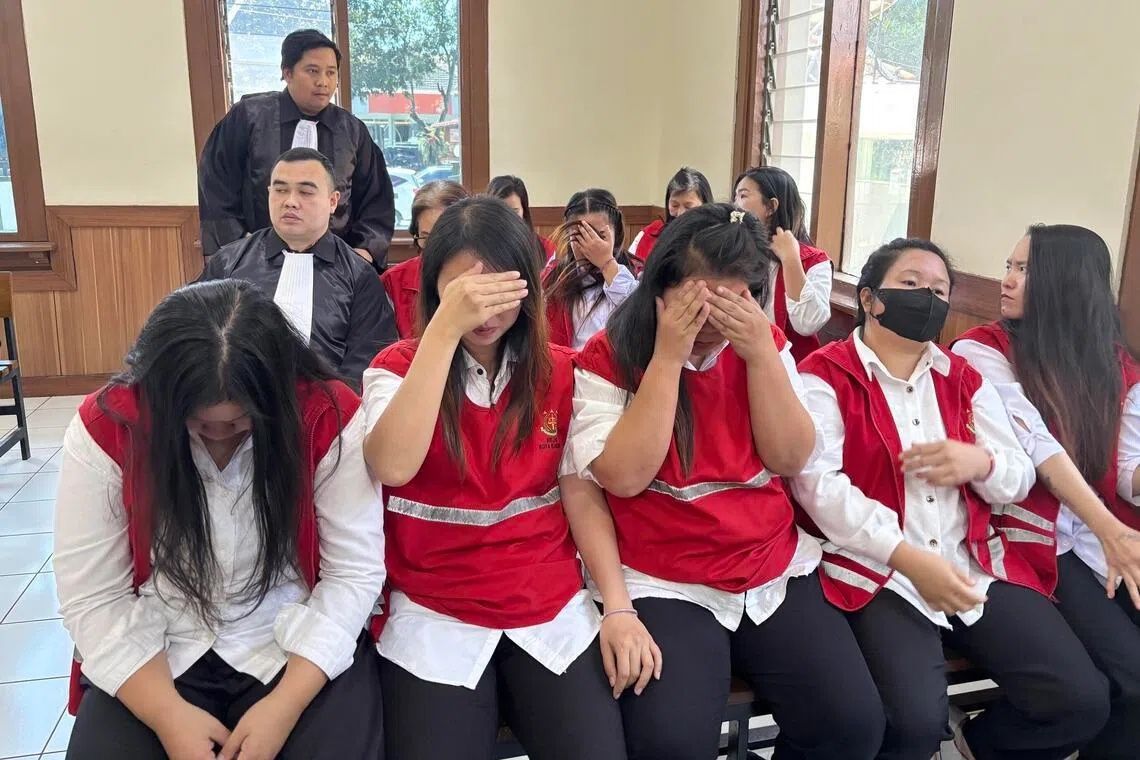
The Indonesian legal system moved closer to resolution in one of the country's most significant human trafficking cases when prosecutors presented their sentencing recommendations on Tuesday at Bandung District Court. The case centres on an alleged syndicate that systematically trafficked at least 34 infants between 2023 and 2025, with prosecutors arguing that at least 12 babies were transported to Singapore as part of a highly organised criminal operation. The 19 defendants—18 women and one man—have been undergoing trial since April, facing charges related to the recruitment, transportation and transfer of children for exploitation purposes across national borders.
At the heart of the prosecution's case stands 70-year-old Lie Siu Luan, known informally as Lily or Popo, whom authorities have identified as the primary architect of the trafficking network. According to prosecutors, Lie orchestrated the entire operation with remarkable efficiency, managing the recruitment of infants, arranging falsified documentation to facilitate illegal adoptions, and coordinating the movement of children across borders. This level of coordination suggests a criminal enterprise with significant infrastructure and international connections rather than an ad-hoc scheme.
Prosecutor Cucu Gantina formally requested that judges find Lie guilty of recruiting, harbouring, sending, transferring, or receiving persons for exploitation purposes within Indonesian territory. The prosecution's framing emphasises the systematic nature of the crimes, presenting evidence that the syndicate operated with clear divisions of labour and established protocols. Each trafficked infant reportedly commanded a price between 200 to 250 million rupiah, equivalent to approximately S$18,110 per child, suggesting the operation generated substantial criminal proceeds.
The prosecution differentiated between defendants based on their roles within the hierarchy. Astri Fitrinika, identified as one of the principal recruiters who directly engaged with potential sellers and buyers, faces a 10-year sentence recommendation, matching that sought for Lie herself. Fellow recruiters Djaka Hamdani and a defendant identified only as Elin also face the maximum 10-year term, whilst Lai Su Hua, accused of creating fraudulent adoption documentation to legitimise the illegal transfers, similarly draws a 10-year recommendation. The remaining 14 defendants, characterised as caretakers who provided temporary custody of the infants, face recommendations of five years' imprisonment—a substantially lighter penalty reflecting their peripheral roles.
The prosecution's strategy reveals how human trafficking networks often exploit different vulnerable populations for distinct purposes. The case demonstrates that the recruitment phase demanded particular criminal expertise, as recruiters needed to identify vulnerable pregnant women or parents willing to surrender infants, negotiate prices, and maintain operational security. The creation of false documentation required knowledge of administrative systems and access to official channels, suggesting sophisticated criminal partnerships possibly extending into government or quasi-governmental bodies.
Emotional scenes unfolded as the prosecution concluded its arguments. Both Lie and Astri displayed visible distress upon hearing the sentencing recommendations, a response that may be calculated to influence judicial perception or may reflect the weight of the allegations. Lie's legal representative, Sendi Sanjaya, immediately challenged a crucial element of the prosecution's case by disputing whether the babies experienced exploitation as defined under Indonesian law. This defence strategy seeks to reframe the crime as adoption facilitation rather than exploitation, arguing that the children were healthy, properly cared for, and their subsequent locations remained known to the network—factors potentially inconsistent with the prosecution's framing of predatory trafficking.
Astri's defence counsel, Hendri Samuel Tampubolon, adopted a different tactical approach by acknowledging Astri's role whilst emphasising her subordinate position relative to Lie. Tampubolon contended that Astri operated under Lie's control rather than as an independent actor, a distinction potentially relevant to sentencing considerations. He highlighted Astri's cooperation with law enforcement during investigation phases, a factor typically favourable in criminal proceedings. This defence strategy aims to leverage any cooperation agreements and to establish meaningful distinctions between mastermind and subordinate operators.
The syndicate's international dimension adds significant complexity to the case, as the involvement of Singapore raises questions about how the transfers were executed and which agencies facilitated the movement of infants. During trial testimony, Lie identified four Singaporeans—referred to only as "Petter", "John", "Mr Tan" and "Mr Chew"—as adoption agents operating on behalf of the ring. These individuals remain unidentified in official proceedings, suggesting either ongoing investigation phases or complications in extradition and prosecution across jurisdictions. The vague identifications highlight how international human trafficking networks often depend on loosely connected intermediaries rather than formal organisational structures.
The case's origins underscore how trafficking networks recruit through digital platforms exploiting legitimate parental desires. A West Javanese resident named Dani Hidayat became aware of the syndicate after joining a Facebook adoption support group whilst his wife was pregnant. Astri subsequently approached him directly through the platform, offering 8 million rupiah for his unborn child—a remarkable price differential from the 200-250 million rupiah charged to international buyers, suggesting tiered pricing for domestic versus export sales. This approach through social media demonstrates how traffickers exploit the accessibility and relative anonymity of online platforms to identify targets and execute transactions.
The formal revelation of the case in July 2025, when West Javanese authorities detained approximately a dozen suspects following Hidayat's report, proved the critical intervention point. This timing suggests that the full network remained undiscovered for substantial periods, raising questions about what proportion of the syndicate's activities escaped law enforcement detection. The fact that arrests ultimately stemmed from a single civilian complaint rather than proactive investigation indicates potential gaps in anti-trafficking monitoring systems.
Regional cooperation between Indonesia and Singapore formalised in January when both governments announced coordinated investigation efforts. This partnership reflects mutual interest in addressing transnational trafficking networks that exploit gaps between national legal systems and regulatory frameworks. Singapore's involvement as a destination for trafficked infants—a relatively unusual trafficking route compared to labour or sexual exploitation patterns—suggests demand-side factors within its society that warrant deeper examination.
The trial proceedings continue with defence arguments scheduled for the following week. These presentations will test whether the defence's alternative narratives regarding exploitation, Lie's control mechanisms, and cooperation factors gain judicial acceptance. The case's outcome will likely influence how Southeast Asian countries approach coordinated trafficking prosecutions and whether legal definitions of exploitation will encompass adoption-related trafficking in future cases.
For Malaysia and other regional nations, the case demonstrates how human trafficking extends beyond traditional forms and how criminal networks exploit parental desperation and adoption aspirations. The syndicate's operational model—combining recruitment infrastructure, document falsification, international coordination, and pricing tiers—represents capabilities present in multiple transnational criminal networks. Enhanced vigilance around adoption intermediaries and cross-border infant movements has become essential for regional law enforcement agencies.

