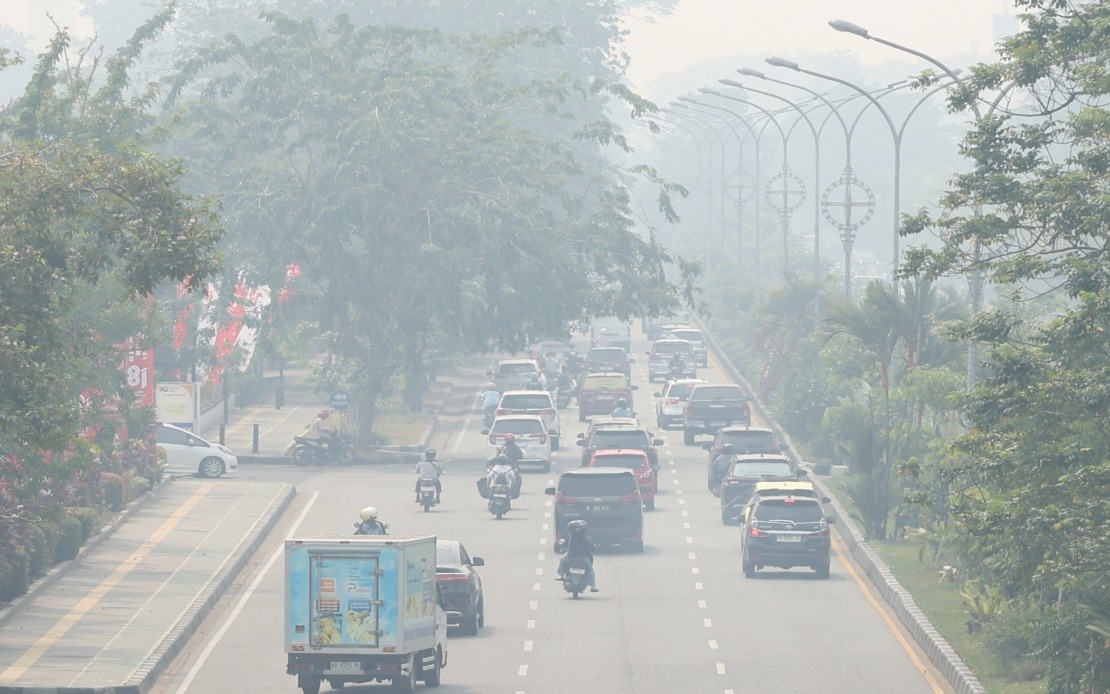
Indonesia is grappling with an escalating air quality crisis as forest and land fires continue to ravage multiple regions, pushing pollution readings to dangerous levels that pose immediate health threats across the nation. The Air Pollutant Index in Jekan Raya, a subdistrict within Palangka Raya in Central Kalimantan, climbed to 573 as of Wednesday morning, marking hazardous conditions based on readings from seventeen air-quality monitoring stations. This extreme measurement underscores the severity of fire activity concentrated in Indonesia's eastern territories and threatens to create transboundary pollution affecting neighbouring Southeast Asian nations if the fires continue unchecked.
According to the Health Ministry's Environmental Health Director Then Suyanti, Central Kalimantan remains the epicentre of the crisis, though dangerous pollution has spread across multiple provinces. Muaro Jambi Regency in neighbouring Jambi province recorded a hazardous API level of 302, indicating that the problem extends well beyond a single location. The simultaneous appearance of hazardous readings in geographically separated areas demonstrates the scope of the fire outbreak and suggests that multiple burning zones are simultaneously releasing smoke into the atmosphere. This geographical dispersal complicates containment and mitigation efforts, as resources must be stretched across a vast territory spanning thousands of kilometres.
The health implications extend across a much wider geographical footprint than the locations recording extreme readings. Additional areas across Sumatra and Kalimantan have registered very unhealthy air quality, with pollution indices between 201 and 300. These affected zones include Pelalawan in Riau, Penukal Abab Lematang Ilir and Ogan Ilir in South Sumatra, Southeast Pontianak in West Kalimantan, and Gunung Mas and Katingan in Central Kalimantan. For Malaysian readers, this proliferation of very unhealthy zones highlights the potential for cross-border haze that has historically caused significant disruption in peninsular Malaysia and the east coast of Sabah and Sarawak during regional fire seasons.
Public health authorities have issued increasingly stark warnings about outdoor activities during the crisis. Director Then Suyanti explicitly advised that in hazardous categories, all residents should avoid going outside entirely, recognising that prolonged exposure to air with pollution indices exceeding 300 poses severe respiratory and cardiovascular risks. For areas classified as very unhealthy, authorities recommended limiting outdoor time to minimise exposure, particularly for vulnerable populations including children, the elderly, and those with pre-existing respiratory conditions. These directives represent a significant disruption to normal daily life and economic activity, forcing schools and workplaces to adapt their operations.
Responding to the scale of the crisis, Indonesia's Health Ministry is preparing comprehensive measures to protect public health through regulatory action. A circular instruction from the ministry's secretary-general may be issued within the next two days, incorporating several protective measures designed to shield the population from sustained exposure. Among the anticipated measures is the authorisation for schools to transition to distance learning when air quality deteriorates to dangerous levels, preventing children from unnecessary outdoor exposure during their commutes and outdoor school hours. These administrative adaptations acknowledge the reality that some situations may become too hazardous for normal operations and require fundamental restructuring of how essential services are delivered.
The human impact of the ongoing fires has been quantified by the ministry's Health Crisis Centre Director Agus Jamaludin, who reported that approximately 3.4 million people across seven provinces face direct exposure to hazardous air quality. The affected provinces span both Sumatra and Kalimantan islands, encompassing Riau, Jambi, and South Sumatra in Sumatra, and West Kalimantan, Central Kalimantan, East Kalimantan, and South Kalimantan in Borneo. All seven provinces have escalated their alert status to emergency alert classification, falling short of the most severe emergency response designation but indicating authorities' recognition of the severity. This classification allows for enhanced coordination and resource mobilisation without triggering the full emergency apparatus, suggesting authorities believe the situation remains controllable with current intervention levels.
Casualties from fire-related incidents remain relatively limited so far, though injuries have been recorded. Agus Jamaludin reported that forty-two people sustained minor injuries attributable to fire activities, while two individuals in South Kalimantan suffered serious burn injuries requiring hospitalisation. Notably, no deaths have been reported to date, and no mass evacuations have been necessary, suggesting that while air quality has reached crisis levels, the physical fire threat to populated areas remains manageable. The deployment of 321 health personnel across the affected provinces demonstrates the preventive health response mobilised to manage air quality-related health complications and prepare treatment capacity for pollution-related respiratory conditions.
Satellite monitoring by Indonesia's Forestry Ministry reveals that fire activity remains widespread and shows limited signs of abatement. As of Tuesday evening, national monitoring detected 805 high-confidence hotspots and 11,313 medium-confidence hotspots across Indonesia. The geographic concentration of high-confidence hotspots indicates where fire activity is most intense and likely contributing disproportionately to atmospheric smoke. South Sumatra leads with 239 high-confidence hotspots, followed by Central Kalimantan with 113, South Kalimantan with 89, and West Kalimantan with 86, while Jambi and Riau recorded substantially lower numbers with seven and one respectively.
Medium-confidence hotspots, representing areas with fire signatures that are less certain or potentially involving smaller fires, show an even more pronounced geographic pattern. West Kalimantan dominates this category with 2,447 such hotspots, followed by Central Kalimantan with 2,168. South Sumatra recorded 1,161, South Kalimantan 710, and Riau and Jambi each recorded under 200. The concentration of medium-confidence hotspots in West and Central Kalimantan suggests that besides the major fires responsible for the extreme API readings, numerous smaller burning incidents throughout these regions contribute to sustained smoke generation. This pattern indicates that effective fire suppression would require addressing not only the most intense fire zones but also coordinated efforts across a much broader landscape affected by distributed fire activity.
For regional observers in Malaysia and Singapore, the current Indonesia fire crisis carries particular significance given the historical pattern of transboundary haze affecting Southeast Asia. During peak fire seasons, smoke from Sumatra and Kalimantan has repeatedly degraded air quality in neighbouring countries, occasionally reaching hazardous levels that triggered diplomatic tensions and health emergencies. The current situation, with multiple provinces simultaneously experiencing hazardous or very unhealthy air quality across a vast geographic area, creates conditions where transboundary haze becomes increasingly probable if firefighting efforts do not achieve rapid containment. Malaysian authorities monitoring air quality in Sabah, Sarawak, and northern Peninsular Malaysia should prepare contingency measures and public health advisories for potential haze impact, drawing on lessons from previous regional fire episodes.
The ongoing crisis illustrates the vulnerability of Southeast Asian air quality to fire dynamics in Indonesian territories, particularly during dry seasons when fire risk escalates dramatically. The concentration of hotspots in Sumatra and Kalimantan, regions where peatland and degraded forest areas are highly susceptible to fire, suggests that Indonesia faces recurrent seasonal challenges that require sustained investment in fire prevention, early detection systems, and firefighting capacity. For Malaysia, the crisis reinforces the importance of regional cooperation on forest management, fire prevention, and transboundary haze mitigation through mechanisms such as the ASEAN Agreement on Transboundary Haze Pollution, ensuring that Indonesia's fire management capabilities remain robust enough to prevent regional air quality disasters.

