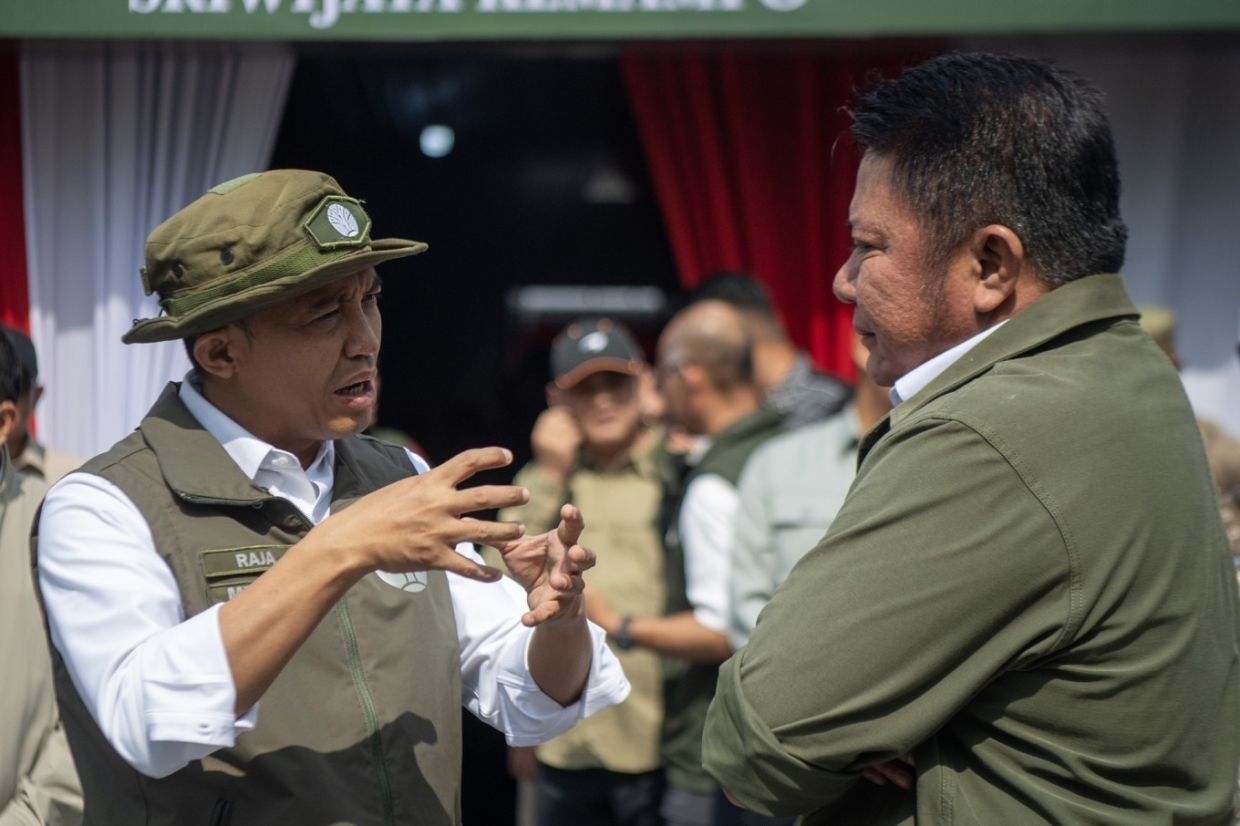
Indonesia's Corruption Eradication Commission (KPK) has resumed scrutiny of Forestry Minister Raja Juli Antoni following suspicions that he may not have fully returned money allegedly offered as a bribe by Suhardiman Amby, regent of Kuantan Singingi in Riau province. The development marks an escalation in what has already become a high-profile corruption case with implications for the government's efforts to demonstrate zero tolerance for graft at senior levels.
KPK spokesperson Budi Prasetyo indicated on Thursday that investigators are examining discrepancies between the amount of illicit funds that Raja Juli initially reported and the total sum he allegedly received from Suhardiman during a meeting on June 2 between officials of the Forestry Ministry and the Kuantan Singingi administration. According to the anti-graft body's findings, the envelope handed to Raja Juli at this encounter contained Singaporean dollars 14,000, equivalent to approximately US$10,919. The investigation widens a case that has already ensnared other ministry staff members, who reportedly received payments totalling S$12,500 from various Kuantan Singingi officials.
The procedural complexities surrounding the alleged transactions underscore the technical nature of Indonesia's anti-corruption enforcement. Raja Juli reported the incident to the KPK on July 3, claiming that he had declined the offered kickback and returned the envelope ten days after receiving it at the Kuantan Singingi Police headquarters on June 12. However, the gap between these dates and the amounts reported has triggered fresh KPK scrutiny. Under Indonesian law, public officials who receive improper gifts in connection with their office must report such transactions to the KPK within 30 days to avoid criminal liability, not to local police as Raja Juli reportedly did.
The underlying transaction appears connected to administrative proposals from the Kuantan Singingi regency seeking to reclassify more than 1,800 hectares of limited production forest in the region. The Forestry Ministry holds authority over such land-use classifications, giving the ministry considerable leverage over local interests. Investigators are examining whether the alleged bribes were explicitly linked to these forest conversion requests, which could substantially strengthen any eventual prosecution.
Previous meetings between Raja Juli and Suhardiman add another dimension to the investigation. Budi confirmed that the two officials had met at least three times before their June 2 encounter, with gatherings recorded in April, May, and June. The KPK has not yet clarified whether these earlier meetings bore any connection to the forest reclassification proposals or whether they followed a pattern of escalating offers. Such a sequence could indicate a coordinated influence campaign rather than a isolated transaction.
Suhardiman's own position has become increasingly precarious. The regent, who belongs to President Prabowo Subianto's Gerindra Party, was arrested and designated as a suspect by the KPK in late June on separate allegations concerning kickbacks from his own regional secretary Zulkarnain. The case against Suhardiman has expanded beyond this initial charge to include the alleged payments to ministry officials, suggesting a more expansive pattern of corrupt dealings within the regency's administration.
The investigation's focus on Raja Juli carries particular political weight given his role as secretary-general of the Indonesian Solidarity Party (PSI), a minority coalition member in the current parliament. His involvement in a corruption inquiry invites scrutiny from political rivals and threatens to undermine the credibility of President Prabowo's administration's anti-corruption posture. Members of the House of Representatives Commission IV, which oversees forestry planning, have already summoned the minister for clarification, though Raja Juli notably absent from a July 14 session, reportedly due to an umrah pilgrimage.
The minister's absence from parliamentary questioning drew particular attention from Commission IV deputy chair Alex Indra Lukman of the Indonesian Democratic Party of Struggle (PDI-P), highlighting how the case has become entangled with broader legislative dynamics. Such parliamentary pressure typically intensifies as investigations proceed, with opposition members using the proceedings to undermine government stability or extract political concessions.
The Forestry Ministry has maintained that no forest status changes have been approved for Kuantan Singingi, with the three most recent reclassification proposals either rejected or still under review. This official stance provides some insulation for the ministry from allegations that bribes directly influenced decision-making, though investigators may dispute the ministry's characterization of events. The distinction between proposals rejected after bribe offers and those rejected despite such offers matters considerably for criminal liability.
Sentences for officials convicted of accepting illegal gifts can reach twenty years imprisonment plus fines of up to one billion rupiah (approximately US$55,867), making this investigation consequential for Raja Juli's political future. The severity of potential penalties reflects Indonesia's legal framework for treating official corruption as a serious crime meriting extended incarceration.
In a formal statement, the Forestry Ministry pledged cooperation with the KPK and commitment to respecting the investigation's progress. Such declarations have become routine in Indonesian government responses to corruption cases, though their sincerity varies considerably. The ministry's willingness to provide requested documentation and testimony will likely prove decisive in determining investigation outcomes.
For Malaysia and other Southeast Asian governments, the case illustrates persistent vulnerabilities in enforcement mechanisms despite decades of anti-corruption institutional development. The gaps between procedural requirements and actual official conduct, combined with the delays in identifying discrepancies between reported and actual amounts, underscore how even sophisticated monitoring systems struggle against determined wrongdoers. As investigations proceed, the case may ultimately reveal whether Indonesia's anti-corruption architecture can effectively constrain senior officials or whether political connections and administrative positioning continue protecting the powerful.

