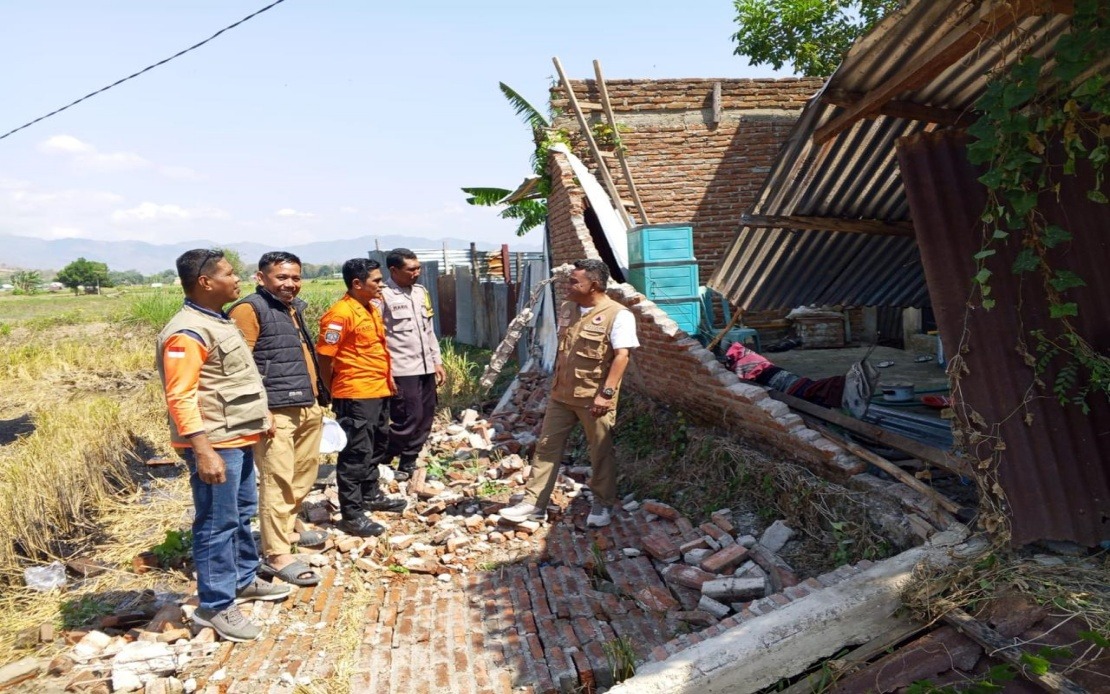
Indonesia's eastern region reeled from a devastating earthquake that claimed 38 lives on Saturday morning, with rescue operations continuing at pace across Flores Island in East Nusa Tenggara. The 7.7 magnitude tremor struck at 4:58 am local time, originating from a point 30 kilometres off the coast near Mbay at a depth of 15 kilometres, unleashing destructive forces that left communities in urgent need of assistance.
According to National Disaster Management Agency chief Suharyanto, the immediate aftermath presented a complex emergency picture as Saturday progressed into afternoon hours. Beyond the confirmed fatalities, emergency responders documented two individuals requiring serious medical intervention and 11 others suffering minor injuries. Notably, approximately 2,000 residents had already moved to safety independently, indicating that some communities managed swift self-evacuation responses, though many others remained at risk in affected zones.
The quake's impact rippled across the island's infrastructure and built environment with considerable force. Dozens of residential properties sustained significant structural damage, while multiple health centres serving local populations faced operational disruption. The tremor's energy destabilised terrain across the region, triggering landslide events that obstructed several major and minor roads, complicating both rescue access and the delivery of humanitarian supplies. Transportation infrastructure bore additional strain, with airport terminal facilities affected, though runway surfaces retained sufficient integrity for continued operation. Two port facilities similarly experienced damage, though preliminary assessments suggested functionality remained partially preserved.
The initial earthquake prompted immediate issuance of a tsunami alert as a precautionary measure, reflecting standard protocols for offshore seismic events of this magnitude in the Indian Ocean region. However, this alert was progressively downgraded and eventually withdrawn by 7:31 am after hydrographic monitoring stations detected no unusual sea-level anomalies that would indicate dangerous wave generation. This development provided relief to anxious populations but underscored the multifaceted hazards presented by such powerful geological events.
Rescue coordination emerged as the paramount operational concern for Indonesia's emergency management apparatus. Suharyanto emphasised that locating and extracting individuals trapped beneath debris constituted the most pressing priority. The National Search and Rescue Agency deployed field teams alongside Indonesian military and police personnel, creating an integrated emergency response architecture aimed at systematically reaching affected communities. The distributed nature of damage across populated areas meant that rescue operations would necessarily extend across multiple sites simultaneously, straining coordination and resource allocation.
For Malaysian observers and broader Southeast Asian audiences, the Flores earthquake underscores the region's persistent exposure to significant seismic hazards. The Indo-Australian Plate subduction zone, which generates such events, poses ongoing risks to Indonesia's sprawling archipelago and neighbouring territories. The 7.7 magnitude rating places this event within the upper range of destructive earthquakes, though not catastrophic by global standards, a distinction that nonetheless carries little comfort for affected families and communities.
Indonesian authorities recognised that Friday's damage assessment remained preliminary, with casualty figures and infrastructure impact evaluations expected to deepen as rescue operations progressed and surveyors accessed previously unreachable zones. The agency flagged that such initial counts typically increase as remote areas become accessible and buried structures are examined more thoroughly. This realistic framing helped manage public expectations while maintaining focus on ongoing rescue priorities.
The restoration of transport corridors became a secondary priority objective, reflecting Indonesia's understanding that rescue effectiveness depends upon maintaining access routes. The Ministry of Public Works mobilised personnel and equipment specifically designated for landslide debris removal, recognising that blocked roads create bottlenecks preventing both search teams and humanitarian supply chains from reaching isolated populations. This logistical dimension of disaster response often receives less public attention than dramatic rescue imagery but proves equally vital to emergency outcomes.
To support affected populations beyond immediate rescue operations, the BNPB deployed aerial assets comprising two helicopters and one fixed-wing aircraft. These assets served dual functions, transporting rescue personnel to remote locations inaccessible by road and airlifting evacuees from danger zones. Simultaneously, these aircraft enabled the delivery of critical humanitarian supplies to communities cut off from ground transport networks. Relief packages distributed across affected regions encompassed essential items including foodstuffs, potable water, temporary shelter provisions, electrical generators, and medical supplies.
The coordination of such comprehensive emergency response across a geographically dispersed area highlights both the capabilities and challenges facing Indonesia's disaster management infrastructure. With a population of over 270 million spread across thousands of islands, Indonesian authorities have developed substantial institutional expertise in rapid disaster response, yet each major event tests these systems anew. For Malaysia and other Southeast Asian nations with similar seismic vulnerabilities, Indonesia's response protocols and lessons learned offer instructive examples for regional preparedness frameworks.
The Flores earthquake's aftermath will likely contribute to ongoing discussions within the Association of Southeast Asian Nations regarding regional earthquake response coordination and early warning systems. Enhanced cross-border information sharing and coordinated humanitarian assistance mechanisms could strengthen collective resilience across the region. As rescue operations continued Saturday evening and into subsequent days, the full scope of damage and displacement remained subject to revision as teams reached previously cut-off communities and conducted comprehensive damage surveys.

