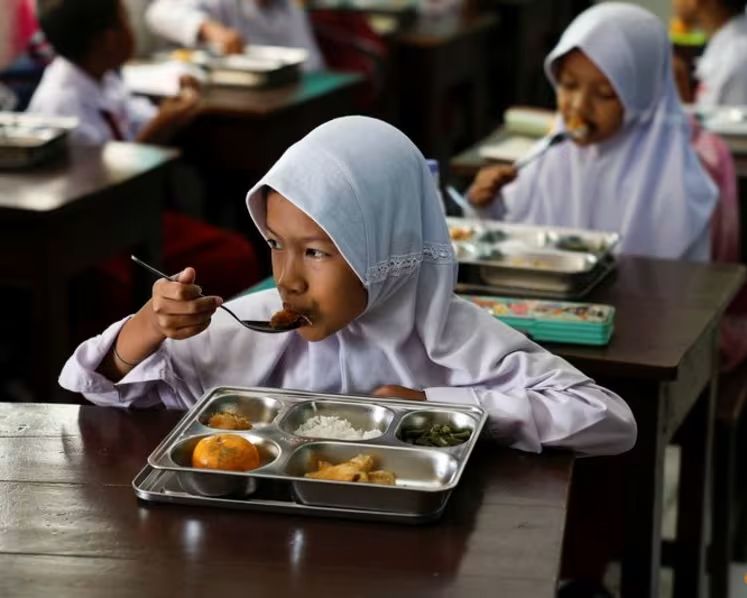
The Indonesian government's ambitious free meals programme has suffered another significant blow to its leadership structure, with the head of the National Nutrition Agency stepping down on Wednesday, just over a month after her predecessor was dismissed and arrested on corruption charges. Nanik Sudaryati Deyang, who assumed the top position in June, cited health reasons for her departure, revealing through a Facebook announcement that she requires overseas medical treatment for a serious cardiovascular condition. The successive departures underscore mounting instability within the agency responsible for executing what President Prabowo Subianto had positioned as his signature policy achievement and a central plank of his election platform.
Nanik's exit comes amid cascading pressures on an institution struggling to manage both operational and reputational crises. She disclosed that her doctor warned of arterial blockage resulting from extreme occupational stress, a poignant illustration of the mounting strain within the agency's senior ranks. The resignation represents the second major leadership transition in little more than thirty days, following the abrupt removal and subsequent arrest of her predecessor on allegations related to financial misconduct in the multibillion-dollar nutrition initiative. The pattern of rapid turnover raises serious questions about the programme's institutional stability and the capacity of its leadership to navigate an increasingly complex operating environment.
The circumstances surrounding Nanik's departure reveal a programme beset by fundamental challenges spanning logistics, quality assurance, and public health. Since launching in January 2025, the initiative has encountered significant operational obstacles, including failures in meal distribution networks and widespread reports questioning the nutritional standard of provided food. Most alarmingly, the programme has been connected to multiple mass food poisoning incidents, undermining public confidence in a scheme designed to address nutritional deficiencies among vulnerable populations including schoolchildren and expectant mothers. These accumulating problems have transformed what was intended as a flagship social welfare initiative into a potential flashpoint for public dissatisfaction.
Beyond the immediate health and operational crises, the programme has become enmeshed in a criminal investigation framework, with authorities examining the financial governance of the multibillion-dollar undertaking. The arrest of Nanik's predecessor on corruption-related charges suggests that concerns extend beyond logistical fumbling to encompass potential malfeasance in resource allocation and oversight. This investigative dimension adds legal and reputational jeopardy to an initiative already struggling with operational credibility, creating a complex backdrop against which the incoming leadership must attempt to restore institutional confidence.
Fiscal pressures have simultaneously intensified the agency's difficulties. The National Nutrition Agency announced a second budget reduction for 2026, slashing allocations from 268 trillion rupiah to 229 trillion rupiah, equivalent to approximately USD 12.79 billion. This latest cut represents merely the most recent contraction; the current allocation stands more than 100 trillion rupiah below the initial budgetary projection of 335 trillion rupiah. The sequential reduction in funding comes as the programme grapples with expanding implementation challenges, creating a difficult calculus where already-stretched resources must accommodate either reduced coverage or further compromises in service quality.
The budgetary trajectory directly contradicts the programme's original ambitions and raises fundamental questions about fiscal sustainability. The initiative was originally conceived to serve 83 million Indonesians, spanning schoolchildren and pregnant women among other vulnerable groups. Before the most recent budget reductions, the agency reported having distributed meals to 62.5 million beneficiaries, suggesting that the programme's current budget trajectory may necessitate either reduced per-capita spending or narrowed population coverage. Additional budget reviews loom on the horizon, indicating that further retrenchment remains possible, which could force difficult choices about programme scope and quality standards.
Nanik's exit is complicated by her assertions regarding the programme's proper characterisation and purpose. She defended the free meals initiative against suggestions that it constitutes a political project, instead framing it as a legitimate public health intervention targeting childhood malnutrition. This rhetorical positioning reflects broader contestation over whether the programme should be understood primarily through a welfare lens or whether critics' concerns about fiscal strain and governance failures carry greater weight. The distinction matters considerably for how Indonesians assess the trade-offs inherent in maintaining such an expensive social commitment amid competing budgetary priorities.
Nanik's successor remains to be formally announced, though she indicated that an internal candidate from the agency would assume leadership responsibilities. The reliance on existing staff to fill the vacancy suggests that the incoming chief will inherit institutional knowledge of the programme's challenges while potentially lacking the external perspective that might enable fresh approaches to longstanding problems. The continuity strategy offers administrative continuity but may limit the scope for transformative reforms that could address root causes of operational and financial difficulties.
Prabowo's reported intention to establish a supervisory board for the agency points toward restructuring efforts designed to strengthen oversight and governance frameworks. The formation of such a body could represent an acknowledgment that existing institutional arrangements have proven insufficient to manage the programme's complexity and scale. Whether such structural innovations can effectively arrest the pattern of leadership turbulence and operational dysfunction remains uncertain, particularly given that the incoming chief will operate within the same budgetary constraints and investigative scrutiny that precipitated the previous leadership's departure.
For Malaysian observers, Indonesia's experience with the free meals programme offers instructive lessons regarding the challenges inherent in scaling ambitious social welfare initiatives. The combination of logistical difficulties, quality control failures, fiscal pressures, and governance questions mirrors obstacles that other Southeast Asian governments have encountered when attempting to rapidly expand social spending in complex institutional environments. The programme's trajectory raises broader questions about whether resource-intensive food subsidy schemes represent the most effective approach to addressing nutritional deficiencies, or whether alternative policy instruments might achieve comparable outcomes with reduced administrative complexity and fiscal burden.
The wider implications extend to Indonesian fiscal stability and public confidence in large-scale government initiatives. The programme's mounting costs, combined with the reputational damage from food safety incidents and corruption allegations, may influence public discourse around future expansion of major social spending commitments. The budget reductions, while responding to fiscal constraints, risk undermining the programme's credibility as a serious policy response to malnutrition, particularly if further cuts force visible reductions in beneficiary numbers or meal quality. Prabowo's government faces a delicate challenge in salvaging a marquee policy initiative while simultaneously addressing legitimate concerns about fiscal sustainability and institutional governance.

