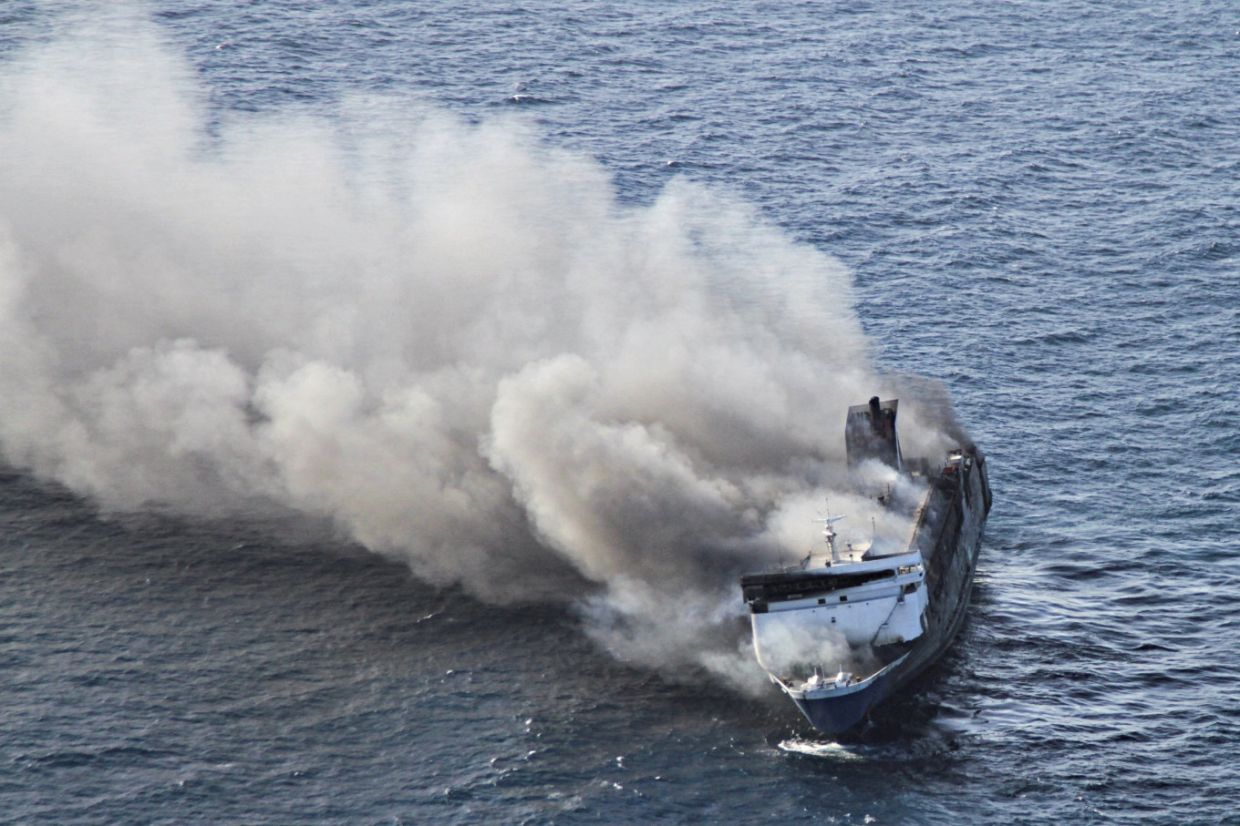
A catastrophic fire that engulfed the KMP Mutiara Sentosa II early Sunday morning has thrust Indonesia's troubled maritime sector back into the spotlight, exposing what safety experts describe as systemic failures in oversight, emergency procedures, and vessel maintenance. The Ro-Ro passenger ferry, operating between Surabaya in East Java and Makassar in South Sulawesi, caught fire at approximately 6am on August 2, claiming at least five lives and leaving two passengers still missing. With 236 passengers—predominantly logistics truck drivers—and 39 crew members aboard the 160-meter vessel, the incident has reignited longstanding concerns about whether Indonesia's regulatory framework can adequately protect those who depend on maritime transport to move goods and people across the archipelago.
Accounts from survivors paint a disturbing picture of an evacuation marred by poor coordination and inadequate emergency preparedness. According to Udin Karo Karo, chairman of the Makassar–Surabaya Truck Drivers Association, crew members largely abandoned their duty to guide passengers to safety, forcing roughly 40 percent of those aboard to fend for themselves. Passengers desperate to escape the spreading blaze found themselves jumping into the sea with only life jackets for protection, as no lifeboats or inflatable rescue rafts appeared to be readily accessible during the emergency. The absence of visible life-saving equipment and organized evacuation procedures represents a dramatic failure to meet maritime safety standards that most nations consider non-negotiable. Karo Karo has called on port authorities and maritime regulators to launch a thorough investigation into the vessel's operational readiness and whether the company met all legally mandated safety compliance requirements.
The incident is particularly troubling because it represents not an isolated mishap but a pattern of failure by the vessel's operator, PT Atosim Lampung Pelayaran (ALP). The company previously owned the KMP Mutiara Sentosa I, which likewise caught fire near Madura on May 19, 2017, killing five people in a nearly identical tragedy. That two vessels from the same operator have experienced major fires within the span of five years suggests either systemic management failures, inadequate maintenance protocols, or a corporate safety culture fundamentally at odds with the practices necessary to protect human life. Transportation Minister Dudy Purwagandhi acknowledged this troubling history, noting that PT ALP had been involved in at least two previous maritime accidents, a record that demands explanation and accountability.
Examiners are now delving beyond simple questions of fire causation to investigate deeper structural weaknesses. Edi Priyanto, deputy chairman of the East Java Occupational Safety and Health Council, argues that the fire's occurrence suggests problems that transcend technical defects alone, pointing instead toward fundamental shortcomings in the company's safety culture, organizational learning systems, and risk management frameworks. He emphasized that any serious maritime incident should trigger systemic improvements; the recurrence of similar accidents at the same company indicates that lessons from the 2017 tragedy were never meaningfully implemented. The investigation, Priyanto stressed, must examine not only what ignited the fire but why it spread so rapidly across the vessel and whether emergency response systems and safety procedures functioned as designed.
Indonesia's broader maritime safety apparatus faces uncomfortable scrutiny in the aftermath of this disaster. The country's archipelago spans thousands of kilometers and hosts one of the world's busiest shipping corridors, yet investigators and lawmakers increasingly question whether regulatory oversight has kept pace with the scale of maritime activity. Abdul Hadi, a member of the House of Representatives Commission V responsible for transportation and infrastructure, described the KMP Mutiara Sentosa II fire as a grave warning about the deteriorating state of Indonesia's maritime safety system. He warned that consecutive vessel accidents within compressed timeframes no longer qualify as isolated incidents but rather signal systemic dysfunction demanding urgent intervention. When safety inspections devolve into mere administrative routines divorced from actual vessel seaworthiness, the framework loses all protective value.
The timing of this tragedy underscores the urgency of reform. Just one month before the KMP Mutiara Sentosa II caught fire, a ferry carrying more than 70 passengers sank near Selayar, an island off South Sulawesi, killing at least four people with fourteen others remaining missing when search operations concluded. The proximity of these disasters within a single month reflects the accumulating human cost of inadequate oversight and raises questions about whether Indonesia's maritime regulatory bodies possess sufficient resources, expertise, and authority to enforce consistent safety standards across hundreds of vessels operating throughout the nation's waters. For Malaysian maritime stakeholders and regional observers, these incidents highlight the risks associated with substandard operators operating on shared sea routes and the potential for safety failures to extend beyond Indonesia's borders.
The investigation by Indonesia's National Transportation Safety Committee (KNKT) will establish the immediate cause of the fire, but Minister Purwagandhi signaled that the government's response will extend far beyond identifying the ignition source. Following KNKT findings, authorities plan to conduct a comprehensive evaluation of PT ALP's operations, safety practices, and compliance record. This evaluation represents a critical test of whether Indonesia's government possesses the political will to impose meaningful sanctions on operators with documented safety failures and to fundamentally overhaul licensing and certification processes that may have permitted dangerous vessels to remain in service. The evaluation's outcome will reveal whether Indonesia treats maritime safety as a serious regulatory priority or merely as an aspirational goal subordinated to commercial interests.
Regu latory experts stress that effective maritime safety depends on multiple reinforcing systems operating in concert. Seaworthiness cannot be reduced to a certification box checked during occasional inspections; it requires consistent maintenance, regular crew training, functional emergency equipment, and an organizational culture that prioritizes passenger protection above operational convenience. Priyanto's observation that safety depends on the effectiveness of management systems, maintenance quality, crew preparedness, and strong safety culture reflects international best practices established through decades of maritime regulation. Indonesia must reconcile its current practices against these standards, recognizing that shortcuts in inspection procedures, inadequate crew training, or delayed maintenance create cascading risks that manifest in tragedy.
For shipping companies operating in Indonesia and across Southeast Asia, the KMP Mutiara Sentosa II disaster carries profound implications. Operators face intensifying scrutiny regarding their safety records, with passengers and shippers increasingly conscious of vessel history and operator reputation. Insurers and port authorities may begin imposing stricter conditions on operators with incident histories, effectively imposing market discipline on safety lapses. Regional maritime authorities, including those in Malaysia, Singapore, and other neighboring nations, may coordinate more closely to prevent vessels with poor safety records from accessing their ports, creating economic pressure for systematic improvement. The incident thus serves as a warning that maritime safety failures carry not only human costs but increasingly severe commercial consequences.
Abdul Hadi's insistence that safety certifications must reflect actual vessel seaworthiness rather than mere administrative compliance suggests a fundamental recalibration may be necessary in how Indonesia approaches maritime regulation. Inspections must be conducted with genuine rigor, evaluating everything from fire suppression systems to crew competency to maintenance records. Certification authorities must maintain independence from commercial pressures that incentivize approving substandard vessels. This recalibration would require investment in training qualified inspectors, establishing clear safety standards with objective verification mechanisms, and creating transparent accountability frameworks where regulators can be held responsible for certifying unsafe vessels. Without such institutional strengthening, Indonesia risks enduring a continued cycle of preventable maritime tragedies.
The government's response will ultimately determine whether the KMP Mutiara Sentosa II fire catalyzes meaningful reform or becomes merely another incident in an accumulating pattern of maritime disasters. Minister Purwagandhi's commitment to comprehensive evaluation of PT ALP following the KNKT investigation represents a necessary first step, but true progress requires extending reforms across the entire industry. This includes revising inspection protocols, strengthening crew training requirements, mandating modern safety equipment on all passenger vessels, and establishing penalties sufficiently severe that operators cannot rationalize cutting safety corners as a business strategy. Malaysia and other regional partners should monitor Indonesia's response closely, recognizing that effective maritime safety in the Strait of Malacca and surrounding waters depends partly on the regulatory competence of all coastal nations. The lives lost on the KMP Mutiara Sentosa II demand nothing less than a comprehensive transformation of how Indonesia approaches maritime safety oversight.

