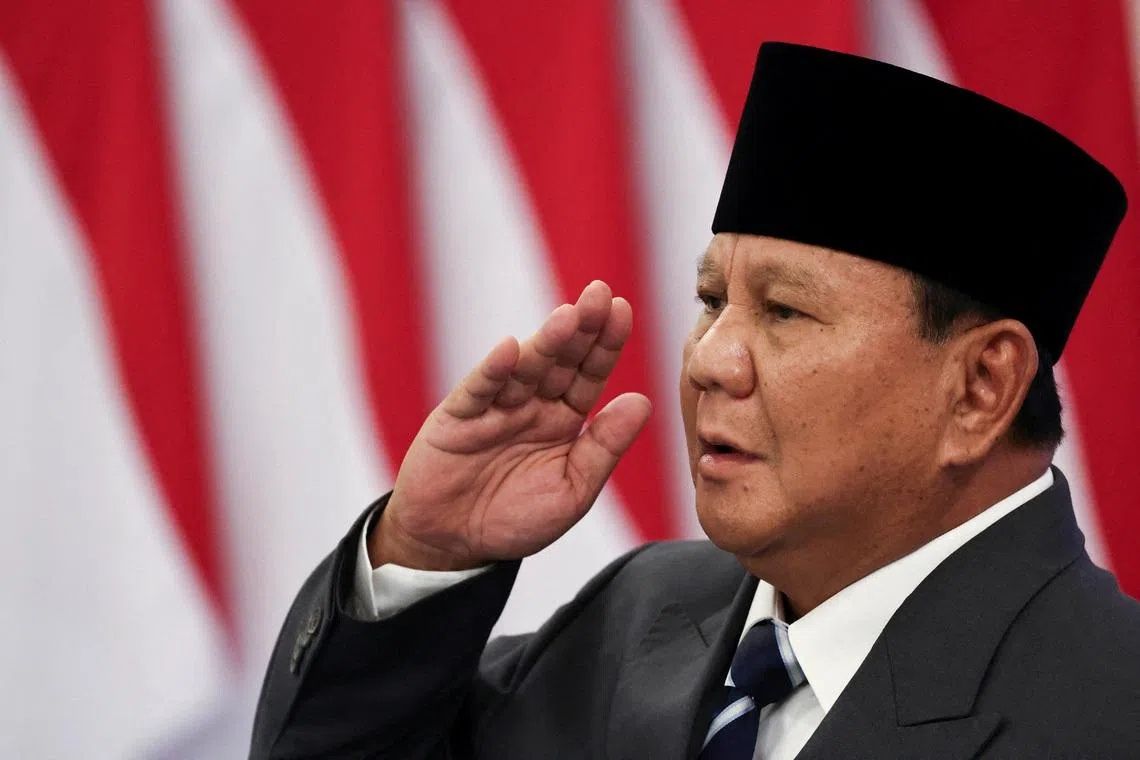
Indonesia's human rights commission has escalated pressure on the government to scrap military training components from President Prabowo Subianto's flagship village cooperative initiative, following the deaths of five participants just ten days into a 45-day instruction period. The intervention marks a significant challenge to the administration's integration of military personnel and protocols into civilian economic development programmes, raising broader questions about the appropriate scope of armed forces involvement in peacetime nation-building efforts.
The Red and White Cooperatives programme, which commenced operations last July, represents a cornerstone of Prabowo's economic vision for Indonesia. Designed to cultivate approximately 80,000 village-level cooperative enterprises nationwide, the initiative seeks to generate employment opportunities whilst advancing the administration's ambitious target of achieving 8% economic growth by 2029. These cooperatives function as retail outlets for essential household items, government-subsidised cooking gas, and agricultural fertilisers, positioning themselves as critical distribution channels for state-supported commodities in rural communities across the archipelago.
Near 35,000 individuals selected to manage these cooperatives must complete the mandatory military training curriculum, which commenced on June 14 and extends through July 31 across multiple regional defence ministry facilities. The inclusion of military instruction for civilian cooperative managers represents an unusual policy choice that has drawn considerable scrutiny from civil society organisations. The human rights commission explicitly questioned the rationale for subjecting economic managers to military protocols, arguing that cooperative management fundamentally requires expertise in business operations, member services, and organisational governance—competencies disconnected from military discipline or combat preparation.
The defence ministry disclosed that the five fatalities occurred between June 17 and June 26, attributing the deaths to diverse medical causes including cardiac arrest, heat stroke, active tuberculosis, and pneumonia. Major General Ketut Gede Wetan, the ministry's human resource development chief, asserted that all participants had undergone medical screening before enrolment and received satisfactory clearance. He further characterised the training regimen as primarily developmental rather than physically demanding, denying allegations that strenuous activity contributed to the deaths. The ministry's explanation, however, has failed to address persistent questions about whether comprehensive health monitoring and adequate medical facilities were in place during the intensive programme.
In response to public concern, the defence ministry announced plans for a comprehensive evaluation encompassing enhanced health surveillance, early identification of participants with underlying health vulnerabilities, and recalibration of activity intensity levels. The health ministry will reportedly participate in future programme iterations, suggesting acknowledgment that civilian health considerations require specialist management beyond military capacity. These commitments, whilst indicating receptiveness to reform, arrived only after sustained pressure from rights advocates and carry an implicit admission that the original programme design contained deficiencies in health safeguarding.
The human rights commission's formal recommendation targets the fundamental mismatch between military training methodology and legitimate cooperative management requirements. Commission official Pramono Ubaid Tantowi articulated that effective capacity-building for cooperative leadership should concentrate on strengthening managerial competence, contemporary leadership practices, and financial literacy—domains where civilian expertise delivers superior outcomes compared to military instruction. This distinction proves particularly relevant for village-level managers operating in economically disadvantaged communities, where sophisticated business acumen and community engagement skills supersede military command structures as requirements for success.
Beyond the immediate deaths, the incident illuminates the broader trajectory of Prabowo's presidency since his October 2024 inauguration. The former general has consistently expanded military institutional presence across civilian administrative domains, embedding defence ministry personnel and methodologies into programmes nominally classified as economic or social initiatives. This pattern reflects a distinctive governing philosophy that privileges military hierarchy and discipline as instruments for accelerating national development, a perspective increasingly questioned by human rights monitors and development practitioners who contend that civilian expertise better serves non-security policy domains.
The commission has further demanded official investigation into the fatalities and urged police to commission forensic autopsies yielding credible evidence regarding death causation. This investigative pressure raises the possibility of criminal accountability, depending on whether inquiries establish negligence or violations of occupational health standards. The insistence on forensic procedures suggests the rights body suspects official explanations may obscure culpability or systemic failures in programme management. Such investigations could potentially establish precedent regarding government accountability for deaths occurring during state-mandated civilian training programmes.
For Malaysian observers, the Indonesian case carries instructive implications regarding the appropriate boundaries between military institutions and civilian governance. As Southeast Asian nations navigate economic development strategies and institutional modernisation, the Indonesian experience demonstrates both the appeal and the hazards of militarised approaches to civilian objectives. The deaths underscore that importing military training protocols into non-defence contexts creates distinctive health and safety vulnerabilities, particularly among participants without prior military experience or conditioning. Malaysia's own cooperative sector, whilst historically less militarised than Indonesia's emerging model, can extract cautionary lessons regarding the importance of maintaining sector-specific expertise and civilian-led management standards.
The international development community will closely observe how the Indonesian government responds to these recommendations and whether genuine structural reforms follow. A demonstration of willingness to separate military and civilian administrative functions would reassure international partners regarding the administration's commitment to rule-of-law principles and occupational safety standards. Conversely, continued integration of military frameworks into civilian programmes despite documented fatalities would signal institutional resistance to external accountability and empirical evidence—a trajectory potentially affecting Indonesia's international standing and investor confidence across multiple sectors dependent on transparent governance and predictable safety standards.

