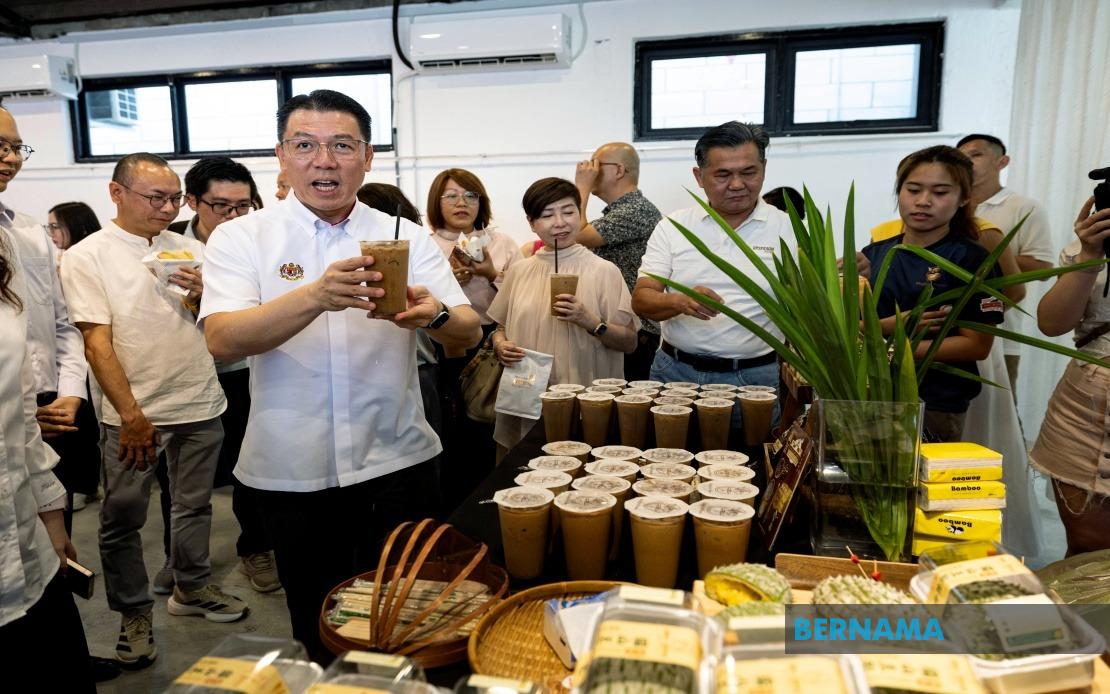
In a bid to harness the unifying power of cuisine, Ipoh is preparing to host the Jom Makan Expo 2026, an ambitious three-day culinary festival designed to celebrate Malaysia's multicultural food traditions while positioning gastronomy as a tool for social cohesion. Minister of Housing and Local Government Nga Kor Ming unveiled the initiative during a pre-launch event this week, framing the exposition as far more than a commercial venture. By strategically timing the festival during Merdeka Month, organisers are deliberately linking gastronomic celebration to national pride and the fundamental principle of unity through diversity that defines Malaysia's identity.
The festival will operate from August 28 to 30, running nightly from 5 pm to 11 pm at Palo 101 in Ipoh, with organisers projecting over 20,000 attendees. This scale of ambition reflects growing recognition among policymakers that cultural tourism experiences rooted in authentic local traditions can generate substantial economic benefits while strengthening community bonds. The Kepayang constituency service centre, alongside multiple strategic partners, has curated more than 50 food and agricultural product stalls that will collectively showcase the breadth of Ipoh's culinary reputation. This represents a comprehensive effort to present the city not merely as a destination for casual visitors, but as a living museum of gastronomic culture.
At the heart of the exposition lie twelve signature Ipoh specialties, representing dishes and preparations so deeply embedded in the city's identity that they function as cultural markers. Laksa Buyong, a complex spiced noodle dish steeped in local tradition, sits alongside the renowned Ipoh White Coffee, an institution that extends far beyond a simple beverage to encompass techniques and social practices refined over generations. Additional offerings including nasi ayam taugeh, puding taufu, and kacang putih collectively demonstrate how Ipoh's food landscape reflects the layered histories of the communities that have shaped the city. These are not contemporary fusion creations, but authentic recipes that carry the weight of cultural memory and intergenerational knowledge transmission.
Recognising that food heritage requires contextualisation to resonate with contemporary audiences, the organisers have integrated six Ipoh Food Culture Galleries into the programme. These curated exhibition spaces will explore the evolution and historical significance of local culinary practices, including dedicated sections on Ipoh White Coffee production, the unique food culture that emerged during the tin mining era, and the role of preserved vegetables and condiments in regional cooking. This pedagogical approach transforms the expo from a consumption event into an educational experience where visitors gain understanding of how geography, economics, and migration patterns have shaped what people eat. The tin mining era gallery carries particular significance for Southeast Asian readers, as it illuminates how industrial development and labour migration fundamentally altered regional food cultures across the broader region.
The programme structure balances commercial and cultural elements deliberately. Beyond food stalls, the three-day schedule features cultural performances representing various ethnic communities, creating visual and performative expressions of the unity-through-diversity theme. Food Talks Ipoh sessions will invite established food historians, culinary practitioners, and community elders to share narratives about how dishes originated, evolved, and acquired their contemporary significance. The launch of an Ipoh QR Digital Food Map represents technological innovation in cultural tourism, allowing visitors to access layered information about each dish through their mobile devices—a practical tool that bridges traditional culinary knowledge with digital accessibility.
The closing ceremony's fireworks display and scheduled lucky draw prizes serve dual functions: they provide entertainment value that encourages family attendance and extended stays, while the visual spectacle reinforces the festival as a moment of collective celebration. This programming strategy acknowledges that gastronomic tourism succeeds when it combines sensory pleasure with meaningful engagement and the possibility of material reward. For Malaysian tourism stakeholders and regional observers, the Ipoh model demonstrates how secondary cities can leverage authentic cultural assets to compete effectively against better-known destinations, particularly by emphasising depth of experience over superficial attractions.
Nga Kor Ming's framing of food as a deliberately political instrument—explicitly connecting it to Malaysia's foundational narrative as "Truly Asia"—reflects evolving approaches to nation-building in post-pandemic Southeast Asia. Rather than relying solely on institutional or governmental messaging, the Minister positions culinary practice as the mechanism through which abstract national values become tangible, pleasurable, and personally meaningful. When people from different backgrounds gather to share a meal, cook together, or discuss food traditions, they participate in what scholars term "embodied multiculturalism"—unity experienced through the senses rather than merely acknowledged intellectually.
For Malaysian readers and regional observers, the Ipoh exposition arrives at a significant moment. Across Southeast Asia, cities are increasingly recognising that food-based tourism and cultural programming represent sustainable economic development pathways that distribute benefits more broadly than convention-based or infrastructure-heavy tourism models. Food stall operators, agricultural producers, and hospitality workers benefit directly, while the emphasis on heritage preservation provides cultural legitimacy and funding justification for culinary traditions that might otherwise fade amid globalisation pressures. The project also signals confidence in domestic tourism consumption, with expectations that Malaysians themselves will comprise a substantial portion of the 20,000 projected visitors.
The expo's integration of agricultural product stalls alongside prepared food offerings deserves particular attention. By creating market opportunities for small-scale farmers and food processors whose products feature in iconic local dishes, the festival strengthens rural-urban economic linkages. This approach aligns with broader Malaysian agricultural policy objectives emphasising value-added production and direct producer-to-consumer sales channels that bypass traditional wholesale intermediaries. For Perak state specifically, which remains agriculturally significant despite industrial decline, such initiatives help reposition farming communities as custodians of cultural heritage rather than merely commodity producers.
The strategic choice to host the festival during Merdeka Month carries symbolic weight that extends beyond timing convenience. By deliberately anchoring celebration of food diversity to national independence commemoration, organisers assert that Malaysia's multicultural food traditions are not incidental characteristics but rather foundational elements of national identity. This positioning proves particularly valuable as Malaysia navigates contemporary political discourse that sometimes emphasises difference over commonality. The expo demonstrates that unity-through-diversity remains not merely aspirational rhetoric but a lived practice embedded in daily pleasures like eating and drinking together.
Looking forward, the success or limitations of the Ipoh Jom Makan Expo 2026 will likely influence how other Malaysian cities approach cultural tourism and heritage promotion. If the projected attendance materialises and economic benefits flow to food vendors and producers as intended, the model may inspire replication in other cities with distinctive culinary identities—Penang's varied street food traditions, Melaka's Peranakan cuisine, or Sabah and Sarawak's indigenous food cultures. For regional observers across Southeast Asia grappling with similar questions about cultural preservation and economic development, the Ipoh model offers a template worth monitoring closely, particularly regarding how local government effectively coordinates with private sector partners and manages expectations across diverse stakeholder groups.
The expo ultimately represents something broader than mere festival planning. It embodies a deliberate strategy to position food as fundamental to Malaysian identity, to generate economic opportunity while preserving cultural knowledge, and to create spaces where people from different backgrounds encounter each other through one of humanity's most universal and pleasurable activities. In an era of polarisation and retreat into identity silos, such initiatives carry significance that transcends tourism statistics or vendor revenue figures. They constitute acts of faith in the proposition that Malaysia's strength derives from its willingness to embrace, celebrate, and economically support the diverse traditions that comprise its multicultural character.

