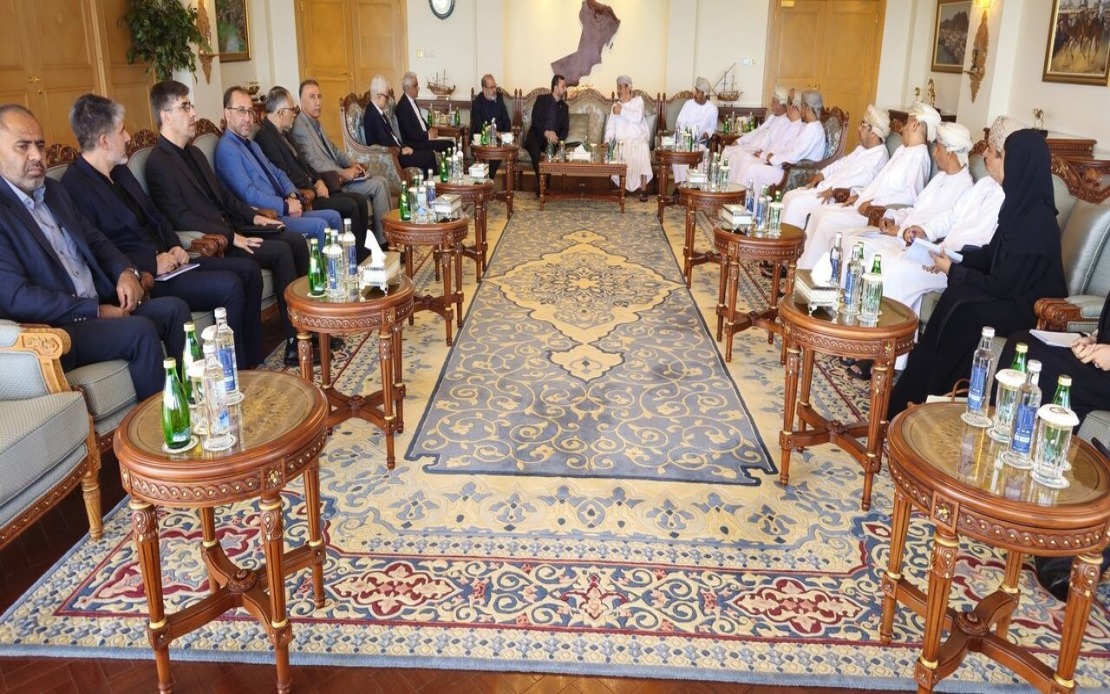
Iran and Oman have taken a significant step toward coordinated stewardship of one of the world's most critical shipping corridors by convening the inaugural meeting of their Joint Hormuz Committee. The gathering, which took place during a recent diplomatic visit to Muscat, represents a formal commitment by both nations to engage in structured dialogue on matters affecting the Strait of Hormuz, through which roughly one-third of seaborne traded oil passes annually.
Kazem Gharibabadi, Iran's Deputy Foreign Minister for Legal and International Affairs, announced the successful completion of discussions with Oman's Ambassador-at-Large Abdulaziz Al Hinai. The meeting brought together senior officials tasked with examining the immediate challenges facing the Strait while simultaneously charting a course for its long-term administration. According to announcements made through official channels, participants reviewed a comprehensive agenda that encompassed existing complications and prospective frameworks for managing this contested waterway.
The foundation for these talks rests upon international maritime law and regional diplomatic precedent. Specifically, both delegations referenced Paragraph 5 of the Islamabad Memorandum of Understanding when framing their discussions, signalling adherence to established protocols governing the rights and responsibilities of countries bordering vital international waters. This legal framework underscores the principle that any arrangement affecting the Strait must preserve and recognise the territorial integrity and maritime prerogatives of all surrounding states.
The committee's establishment follows heightened diplomatic engagement between Tehran and Muscat in late June, when Iranian Foreign Minister Abbas Araghchi and senior negotiator Mohammad Bagher Ghalibaf visited Oman. That visit culminated in a joint statement emphasising that governance structures for the Strait must operate within parameters that fully acknowledge the sovereignty of both littoral nations. The statement signalled a shared understanding that unilateral actions or arrangements excluding any of the key parties would lack legitimacy and stability.
For Malaysia and other Southeast Asian nations dependent on stable shipping through global chokepoints, the Iran-Oman initiative carries considerable weight. The Strait of Hormuz serves as the maritime gateway through which energy supplies destined for Asian markets transit regularly. Any disruption to safe passage or commercial operations through these waters reverberates across supply chains and energy markets throughout the region. Malaysian policymakers and maritime operators monitor developments in this corridor with particular attention, given the nation's substantial reliance on imported crude oil and liquefied natural gas.
The newly established joint committee represents an institutional mechanism designed to prevent unilateral actions and foster consensus-building on practical shipping matters. According to official statements, the committee will focus specifically on reaching agreement regarding the future governance framework for maritime commerce, including the provision of navigational services and the associated costs of maintaining such services. These technical discussions must align with internationally recognised standards, ensuring that any arrangements do not deviate from established maritime conventions and norms.
The timing of these discussions is noteworthy given broader regional tensions and international concerns about freedom of navigation in critical sea lanes. By establishing formal channels for bilateral engagement, Iran and Oman appear committed to demonstrating that neighbouring states can address shared challenges through diplomatic mechanisms rather than through confrontational posturing. This approach may offer valuable lessons for other regional actors grappling with maritime boundary questions and shared resource management.
Oman's positioning as a mediator and pragmatic partner in regional affairs has long been recognised. The sultanate maintains balanced relationships with neighbouring Iran and Gulf Cooperation Council states, positioning it uniquely to facilitate dialogue on contentious issues. By hosting this inaugural committee meeting and engaging substantively with Iranian proposals, Oman reinforces its reputation as a voice for stability and reasoned diplomacy in a region often characterised by polarisation.
Moving forward, the committee's success will depend on sustained political will from both governments and the capacity of officials to translate diplomatic goodwill into concrete operational agreements. The challenges ahead include defining service standards for maritime traffic, establishing cost-sharing mechanisms, ensuring compliance protocols, and creating dispute resolution procedures. These technical details matter immensely to merchant vessels, shipping companies, and energy traders whose livelihoods depend on predictable conditions.
For the international community, including Southeast Asian stakeholders, the establishment of this bilateral framework suggests that dialogue remains possible even amid broader geopolitical tensions. If Iran and Oman can successfully navigate their differences through institutional channels and establish mutually acceptable protocols for Strait management, the precedent could encourage similar collaborative approaches to other contested maritime zones globally. Conversely, should negotiations founder, the implications for regional stability and international commerce could prove concerning.
The committee's future meetings will determine whether this inaugural gathering represents a genuine turning point toward cooperative governance or merely a symbolic gesture obscuring deeper disagreements. Both nations have publicly committed to pursuing further discussions, indicating at minimum a shared desire to continue engagement. For Malaysia and other trading nations, the outcome will merit close observation, as the Strait of Hormuz's stability remains inseparable from broader Asian prosperity and energy security.

