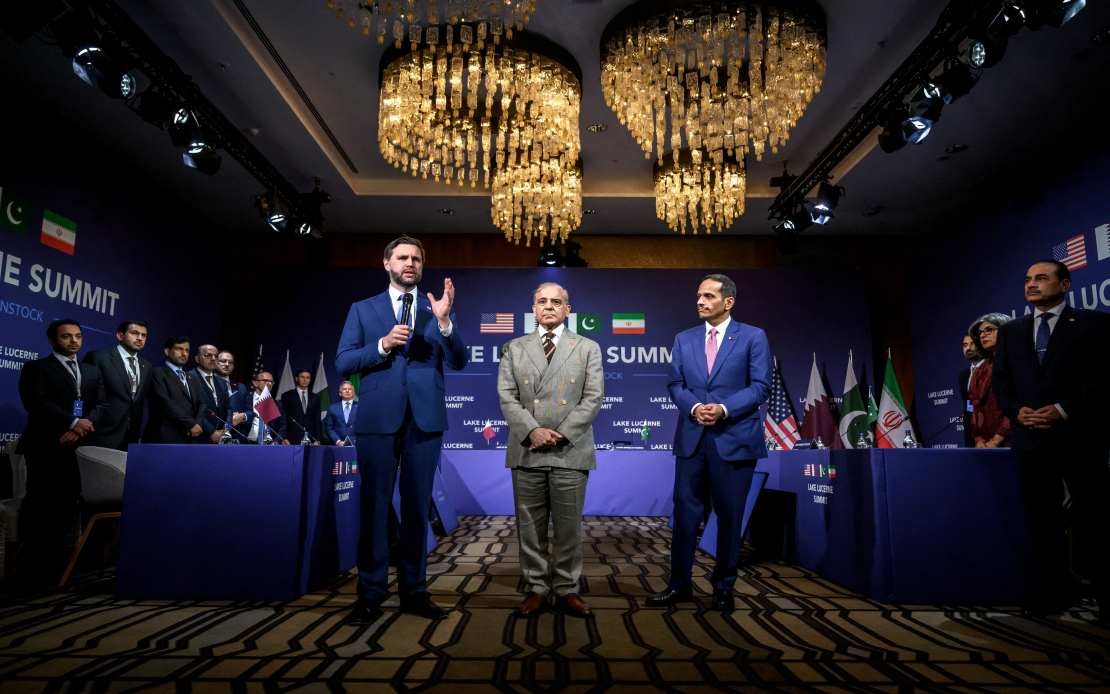
Delegations from Iran and the United States have wrapped up their initial negotiating session in Switzerland, according to reports from Iran's Fars News Agency on Sunday. The talks, which were mediated by Qatar and Pakistan, represent a significant diplomatic effort to move towards implementing an interim agreement between the two nations that was signed earlier in the week. The conclusion of this opening round marks the beginning of what could be a lengthy process to ease tensions that have destabilised the wider West Asia region for an extended period.
The meeting in Switzerland was deliberately kept brief, lasting approximately 80 minutes before being suspended to allow each participating delegation to return to their respective capitals or assigned locations for internal consultations. This structured approach to the negotiations suggests that both sides are proceeding cautiously, with time built in for decision-makers to review the substance of discussions and provide guidance to their negotiating teams. The decision to pause after a relatively short session is typical of complex international negotiations where immediate consensus is unlikely and extensive coordination within each government is necessary.
Qatar and Pakistan, serving as co-mediators in these discussions, had announced the commencement of talks earlier on Sunday. Their involvement underscores the regional dimension of this dispute and the importance of trusted intermediaries in facilitating communication between Washington and Tehran. Both nations have historical diplomatic relationships and credibility with both sides, positioning them uniquely to help bridge the significant gap between American and Iranian positions. The mediation structure itself signals that direct bilateral engagement between the two countries remains delicate.
The substantive agenda for these talks centres on implementing the terms outlined in a memorandum of understanding that was finalised on Wednesday of the previous week. This agreement is intended to bring an end to months of escalating military tensions and political brinkmanship that have threatened regional stability and international commerce. One of the key objectives is to restore freedom of navigation through the Strait of Hormuz, one of the world's most critical maritime chokepoints through which approximately one-third of global seaborne oil trade passes. Any disruption to shipping in this corridor has immediate implications for energy prices and supply chains across Southeast Asia and beyond.
The US delegation is being led by Vice President JD Vance, signalling the high-level political importance Washington is placing on these negotiations. His presence indicates that the Biden administration is committed to pursuing a diplomatic resolution and is willing to invest significant political capital in the process. The Iranian side is represented by Parliament Speaker Mohammad Bagher Qalibaf and Foreign Minister Abbas Araghchi, two figures with substantial influence in Tehran's decision-making apparatus. The calibre of representatives on both sides suggests that meaningful discussions are taking place rather than merely going through diplomatic formalities.
The choice of Bürgenstock in Switzerland as the venue for these talks carries symbolic weight. Switzerland has long served as neutral ground for sensitive international negotiations, having hosted numerous high-level diplomatic meetings throughout its modern history. The country's status as a non-aligned state and its reputation for discretion make it an ideal location for talks of this sensitivity. Furthermore, Switzerland's banking sector and international institutions provide logistical support for complex negotiations.
For Malaysian readers and the broader Southeast Asian region, these developments carry significant implications. Any lasting resolution to the Iran-US tension would contribute to regional stability and reduce the risk of military escalation that could disrupt shipping lanes and energy supplies on which the region depends. Southeast Asian economies are heavily reliant on stable energy prices and unimpeded maritime trade, making developments in the Strait of Hormuz directly relevant to economic wellbeing across the region. A successful negotiation could help moderate oil prices and reduce geopolitical risk premiums that have persisted in energy markets.
The initial round of talks, though brief, appears to have proceeded without visible acrimony or breakdown in communication. The fact that both delegations agreed to suspend rather than abandon talks suggests that lines of dialogue remain open and that there is mutual interest in continuing engagement. However, the absence of any announcement regarding when the next session would commence leaves significant uncertainty about the timeline for these negotiations. The deliberate pace suggests that negotiators are not rushing towards a premature agreement.
The interim agreement that these talks are designed to implement represents a breakthrough after months of tension that escalated following various military incidents and political provocations. The willingness of both governments to engage through this four-party format demonstrates a recognition that the costs of continued conflict outweigh the benefits. For the region, this recognition is encouraging, though scepticism remains warranted given the deep historical animosities and conflicting strategic interests between Washington and Tehran.
Moving forward, observers will be watching closely for signals about the next phase of negotiations and the actual progress being made on substantive issues. The involvement of experienced diplomats and the careful structuring of talks suggest that negotiators understand the complexity of what they are attempting to achieve. Success will likely require significant compromises from both sides and creative solutions to long-standing disputes. For Malaysia and other Southeast Asian nations dependent on Middle Eastern stability, the success or failure of these negotiations carries real consequences for regional prosperity and security.

