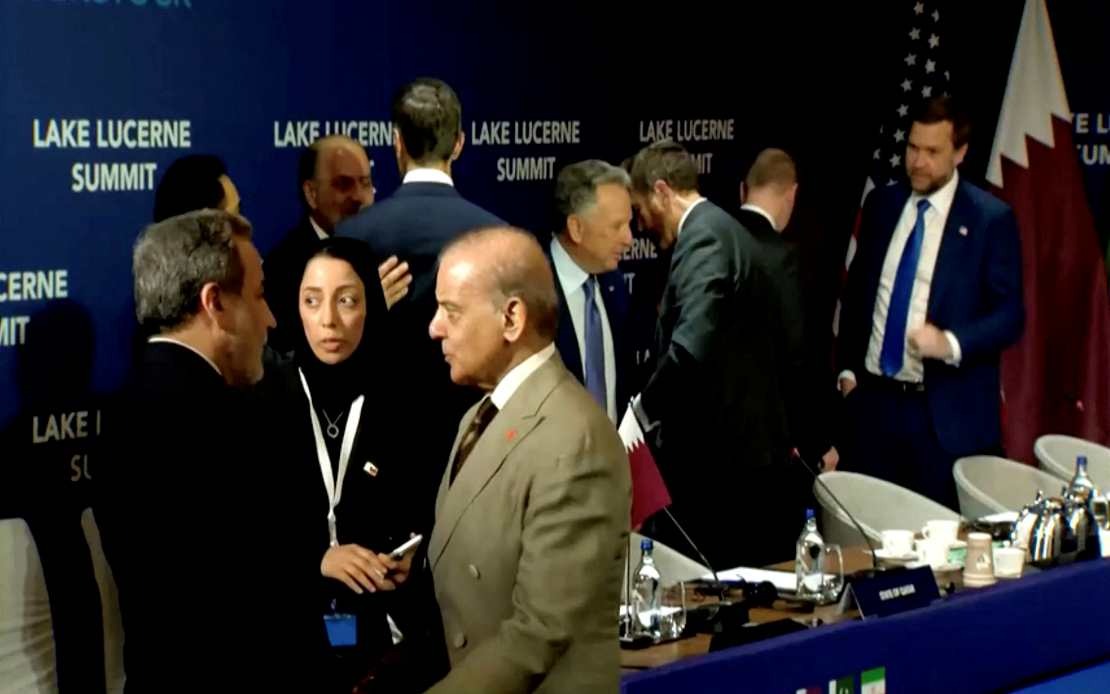
Negotiations between Iran and the United States have reached a significant milestone with the completion of a draft agreement addressing temporary sanctions relief on Iranian oil exports, according to Hossein Ghorbanzadeh, a member of Tehran's delegation. The development emerged from talks conducted at the Burgenstock resort in Switzerland, where discussions have been taking place under the framework of a recently formalised accord between the two nations seeking to transform their hostile relationship and resolve long-standing regional tensions.
The memorandum of understanding between Iran and the United States, known formally as the Islamabad Memorandum of Understanding, entered into force on June 18 following electronic signatures from Iranian President Masoud Pezeshkian and US President Donald Trump. This framework represents an ambitious attempt to address multiple dimensions of the Iran-US conflict that have festered for decades, moving beyond bilateral disputes to encompass the broader regional security architecture that has defined Middle Eastern geopolitics since the 1979 Islamic Revolution.
The initial 14-point understanding was announced on June 14 through the mediation efforts of Pakistan, a significant diplomatic intervention that underscores how third-party intermediaries remain essential in resolving entrenched international disputes. The agreement commits both parties to ending hostilities across multiple theatres of conflict, including the devastating war in Lebanon, a critical provision that effectively ties the sanctions relief agreement to broader peace objectives in the region. This conditional approach suggests that policymakers recognise the interconnected nature of Middle Eastern security challenges and are attempting to create incentive structures that encourage compliance with the overall peace framework.
Ghorbanzadeh clarified an important detail regarding the implementation timeline: the remaining provisions of the memorandum will not become operational unless a definitive peace settlement is achieved to conclude the war in Lebanon. This stipulation reflects Iran's strategic interests in Lebanon, where it maintains significant influence through various proxies and non-state actors. For Malaysian readers and Southeast Asian observers, this development carries implications for regional stability, as any escalation or resolution in the Middle East affects global energy markets, shipping lanes, and the broader security environment that impacts trade flows through critical waterways.
Beyond the sanctions relief component, the negotiators have been addressing an array of technical issues through separate working sessions conducted alongside the main talks. These technical discussions represent the granular, detailed work required to translate high-level political agreements into implementable arrangements. The parallel track approach allows specialists and technical experts to resolve specific complications without derailing broader diplomatic momentum—a pragmatic methodology that acknowledges the complexity involved in dismantling sanctions regimes and restructuring economic relationships between nations that have been isolated from each other.
The draft concerning temporary easing of sanctions on Iranian oil exports carries profound significance for global energy markets. Iran possesses some of the world's largest proven oil reserves, and the restoration of its oil exports to international markets could affect pricing dynamics in ways that reverberate across Southeast Asia, where energy security remains a paramount concern. Malaysia, as both an energy consumer and a regional economic hub, has vested interests in stabilising oil markets and ensuring that geopolitical tensions do not disrupt supply chains or inflate energy costs that would ripple through manufacturing sectors and transportation networks.
During the Switzerland negotiations, the Iranian delegation also discussed mechanisms for releasing frozen Iranian assets, an issue that has complicated Iran-US relations for decades. These discussions occurred with the Qatari delegation participating, reflecting Qatar's role as a diplomatic broker and its interests in regional stability. The unfreezing of substantial Iranian financial assets would provide Tehran with capital to address domestic economic challenges and potentially fund reconstruction efforts, though Western governments remain concerned about how Iran might allocate such resources.
The memorandum's provisions extend beyond the sanctions component to encompass restoration of maritime operations in the Strait of Hormuz, one of the world's most critical chokepoints through which approximately one-third of global seaborne oil trade transits. The agreement also contemplates lifting the US naval blockade that has constrained Iranian commerce, a reversal that would fundamentally alter the security environment in the Persian Gulf. For regional powers and global stakeholders, including Malaysia, the reopening of this strategic waterway to normalized traffic would reduce geopolitical risk premiums embedded in shipping insurance and energy prices.
The conditional nature of the agreement—linking oil sanctions relief to Lebanese peace—demonstrates how regional conflicts have become inextricably intertwined. Lebanon's stability remains elusive, with multiple armed factions competing for influence and ordinary Lebanese citizens suffering humanitarian consequences. The inclusion of Lebanese peace as a prerequisite for full implementation suggests that negotiators understand resolving the immediate conflict is prerequisite to addressing deeper systemic issues between Iran and the United States.
For Southeast Asian nations monitoring these developments, the implications extend across multiple domains. Economic stability depends partly on global energy security, and any arrangement that reduces Middle Eastern tensions contributes to more predictable markets. Additionally, regional actors like Malaysia have economic interests in Iran through trade relationships that sanctions have complicated, making any sanction relief potentially beneficial for cross-border commerce. However, the conditional implementation framework means that progress remains fragile and dependent on developments in Lebanon that remain highly volatile.
The negotiation process itself demonstrates that despite decades of hostility, structured dialogue mechanisms can produce tangible agreements addressing substantive issues. The Pakistan-mediated approach offers lessons for other regional disputes, suggesting that third-party facilitators with credibility among multiple parties can create space for progress that direct bilateral channels have previously failed to achieve. For Malaysia and other Southeast Asian nations seeking to manage complex regional dynamics, observing how larger powers navigate conflict resolution through structured negotiation provides relevant insights.
As these talks continue at the Burgenstock resort, observers should recognize that the completion of a draft agreement represents progress but not resolution. Finalizing implementation details, establishing verification mechanisms, and ensuring compliance will require sustained political commitment from both Washington and Tehran. The inclusion of Lebanese peace as a condition introduces uncertainty, as developments in that conflict remain subject to numerous actors and unpredictable variables that neither Iran nor the United States can entirely control.

