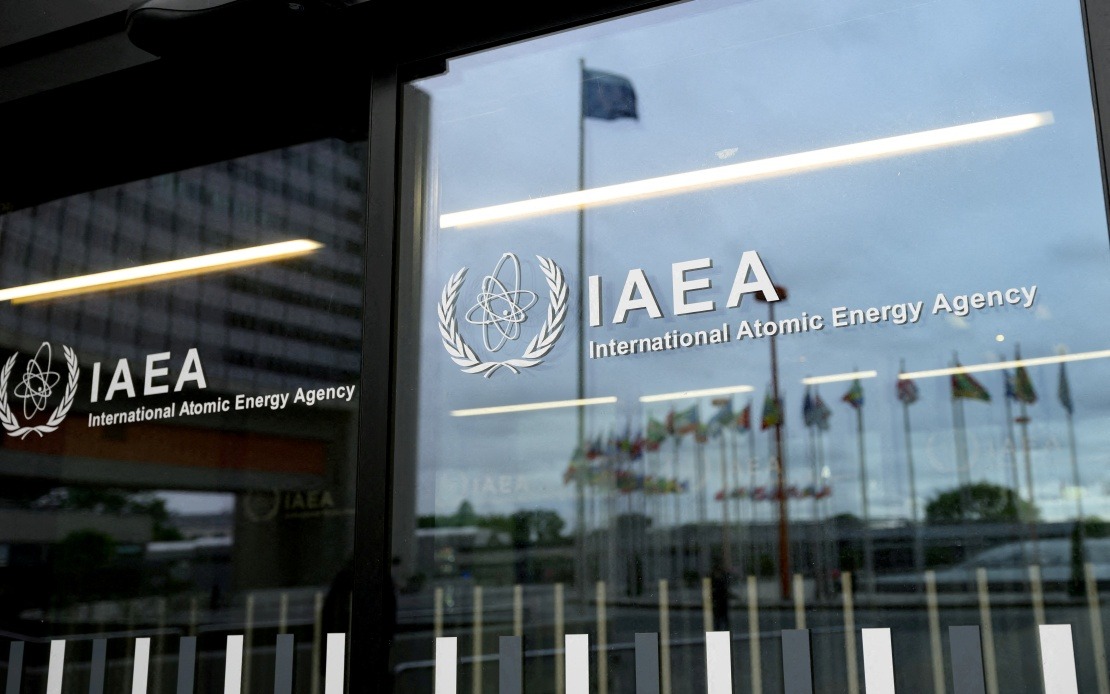
Iran has firmly rejected requests for International Atomic Energy Agency access to its nuclear installations, declaring that questions surrounding inspections will be negotiated exclusively as part of a final comprehensive agreement with the United States. Deputy Foreign Minister for Legal and International Affairs Kazem Gharibabadi made the position clear through social media, signalling that Tehran will not grant IAEA personnel entry to its facilities ahead of resolving the broader nuclear dispute with Washington.
Gharibabadi's statement represents a hardening of Iran's negotiating stance just days after the two nations signed a memorandum of understanding on June 18 that established a 60-day window for reaching a definitive nuclear accord. The Iranian diplomat explicitly tied any future inspections to what he termed "practical action to terminate all sanctions," effectively making comprehensive sanctions relief a prerequisite for IAEA access rather than a parallel process. This linkage suggests Tehran views nuclear transparency as a bargaining chip to be deployed only after securing economic concessions.
The timing of Iran's announcement proved particularly significant, coming directly after IAEA Director General Rafael Grossi indicated the agency would proceed with inspections in Iran based on the recently signed memorandum. Grossi's statement appeared to presuppose Iranian cooperation with inspection protocols, but Gharibabadi's swift rebuff exposed the gap between international expectations and Tehran's actual willingness to grant access. The deputy foreign minister also denied that any meeting had occurred between Iran's negotiating delegation and Grossi in Switzerland despite the director general's expressed desire for such engagement.
The standoff centres on three major nuclear complexes at Fordow, Natanz, and Isfahan, all of which sustained significant damage during the most recent military escalation in the Middle East. Iran's nuclear facilities have become focal points of international concern and regional conflict, with both the United States and Israel conducting extensive strikes against these installations during separate military campaigns spanning from late February through June 2025. The ongoing hostilities have left these sites in varying states of disrepair, complicating both operational capacity and the ability to conduct thorough inspections.
For Malaysian and Southeast Asian observers, the unfolding negotiations carry implications that extend beyond Iran's immediate nuclear situation. The region's energy security remains vulnerable to disruptions stemming from Middle Eastern tensions, particularly given heavy reliance on hydrocarbon imports and the critical importance of maritime shipping lanes passing through the Persian Gulf. Any prolonged deadlock between Iran and the United States could intensify regional volatility and affect global oil markets, with downstream effects on regional economies dependent on stable energy supplies.
The June 18 memorandum itself emerged as a significant diplomatic development, establishing the framework through which both parties could theoretically move toward a lasting nuclear settlement. The initial negotiating round occurred in Switzerland over Sunday and Monday, with delegations engaging in what appeared to be substantive discussions. However, the rapid disagreement over inspection protocols suggests deeper structural obstacles remain unresolved between the two nations, particularly regarding the sequencing of confidence-building measures and sanctions relief.
Iran's insistence that inspections be bundled within a final agreement rather than undertaken independently reflects a broader negotiating philosophy that views nuclear transparency through the lens of security concessions. From Tehran's perspective, allowing IAEA access before securing guaranteed sanctions removal would represent a unilateral Iranian concession with no reciprocal commitment from Washington. This calculation reflects historical precedent, given that Iran previously agreed to nuclear limitations under the 2015 Joint Comprehensive Plan of Action only to see those arrangements undermined when the United States withdrew in 2018.
Gharibabadi's statement also carries internal political significance within Iran, signalling to domestic constituencies that the government will not rush into agreements that compromise Iranian sovereignty or provide inspection access without corresponding economic benefits. The military establishment and conservative factions have long expressed skepticism toward international nuclear agreements, viewing them as potential vectors for espionage and technological interference. By tying inspections to sanctions removal, Gharibabadi appeases these constituencies while maintaining negotiating flexibility.
The 60-day negotiating window established by the memorandum creates considerable time pressure on both delegations. Should the parties fail to reach agreement within this window, the collapse of talks would likely trigger another cycle of escalation and military action. The recent bombing campaigns demonstrated the willingness of both the United States and Israel to pursue military options, suggesting that the diplomatic window, while presumably serious, exists under the shadow of potential renewed conflict.
For international nuclear governance, Iran's stance raises broader questions about the IAEA's capacity to function as an impartial technical body when inspections become entangled in geopolitical disputes. The agency's credibility rests on its ability to conduct monitoring independently of political considerations, yet increasingly the IAEA finds itself navigating conflicts where access itself becomes a contested political outcome. Other proliferation-prone states may observe how Iran negotiates its inspection terms, potentially establishing precedents for other nations seeking to negotiate nuclear agreements.
The disagreement also underscores persistent asymmetries in the negotiating environment. The United States possesses multiple leverage points, including the capacity to impose additional sanctions, conduct military operations, and restrict Iran's access to international financial systems. Iran, conversely, can manipulate the timeline through negotiating delays, demand maximum concessions as preconditions for cooperation, and maintain the implicit threat of nuclear escalation. Within this asymmetrical context, Tehran's conditioning of inspections on sanctions removal represents an attempt to extract maximum value from its only substantial bargaining asset.
Looking toward the compressed negotiating timeline ahead, whether the two parties can bridge their disagreement on inspection protocols will likely determine whether the memorandum yields a breakthrough or merely delays another round of conflict. Gharibabadi's remarks suggest Iran intends to drive a hard bargain, leveraging inspection access as one of several negotiating elements rather than treating it as a technical matter separable from political and economic dimensions. The coming weeks will reveal whether Washington shares this assessment or expects inspections to proceed as an independent confidence-building measure.

