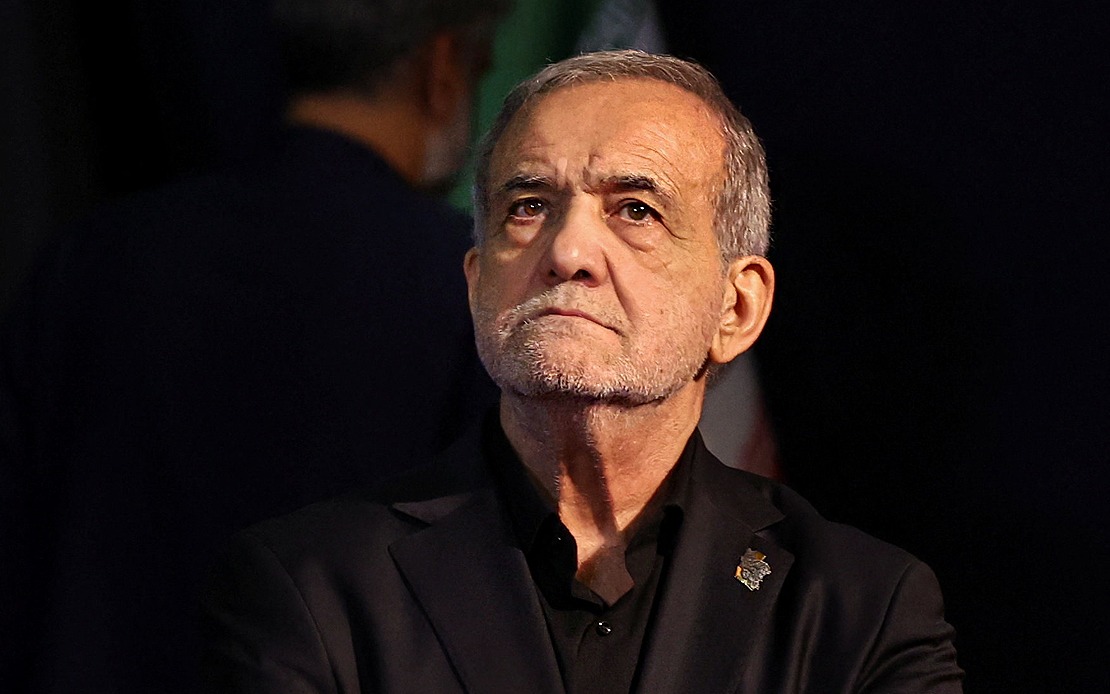
Iranian President Masoud Pezeshkian has formally called for pursuing legal action through international bodies to address damage inflicted on Iran's transport infrastructure, characterizing recent US military operations against civilian facilities as constituting war crimes. The declaration represents a significant escalation in Iran's diplomatic response to the attacks and signals the country's intention to leverage international legal mechanisms to address what it views as violations of international humanitarian law.
During a visit to the Ministry of Roads and Urban Development on Sunday, Pezeshkian conducted a comprehensive review of Iran's transport and logistics systems as part of his ongoing monitoring programme of government institutions. The visit underscored the significance the Iranian administration places on assessing the full scope of infrastructure vulnerabilities exposed by the recent military confrontation in the region. Officials briefed the president on the operational status of border terminals, ports, and the integrated network of road, rail, maritime and air transport systems that form the backbone of Iran's civilian economy.
The briefing extended to critical supply chain issues, with ministry officials detailing how damage has affected the distribution and movement of essential goods throughout the country. Roads and Urban Development Minister Farzaneh Sadegh presented a detailed accounting of the destruction, cataloguing harm to port facilities, border terminals, bridges, road networks, railway infrastructure, and the logistics hubs that support domestic commerce. The comprehensive nature of the damage assessment suggests that the attacks disrupted multiple layers of Iran's transportation network simultaneously.
In response to the damage report, Pezeshkian issued directives aimed at mitigating the disruption to civilian life and economic activity. He ordered accelerated reconstruction of the damaged facilities while simultaneously emphasizing the activation of alternative transportation routes as a contingency measure. These instructions reflect a dual-track strategy: directly repairing critical infrastructure while maintaining continuity of services through redundant pathways. The president also mandated measures to strengthen the overall resilience of the transport network to withstand future potential disruptions.
Pezeshkian publicly commended the ministry's workforce for their efforts in sustaining transport services during the crisis period. His remarks emphasized the role of continued public cooperation alongside government action in thwarting what he characterised as attempts by adversaries to undermine Iran's infrastructure resilience. The framing positions infrastructure maintenance as a matter of national persistence and collective resolve rather than merely technical reconstruction.
The president's statements follow a recent period of heightened military tension in which US air operations targeted Iranian civilian infrastructure over a span of nearly two weeks. The attacks specifically focused on bridges and roads in southern Iran, indicating a systematic approach to degrading transportation capacity. According to Iranian accounts, the US campaign halted only after Iran's armed forces conducted retaliatory military operations that compelled a cessation of the attacks.
Iran's decision to pursue international legal remedies reflects a strategic choice to complement military deterrence with diplomatic and legal pressure. By characterizing the attacks as war crimes and invoking international legal mechanisms, Iran aims to establish a formal record of alleged violations and potentially mobilize international opinion and legal scrutiny against the United States. This approach acknowledges the limits of military responses alone while seeking to impose costs through legal and reputational channels.
For Southeast Asian nations including Malaysia, Iran's case carries implications regarding civilian infrastructure protection in conflict scenarios and the application of international humanitarian law. The incident highlights how civilian transport systems that are economically vital during peacetime become vulnerable military targets in regional conflicts. Malaysia and other regional states must consider how such precedents might affect their own infrastructure security calculations and their positions on international humanitarian law enforcement.
The broader geopolitical context involves escalating US-Iran tensions that have periodically destabilized the region over several years. Iran's emphasis on international legal processes suggests it may be signalling to regional partners and international bodies that it intends to pursue non-military mechanisms for accountability. This could influence how other nations in the Middle East and Asia respond to similar incidents and reinforces the significance of independent international mechanisms for investigating alleged violations of the laws of war.
The reconstruction imperative Pezeshkian outlined will require substantial financial and technical resources over months or potentially years. The scale of the damage raises questions about how Iran will finance recovery while maintaining sanctions-affected economic conditions. This reconstruction challenge may also necessitate technological and logistical assistance from external partners, potentially shaping Iran's diplomatic engagement with various nations during the recovery period.
Pezeshkian's framing of infrastructure resilience as a matter of national will rather than purely technical capacity reflects how military crises reshape domestic governance priorities. The emphasis on alternative routes and redundancy suggests Iran is pursuing systematic hardening of its transport networks against future disruption. This long-term infrastructure adaptation in response to military vulnerability represents a significant shift in how Iran structures its civilian economy.
The international legal dimension remains uncertain regarding potential outcomes. The International Court of Justice and other bodies have limited enforcement mechanisms, and powerful nations often resist formal accountability proceedings. Nevertheless, Iran's pursuit of such avenues contributes to building a documented record of alleged violations that could carry diplomatic weight and inform future international negotiations or reconciliation efforts should the regional situation eventually de-escalate.

