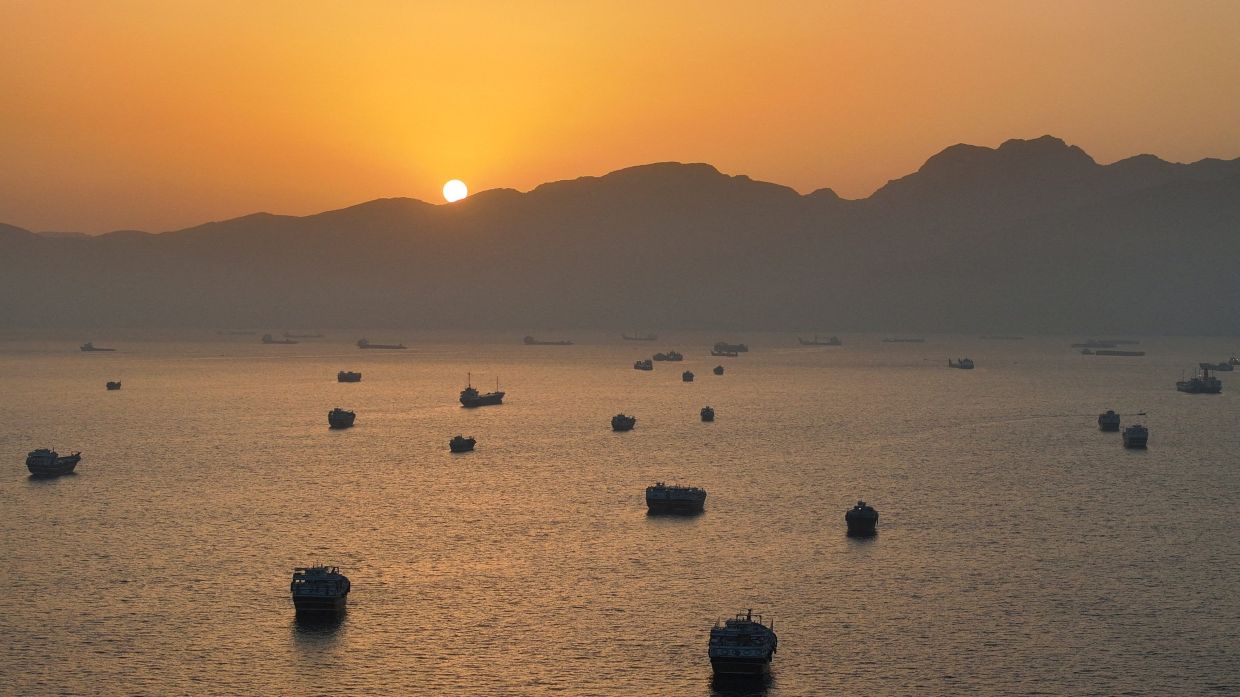
The interim agreement between Iran and the United States is beginning to have tangible effects on global energy markets, as major crude oil tankers resume movement through one of the world's most critical maritime chokepoints. On Wednesday, three significantly-sized vessels carrying approximately 5 million barrels of crude oil commenced their passages through the Strait of Hormuz, marking a notable acceleration in the release of petroleum supplies that had accumulated in the Persian Gulf region during the ongoing Middle East conflict. Shipping data analysed by LSEG and Kpler confirmed that the movement represents a substantial thaw in what had become an increasingly constrictive bottleneck for global energy flows, with two of the departing vessels bound for Asian markets.
The South Korean-flagged VL Breeze, a Very Large Crude Carrier owned by refiner Hyundai Oilbank, transited the strait with 2 million barrels of mixed Qatari condensate and crude from Abu Dhabi destined for the Daesan refinery facility in South Korea. This passage demonstrates the particular importance of the deal to Asian energy importers, who have historically relied on Gulf supplies for a significant proportion of their petroleum requirements. The vessel's movement through the strait follows weeks of suspension, during which shipping routes became increasingly congested as operators and charterers grappled with heightened security concerns and maritime disruptions stemming from regional hostilities.
Two additional tankers operated under Liberian flags followed in parallel, each bringing essential crude supplies to different Asian destinations. The Plata Carrier, chartered by Indian Oil Corporation, departed with 2 million barrels of Saudi Arabian crude, signalling renewed commercial engagement between major Gulf producers and India's energy sector. Concurrently, the Suezmax vessel Prudent Warrior moved Iraqi Basrah crude—approximately 1 million barrels—toward the Omani port of Sohar, establishing a secondary supply corridor that regional energy markets have come to depend upon. The choreography of these departures reflects careful coordination among shipping companies, energy traders, and Gulf maritime authorities seeking to restore confidence in the region's transportation infrastructure.
According to analysis conducted by Kpler and Vortexa, the crude oil pipeline had become severely congested prior to this week, with estimates suggesting that as much as 90 million barrels lay immobilised within the Persian Gulf awaiting clearance to proceed to international markets. This inventory buildup carried significant economic implications not merely for regional actors but for global energy consumers and refineries worldwide, many of which depend on Gulf supplies to meet operational capacity and pricing stability. The logjam had created uncertainty in forward-contract markets and constrained the ability of downstream industries in Asia, Europe, and beyond to secure feedstock at competitive rates.
South Korea's maritime ministry provided additional context regarding the broader pattern of vessel movements, confirming that four vessels operated by South Korean shipping interests successfully transited the strait and were sailing toward their designated ports. Of these four, one was proceeding directly to South Korea while the remaining three were destined for third-country ports, expanding the geographic reach of resumed energy commerce. However, the statistical picture remains sobering: of the 26 vessels that became stranded at the outset of the Middle East conflict, 18 remain within the Gulf awaiting their opportunity to transit. This means that despite the encouraging progress reflected in recent departures, substantially more congestion must be cleared before normal shipping patterns can be considered fully restored.
The technical question of whether vessels are following designated maritime corridors established through cooperation between Oman and the International Maritime Organization adds another layer to understanding how the region's recovery is unfolding. Oman has designated two separate temporary shipping lanes—one traversing north of the traditional corridor and another to the south—to provide alternative pathways that enhance safety and reduce perceived risk for commercial operators. The sultanate simultaneously announced its commitment to maintaining open passage through the Strait of Hormuz without levying any supplementary tolls, a significant commitment given its geographic position and the strategic value of its cooperation. This arrangement reflects Oman's interest in stability and its role as a diplomatic intermediary in regional tensions.
Liquefied natural gas shipments are also showing signs of resumed momentum, with nine empty LNG carrier vessels now documented as having transited the strait to load cargoes from Qatari terminals—the highest number recorded since hostilities commenced in the region. The recent transit of the Shandong Redwood and Milaha Qatar represents confirmation that LNG supply chains, which had been severely disrupted, are gradually returning to functionality. Qatar's energy sector holds particular significance for global LNG markets, and renewed loading operations signal an important psychological and commercial turning point for liquefied gas availability across Europe, Asia, and other consuming regions.
The timeframe for full normalisation of Qatari LNG production appears measurable rather than indefinite. According to reporting from the Financial Times, Qatar's Prime Minister Sheikh Mohammed bin Abdulrahman al-Thani indicated that the nation would restore its liquefied natural gas production to normal operational levels within the span of several weeks. This projection offers encouraging news for global LNG consumers who have faced elevated prices and supply anxiety throughout the recent period of heightened regional tension. For Southeast Asian nations heavily dependent on LNG imports—including Malaysia, Singapore, and regional manufacturing hubs—the prospect of restored Qatari output carries substantial implications for energy costs and industrial competitiveness.
The broader implications for Malaysian and regional energy markets are multifaceted and consequential. Malaysia's own energy sector, encompassing both crude oil exports and substantial petrochemical refining capacity, functions within a global market deeply influenced by Gulf supply dynamics and pricing trends. The restoration of normal flows through the Strait of Hormuz should moderate upward pressure on energy costs that had accumulated during the disruption period. For Southeast Asian manufacturers and energy-intensive industries, the resumption of stable Gulf supply patterns represents relief from the elevated input costs that had accumulated during weeks of constrained availability and heightened risk premiums.
The interim agreement between Iran and the United States appears to be generating tangible commercial outcomes more rapidly than many observers anticipated, suggesting that diplomatic progress can translate into market-level functionality within relatively compressed timeframes. However, the persistence of 18 stranded vessels within the Gulf indicates that substantial work remains before the region's maritime traffic fully normalises. The success of this initial wave of departures will likely influence operator confidence and determine whether the momentum continues or faces new obstacles, making the coming weeks a critical test of whether the diplomatic breakthrough can sustain practical implementation in an environment characterised by ongoing uncertainty and geopolitical complexity.

