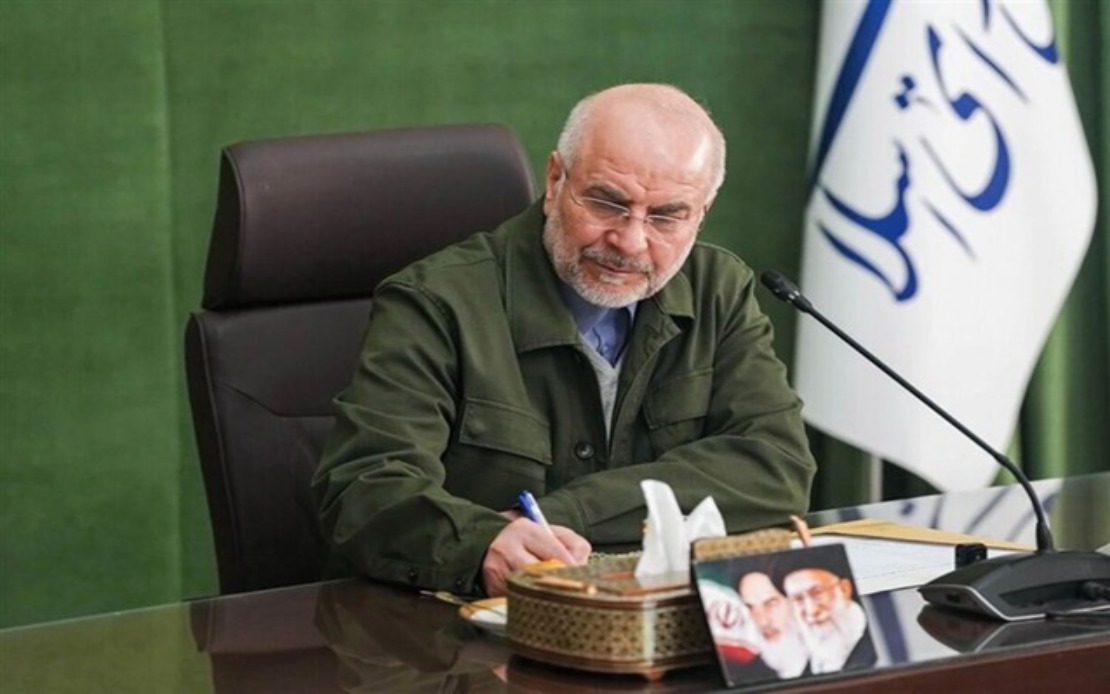
Iran's Parliament Speaker Mohammad Bagher Ghalibaf, who also serves as a principal negotiator for Tehran, has flatly contradicted assertions from Washington regarding the intended use of recently unfrozen Iranian assets. Speaking through social media on Thursday, Ghalibaf dismissed claims that the released funds would be directed towards purchasing United States agricultural commodities, instead characterizing such suggestions as fundamentally misleading. His statement underscores the persistent friction between the two nations even as they formally pursue diplomatic engagement under an agreed framework.
The Iranian official's pointed rejection came in response to recent pronouncements from senior US officials who had outlined specific plans for the unfrozen capital. Vice President JD Vance had suggested on Monday that the funds could facilitate purchases of American soybeans, corn, and wheat. President Donald Trump subsequently escalated these claims on Tuesday, asserting that the money would be held in a US-controlled escrow arrangement and deployed exclusively for acquiring American food and medical supplies, with particular emphasis on grain products.
Ghalibaf's carefully worded statement carried deeper significance than a simple commercial disagreement. His invocation of "decades of mistrust" referenced the historical rupture in US-Iran relations, positioning the current asset dispute within a longer arc of antagonism. The phrase suggested that American expectations about Iranian spending were naive given the profound alienation between the two capitals, implying that Tehran would never voluntarily submit to Washington's prescriptions about how to use its own recovered resources.
Other Tehran officials have reinforced this position with varying degrees of emphasis. On Tuesday, Iran's Foreign Ministry spokesperson Esmaeil Baghaei provided a more measured technical response, stating that Iran retains complete discretion to deploy the unfrozen assets in alignment with its national economic priorities, free from external conditions. Baghaei further emphasized that purchasing decisions would follow standard commercial criteria, namely competitive pricing and product quality—implicit language suggesting that American goods would not receive preferential treatment simply because the US had initially held the capital.
The Central Bank Governor, Abdolnaser Hemmati, adopted yet another rhetorical approach, framing the issue in terms of Iranian sovereignty and commercial logic. Hemmati stated unambiguously that Iran bears no legal or political obligation to purchase any US agricultural products whatsoever. However, he introduced a conditional element, acknowledging that Iranian entities would not categorically exclude American suppliers if they could offer goods at internationally competitive rates. This formulation preserved Iran's autonomy while leaving the theoretical door slightly ajar to US exports.
The fundamental disagreement reflects a clash of negotiating assumptions between Washington and Tehran. The Trump administration's proposal to place Iranian assets in an American-controlled escrow account appears designed to guarantee that released funds would flow directly back into the US economy through agricultural and pharmaceutical purchases. From an Iranian perspective, such an arrangement would represent a hollow victory—the assets would technically be unfrozen, but their use would remain constrained by Washington, effectively perpetuating the sanctions regime in different form.
This divide emerged within the context of a June 18 memorandum of understanding signed by both sides, which established a framework for sixty days of negotiations aimed at reaching a comprehensive agreement on Iran's nuclear programme and the removal of international sanctions. The MoU represents the formal restart of diplomatic engagement, yet the rapid emergence of disputes over implementation mechanics suggests that fundamental trust deficits persist beneath the surface of official cordiality.
Negotiations resumed during a recent round of talks held in Switzerland, where representatives from both delegations convened to discuss pathways toward a final accord. Despite these in-person meetings, the public statements from Iranian officials reveal that negotiators remain far apart on crucial details concerning how sanctions relief would function in practice. The disagreement over asset usage is symptomatic of deeper uncertainties about verification mechanisms, sequencing of concessions, and the credibility of mutual commitments.
For regional observers, particularly in Southeast Asia where many nations maintain commercial relationships with both Iran and the United States, these diplomatic tensions carry significant implications. Should negotiations stall or collapse, the resulting instability could further disrupt global energy markets and disrupt supply chains. Conversely, if both sides can bridge their current disagreements and reach a comprehensive agreement, the normalization of Iran's international economic participation could reshape regional trade patterns and investment flows throughout Asia.
The Central Bank Governor's qualified openness to purchasing US goods at competitive prices may ultimately provide a face-saving pathway for both sides. Such an arrangement would permit American agricultural exports to flow to Iran, satisfying domestic political constituencies within the United States who champion agricultural sales, while simultaneously preserving Iran's assertion that any such purchases reflect commercial choice rather than political compulsion. This compromise framework, however, remains unresolved in current negotiations.
The immediate challenge confronting both delegations involves translating broad agreement on nuclear matters into specific implementation protocols that address the asset question, among numerous other technical issues. The Malaysian and broader Southeast Asian business communities are watching carefully, as the outcome will determine whether Iranian enterprises become viable trading partners in the coming years or remain isolated from international commerce. The resolution of this seemingly narrow dispute about agricultural commodities may thus prove unexpectedly consequential for global commerce and regional prosperity.

