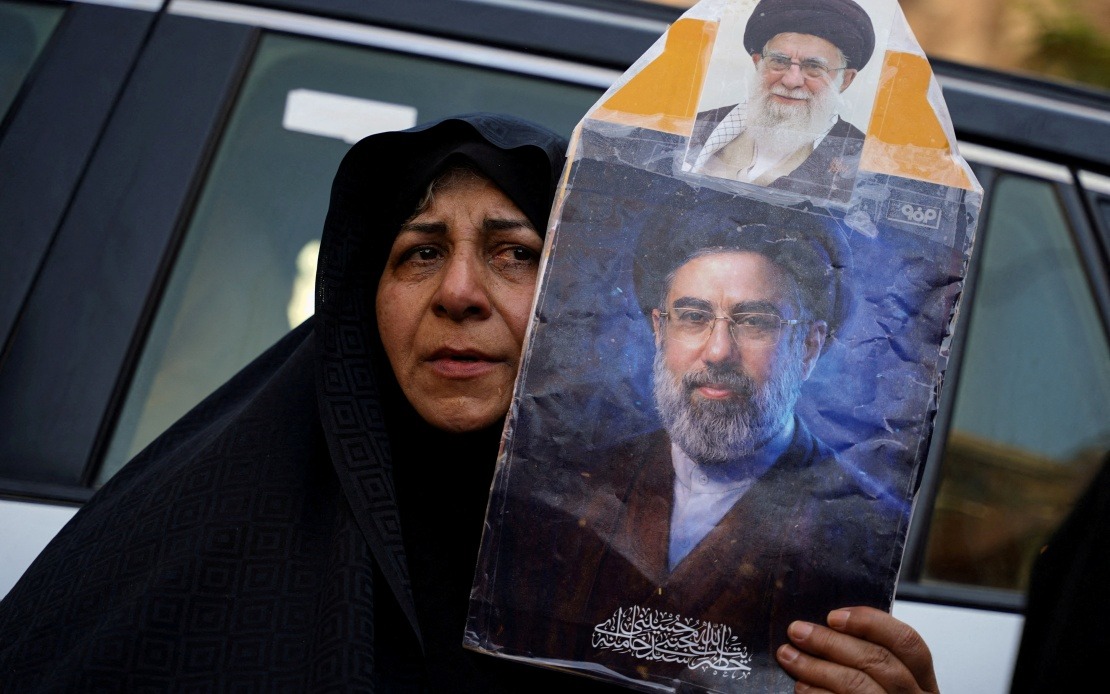
The credibility of US President Donald Trump has become a flashpoint in deteriorating relations between Washington and Tehran, with Iran's Supreme Leader Khamenei taking the extraordinary step of publicly questioning whether the American leader's commitment to international agreements carries any weight. Speaking through Iranian state media on Saturday, Khamenei characterized recent US actions as further evidence that Trump's signature on binding international documents is essentially meaningless, a rhetorical escalation that reflects the profound breakdown in trust between the two nations just weeks after they negotiated what was supposed to be a stabilizing accord.
The core dispute centres on a memorandum of understanding signed on June 18 between Iranian President Masoud Pezeshkian and Trump, which was intended to chart a path toward comprehensive negotiations within a 60-day timeframe. That timeline now appears hopelessly optimistic given the military operations currently unfolding across the Middle East. Khamenei's assertion that Washington has systematically violated the agreement's terms carries particular weight in Iran's political discourse, where scepticism about American reliability has deep historical roots dating back decades of conflict and sanctions.
The Iranian Supreme Leader's language reflected the depth of current frustration, describing the US position as having been unmasked to reveal its true character. He characterized Washington's approach not merely as diplomatic failure but as symptomatic of what he termed America's inherent dishonesty and illogical decision-making. This represents more than standard diplomatic recrimination; it signals to the Iranian public and regional allies that the government views the entire negotiation framework as compromised beyond repair in its current form.
What makes Khamenei's statement particularly significant is its implicit threat of consequences. He explicitly warned that if the US persisted with what Tehran characterises as warmongering and continued imposing costs on Iran, the Iranian government and broader regional resistance movements would deliver what he described as unforgettable lessons. Such language, when employed by the Supreme Leader in an official capacity, typically foreshadows an escalation in military or asymmetrical responses rather than merely rhetorical posturing.
The practical dimensions of this breakdown became evident almost immediately when Iran's Deputy Foreign Minister for Legal and International Affairs Kazem Gharibabadi announced that Tehran has ceased compliance with its obligations under the memorandum. This step represents a formal dissolution of Iran's commitments and signals a return to previous patterns of behaviour, eliminating whatever temporary restraint the agreement had imposed on Tehran's actions. For Malaysian and Southeast Asian observers, this escalation presents serious concerns regarding regional stability and potential disruptions to global energy markets and shipping lanes that directly affect trade flows through the region.
The current military situation on the ground has already moved beyond the bounds of the failed agreement. The United States has conducted multiple strike operations against Iranian targets in recent days, while Iran has responded with its own retaliatory attacks against American military installations and facilities throughout the region. This tit-for-tat cycle, if left unchecked, could spiral into a broader conflict that would have profound ramifications far beyond the immediate Middle Eastern theatre. For Southeast Asia, such escalation would inevitably impact energy security, particularly for nations heavily dependent on Gulf oil and gas imports.
The timing and trajectory of this deterioration raise questions about whether the June agreement was ever realistically designed to succeed or whether it represented a temporary accommodation destined to collapse under the weight of mutual distrust. The rapid unravelling suggests that the underlying positions of both parties remained fundamentally incompatible, with neither side genuinely prepared to make the compromises necessary for sustainable peace. Khamenei's public attack on Trump's credibility implies that the Iranian leadership views the entire exercise as a tactical manoeuvre rather than a genuine peace initiative, a perspective that will likely harden positions on both sides.
For regional analysts and international observers, the current crisis underscores the fragility of negotiated settlements when implemented without addressing the deeper structural tensions between parties. The agreement appears to have lacked sufficient enforcement mechanisms or verification protocols to prevent the accusations of violations that have now derailed the entire process. This failure holds lessons for other multilateral agreements in the region and globally, particularly regarding the necessity of robust implementation frameworks backed by credible third-party oversight.
The escalating rhetoric and military operations also carry implications for broader Middle Eastern alignments and the positions adopted by regional powers. Countries that had tentatively welcomed the June agreement as a stabilizing force now face renewed uncertainty and the possibility of being drawn into a larger conflict. The absence of a functioning diplomatic channel between Washington and Tehran, combined with the mutual recriminations now dominating public discourse, severely constrains the possibility of de-escalation through negotiated settlements in the near term.
For Malaysia and other ASEAN nations, this deterioration requires careful diplomatic positioning. The region has a demonstrated interest in maintaining stable international relations and avoiding entanglement in great power conflicts. The collapse of US-Iran negotiations demonstrates the risks of regional instability spreading to affect shipping, energy security, and investment flows that are central to Southeast Asian prosperity. Malaysian policymakers must monitor these developments closely while considering how best to support international efforts toward renewed dialogue once the current military phase exhausts itself, as such cycles historically eventually do.

