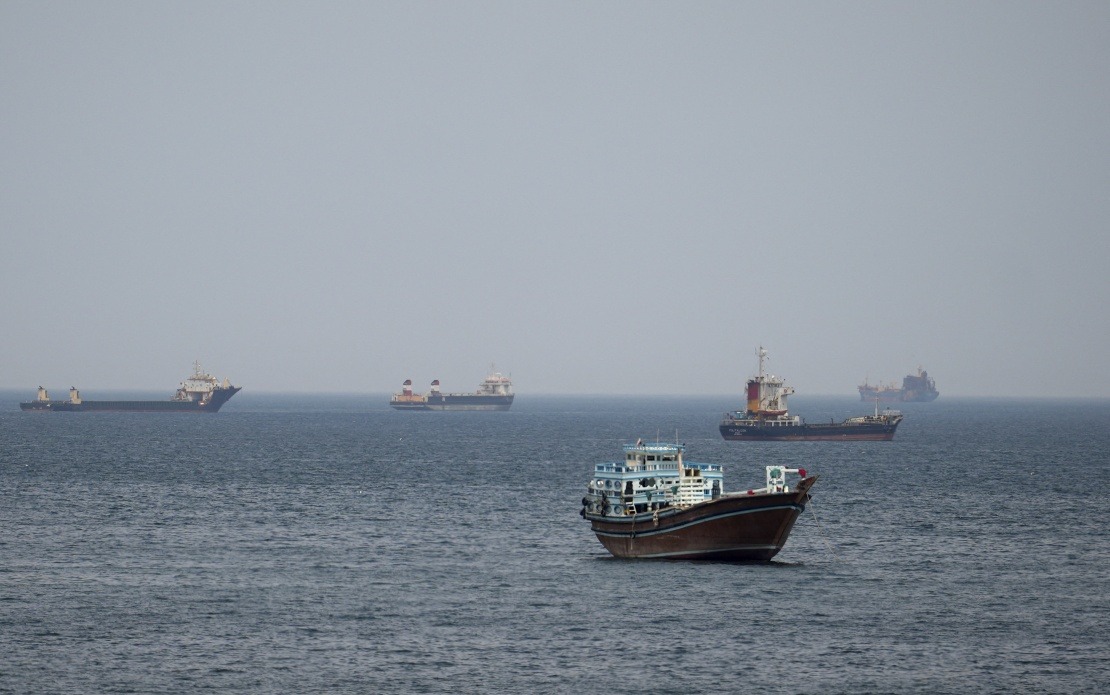
Iran's chief negotiator and Parliament Speaker Mohammad Bagher Qalibaf has arrived in Oman to explore fresh arrangements for governing the Strait of Hormuz, one of the world's most commercially vital maritime passages. Accompanying him is Foreign Minister Abbas Araghchi, signalling the diplomatic importance Tehran places on the discussions. The visit underscores ongoing regional efforts to establish greater stability around this critical chokepoint, through which roughly one-fifth of global petroleum trade transits annually.
Omani Foreign Minister Badr Albusaidi welcomed Qalibaf upon his arrival on Monday, reflecting Muscat's central role as a mediating power in Middle Eastern affairs. The sultanate, with its strategic position on the Persian Gulf and historical tradition of neutrality, has positioned itself as a natural venue for dialogue between regional and international powers. For Malaysia and other Southeast Asian economies heavily dependent on Middle Eastern oil and stable sea lanes, Oman's diplomatic engagement carries considerable weight, as disruptions to the Strait could reverberate across global energy markets and maritime trade routes.
Qalibaf's visit comes immediately after intensive negotiations with United States representatives in Switzerland, where he and Araghchi participated in eighteen hours of discussions brokered by Pakistan and Qatar. These talks focused on implementing a memorandum of understanding recently concluded between Tehran and Washington. The sequential nature of these diplomatic moves—first the US engagement, then the Oman consultation—suggests a carefully choreographed diplomatic calendar designed to build momentum for de-escalation and institutional frameworks around the Strait.
The negotiations in Oman will centre on crafting a mutually acceptable management structure for the Strait of Hormuz. Such an arrangement would represent a significant diplomatic achievement, given the region's historical tensions and competing strategic interests. For Malaysian policymakers and businesses, stable governance of this waterway directly affects supply chain reliability and energy security. Any framework that reduces the risk of unilateral actions or blockades would provide greater predictability for Southeast Asian shipping and energy imports.
In their official statement, Muscat and Tehran jointly emphasised the importance of leveraging the current diplomatic window to advance peace initiatives and reinforce de-escalation measures. Both nations stressed adherence to international law and principles of neighbourly conduct, language that signals a commitment to rules-based approaches rather than unilateral assertions. This rhetorical alignment suggests genuine common ground on the need for structured, predictable arrangements governing maritime traffic through the Strait.
Preservation of regional security and protection of navigation rights through the Strait and broader international waterways featured prominently in the discussions. The emphasis on safe passage reflects concerns shared across the region about freedom of movement for commercial vessels. Southeast Asian nations, which rely heavily on unobstructed access to Middle Eastern resources and maintain significant maritime trade with partners on both sides of the Strait, have a direct stake in such guarantees. Any framework that institutionalises safe passage protections could enhance confidence among maritime operators and reduce insurance premiums for shipping through the region.
Qalibaf is additionally scheduled to meet with Omani Sultan Haitham bin Tariq to discuss bilateral cooperation and broader regional coordination mechanisms. Such high-level engagement signals that these discussions extend beyond immediate crisis management into longer-term relationship building and institutionalisation of dialogue channels. The Sultan's involvement underscores Oman's commitment to its mediating role and its willingness to host senior officials from multiple parties seeking to resolve tensions.
The diplomatic sequence involving mediation by Pakistan and Qatar, combined with Oman's hosting role, demonstrates how smaller, strategically positioned states have become indispensable to major power negotiations in the Middle East. This pattern holds lessons for Southeast Asia, where regional organisations and non-aligned nations increasingly serve as venues and facilitators for dialogue between competing interests. Malaysia's own experience in hosting regional forums and maintaining balanced relationships across dividing lines may offer insights for broader understanding of how medium-sized powers contribute to conflict resolution.
From a Southeast Asian perspective, the successful negotiation of a Hormuz management framework could have spillover effects on maritime cooperation and confidence-building in regional waters closer to home. If Iran and international partners can establish transparent, rule-based mechanisms for governing sensitive shipping lanes, similar approaches might be adapted to address maritime security challenges in the Strait of Malacca and South China Sea. The principles of international law and neighbourly conduct being invoked in Oman resonate with ongoing efforts in Southeast Asia to establish clearer norms for maritime conduct.
The timing of these diplomatic initiatives reflects a broader pattern of renewed engagement between Tehran and external actors following years of heightened tensions. Whether these talks will yield durable institutional arrangements remains uncertain, but the willingness of multiple parties to invest diplomatic capital in the process suggests recognition of mutual interests in stability. For Malaysia and other nations dependent on secure energy supplies and predictable maritime trade, the success or failure of these negotiations carries tangible consequences that extend far beyond the Middle East itself.

