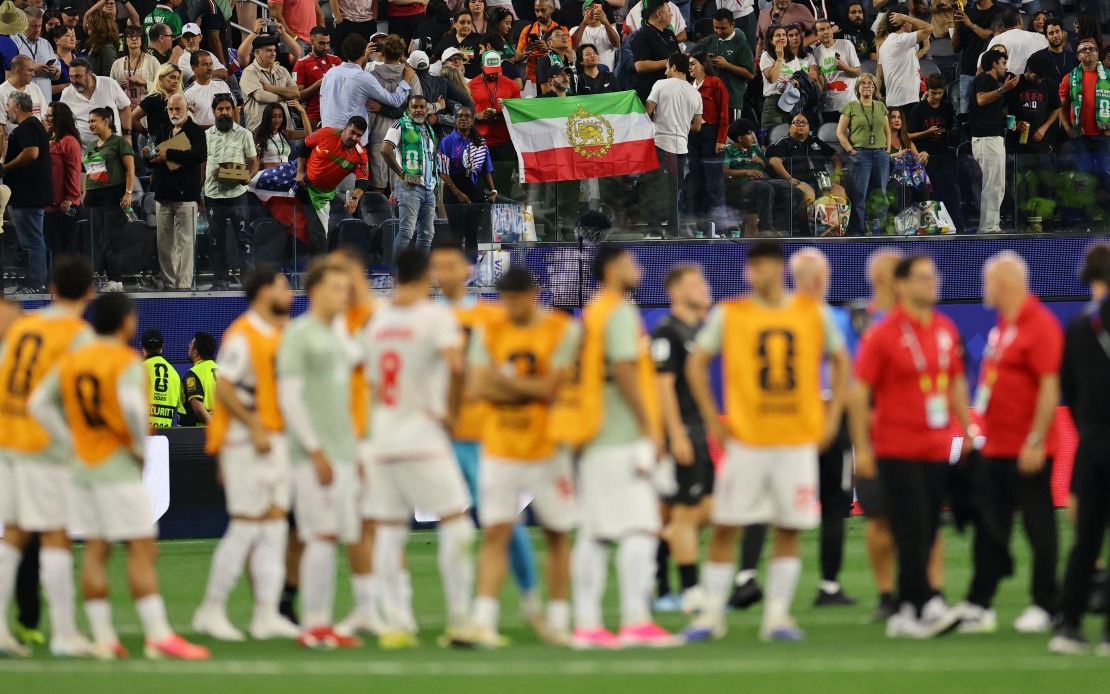
Iran's World Cup campaign has been marred by logistical disruptions that go far beyond typical tournament inconveniences, according to head coach Amir Ghalenoei, who characterizes his squad as the most constrained outfit competing in the global football championship. Speaking to international media in Istanbul, the Iranian manager revealed that his team faced sudden orders to vacate their Los Angeles training headquarters shortly after completing their opening fixture against New Zealand on Monday evening, contradicting earlier expectations that they would remain overnight to conduct recovery protocols.
The forced relocation represents a significant departure from standard tournament protocols that typically prioritize player welfare and recovery between matches. Ghalenoei explained that the Iranian delegation had arranged to spend the night in California and conduct scheduled recovery activities on Tuesday morning, a standard practice in professional football to manage fatigue and prevent injuries. Instead, officials issued an immediate departure order once the final whistle sounded, forcing the team into an extended journey to their alternative base in Mexico.
The physical toll of such sudden travel cannot be understated in the context of international football. Players require specific recovery windows following matches to address muscle fatigue, soreness, and mental exhaustion. The compressed timeline forced upon Iran's squad meant extended hours in transit, disrupted sleep schedules, and minimal opportunity for the kind of structured recovery that other national teams likely enjoyed. This disadvantage becomes particularly pronounced early in a tournament when conditioning and injury prevention form the foundation for sustained performance.
Ghalenoei declined to identify which authority issued the departure command, leaving the matter ambiguous regarding whether the instruction originated from FIFA, United States government officials, or tournament organizers. However, Iran's team captain Mehdi Taremi appeared to offer a political context to the controversy by noting that FIFA President Gianni Infantino had visited the team's locker room immediately after Monday's match. Taremi's cryptic reference to tensions between Washington and Tehran suggests that broader geopolitical dynamics may be influencing decisions that ostensibly should be purely logistical.
The statement carries particular resonance given the timing of the remarks, as international media reports indicated that a peace accord between the United States and Iran was expected to be finalized within the same week. The notion that a 100-day military conflict between the two nations could influence treatment of a sporting delegation reveals how deeply international politics can penetrate supposedly neutral sporting events. Taremi's apparent allusion to this context—"everyone knows it" and "you know where we are"—underscores the complexity facing Iranian athletes competing on the international stage.
Iran's logistical challenges preceded the World Cup match itself. The national team initially planned to establish their tournament base in Tucson, Arizona, a standard arrangement for international squads participating in North American competitions. However, visa complications and administrative obstacles forced a relocation to Tijuana, Mexico, in late May, shifting the team significantly further from the primary tournament venues and their original accommodation plans. This initial disruption alone created an unusual preparation scenario for a squad attempting to compete at the highest level.
The comparison Ghalenoei draws between Iran and other World Cup participants is telling. Every national team competing in a tournament faces logistical complexities, but the Iranian coach's assertion that his squad remains uniquely "repressed" suggests a qualitative difference in the obstacles they encounter. While other teams benefit from standardized protocols ensuring adequate recovery time and stable bases of operations, Iran appears to face obstacles that extend beyond routine tournament management.
For Malaysian readers and Southeast Asian observers, the situation illuminates broader questions about sporting autonomy and the intrusion of international politics into athletic competition. The region has witnessed numerous instances where geopolitical tensions affect sporting arrangements, from visa disputes to venue changes. The Iranian team's experience underscores how developing nations and teams from geopolitically sensitive regions may face disadvantages that wealthier, diplomatically privileged nations avoid.
The timing of the World Cup match and the simultaneous peace negotiations between Washington and Tehran raises intriguing questions about whether the treatment of Iran's football delegation reflects deliberate political messaging or stems from genuine logistical constraints. International relations experts might view such treatment through the lens of diplomatic signaling, yet the direct impact falls upon athletes whose performance and career trajectories are affected by circumstances beyond their control.
Iran's situation also highlights the ongoing tension between FIFA's stated commitment to neutrality and the organization's vulnerability to pressure from powerful nations. While the global sports federation claims to operate independently of political considerations, incidents such as this suggest that diplomatic and governmental influence can shape tournament arrangements in ways that advantage certain nations over others. The presence of Infantino in the Iranian team's locker room, regardless of his stated intentions to provide support, symbolizes the intersection of international diplomacy and sporting governance.
Moving forward, the Iranian team must navigate their tournament commitments while operating from a disadvantaged logistical position. The psychological impact of feeling constrained and monitored during an international competition cannot be easily quantified but remains a genuine concern for player performance and team cohesion. How the squad responds to these challenges—whether channeling frustration into motivation or allowing disruption to affect their play—will form a crucial subplot in their World Cup campaign and broader regional sporting narratives.