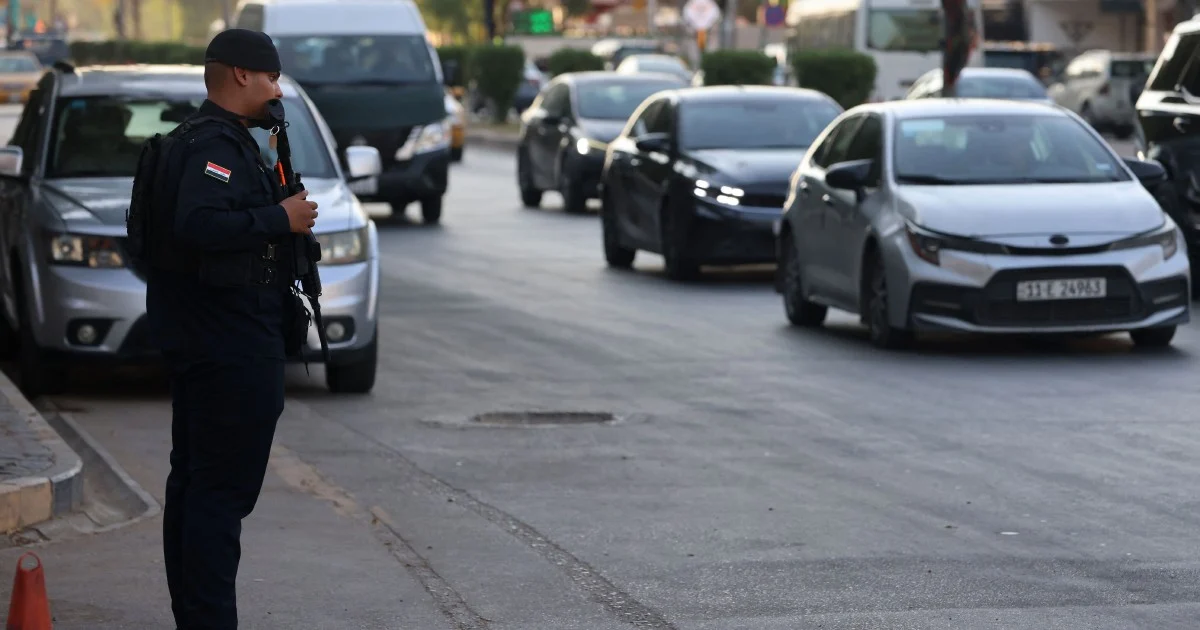
Iraqi law enforcement authorities executed a substantial anti-corruption operation on Sunday, detaining 47 officials across various government echelons as part of an intensifying crackdown against graft. Among those apprehended were several members of parliament, a particularly striking development given the legislative body's historical resistance to accountability measures. The operation, confirmed through official state media channels, represents one of Baghdad's more ambitious enforcement actions targeting high-level corruption in recent months.
The timing and scale of the arrests suggest a sustained commitment from Iraq's anti-corruption apparatus to address systemic malfeasance that has long undercut institutional performance and public trust. Corruption remains one of Iraq's most intractable governance challenges, with international rankings consistently placing the country among the world's most graft-prone nations. The involvement of legislative figures in the detentions signals a willingness to pursue even powerful figures within the political establishment, a move that could strengthen the credibility of anti-corruption efforts if pursued consistently.
Iraq's battle against corruption has intensified amid growing public pressure and economic strain. Years of conflict disrupted institutional capacity-building, creating administrative vacuums that entrenched corrupt practices across ministries, security forces, and service delivery agencies. The petrodollar-dependent economy has historically concentrated wealth and decision-making authority within narrow power networks, facilitating embezzlement, nepotistic hiring, and contract fraud. Recent anti-corruption campaigns, while generating headlines, have produced mixed enforcement outcomes, with observers questioning whether arrests translate into sustained prosecution and meaningful institutional reform.
The political dimensions of such enforcement operations warrant careful scrutiny, particularly given Iraq's factionalised parliament where corruption investigations occasionally serve as instruments of inter-party competition rather than principled accountability. Previous anti-corruption waves have seen prosecutions wax and wane depending on shifting political alliances and power configurations. Transparency advocates have urged Iraqi authorities to demonstrate evenhanded application of anti-corruption law across all factional groupings to avoid perceptions of selective enforcement that would undermine the legitimacy of broader reform efforts.
International observers and multilateral institutions have long flagged corruption as a critical obstacle to Iraq's post-conflict stabilisation and economic development. Systemic graft diverts resources intended for infrastructure, healthcare, and education, directly impairing the government's capacity to deliver public services and consolidate territorial control beyond Baghdad. The financial impact extends beyond direct theft; corruption erodes investor confidence, discourages foreign direct investment, and constrains revenue collection, ultimately reducing funds available for state reconstruction and reconciliation initiatives.
For Southeast Asian nations, Iraq's experience offers cautionary lessons about corruption's institutional corrosiveness. While Malaysia, Indonesia, and other regional states maintain more developed governance frameworks and independent judiciaries than post-2003 Iraq, systematic corruption can undermine even established institutions. The Malaysian Anti-Corruption Commission's successful prosecutions of high-ranking officials in recent years demonstrate that political will and institutional independence remain essential prerequisites for effective enforcement, regardless of a nation's development level or governance maturity.
Iraq's anti-corruption drive also reflects evolving expectations about governmental accountability in the Middle East and North Africa, where civil society mobilisation has increasingly centred on graft as a governance issue transcending sectarian and ideological divisions. Mass protests in Iraq in 2019 and subsequent years prominently featured anti-corruption messaging alongside demands for improved services and reduced foreign influence. This popular pressure has created political incentives for visible enforcement action, though translating public appetite for accountability into durable institutional change remains formidably challenging.
The sustainability of Baghdad's anti-corruption campaign depends substantially on prosecutorial follow-through. International experience demonstrates that high-profile arrests without credible prosecution and conviction undermine public confidence and may ultimately delegitimise reform efforts by creating impressions of purely performative governance. Iraqi courts, themselves subject to political pressures and resource constraints, face considerable challenges in managing complex graft cases involving well-resourced defendants capable of engaging sophisticated legal defences and leveraging political connections.
Regional implications warrant consideration, as neighbouring states contend with comparable corruption challenges often exacerbated by ongoing conflicts and humanitarian crises. The success or failure of Iraq's enforcement efforts will likely influence approaches adopted by adjacent governments and international actors supporting anti-corruption initiatives throughout the region. Conversely, sustained instability in Iraq could undermine the political stability necessary for meaningful anti-corruption progress, creating cyclical patterns that perpetuate governance dysfunction.
Moving forward, Iraq's authorities face the demanding task of converting enforcement momentum into institutional transformation. This requires not merely arresting officials but reforming procurement systems, strengthening audit mechanisms, protecting whistleblowers, and insulating anti-corruption bodies from partisan political manipulation. The detained officials' ultimate fate—whether they face transparent trials resulting in convictions or encounter the judicial limbo that has characterised previous corruption cases—will substantially determine whether Sunday's operation represents a watershed moment in Iraqi governance reform or another ephemeral campaign ultimately overshadowed by structural impediments and political constraints.

