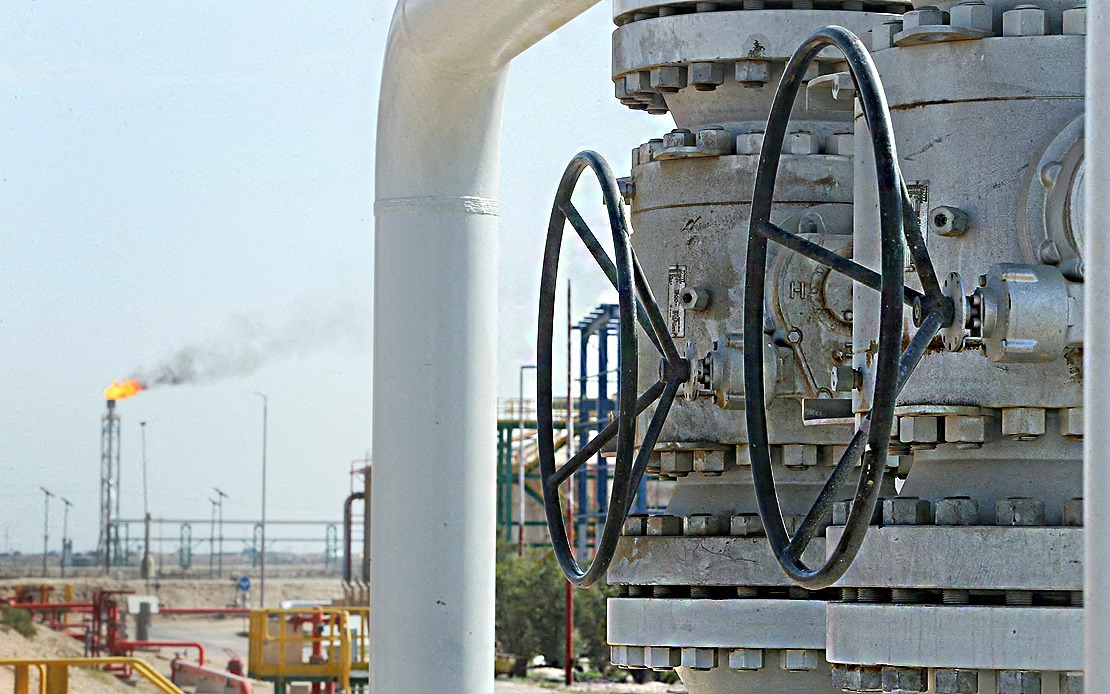
Iraq's government is moving swiftly to develop alternative export infrastructure for its crude oil, with Oil Minister Bassim Khudair announcing that Baghdad has commissioned a feasibility study for an ambitious Mediterranean pipeline project. The proposed corridor would link the country's major hydrocarbon-producing regions in Basra and Kirkuk to ports at Ceyhan in Turkey and Baniyas in Syria, creating a crucial new export pathway that bypasses the strategic waterway linking the Persian Gulf to the Indian Ocean.
The motivation behind this initiative reflects the mounting pressures facing Iraq's fragile economy. As the world's second-largest OPEC producer, Iraq depends overwhelmingly on petroleum revenues to fund government operations and social programmes, with oil sales typically accounting for over 90 per cent of state income. This heavy reliance becomes perilous when export routes face disruption, as more than 10 million Iraqis depend directly on monthly government disbursements through civil service salaries, pensions, and welfare allocations. Any extended interruption to revenue flows threatens widespread social instability and humanitarian consequences.
The current context underscores why Baghdad views this pipeline project as strategically vital. The Strait of Hormuz, through which roughly one-fifth of global petroleum trade normally passes, has experienced prolonged disruptions stemming from escalating hostilities between Iran and the United States. These tensions have created an unpredictable environment for regional energy exports, with Iraqi oil production itself falling as a consequence of the broader conflict dynamics. For Iraq, which sits at the centre of these regional tensions yet seeks to maintain neutrality, the ability to circumvent the chokepoint entirely would provide critical economic insulation from foreign power competition.
Minister Khudair indicated that Baghdad possesses comprehensive strategic planning for achieving energy security through diversified export channels. The proposed pipeline route could eventually extend further south to include the Jordanian Red Sea port of Aqaba, creating a network of alternative outlets rather than a single pathway. This multi-destination approach reflects sophisticated thinking about redundancy and resilience in critical infrastructure, ensuring that no single route failure could cripple exports entirely.
Iraq already operates an existing pipeline infrastructure carrying oil to Turkish ports via Kurdistan, demonstrating the technical feasibility of overland transport. Notably, Khudair revealed that a second pipeline designed to bypass the autonomous Kurdish region entirely is in advanced testing phases and could commence commercial operations within days. This development is particularly significant because it would provide Baghdad with direct export capacity independent of Kurdish regional authorities, strengthening central government control over revenue streams and reducing potential political friction over resource distribution.
However, Iraqi planners remain realistic about the trade-offs inherent in shifting to terrestrial export corridors. Overland pipeline transport, while offering geopolitical insulation, typically involves higher operational costs and lower transport efficiency compared to maritime shipping. Loading crude onto vessels and moving it directly through ocean routes remains the most economically advantageous method for bulk commodity export, meaning any pivot toward Mediterranean pipelines would impose measurable financial burdens on Iraqi producers competing in global markets.
Furthermore, Iraqi officials acknowledge a sobering strategic vulnerability that pipelines alone cannot entirely resolve. Alternative export infrastructure running through Turkey, Syria, Jordan and other regional territories could themselves become targets during periods of heightened international or regional conflict. Iran, as Iraq's powerful neighbour with substantial military capabilities, retains the capacity to threaten any pipeline infrastructure that traverses geographically accessible terrain, particularly routes passing through Syrian territory where Iranian forces and proxy militias maintain significant presence. This reality suggests that no single export solution can provide complete immunity from geopolitical risk in Iraq's volatile neighbourhood.
The strategic implications for Southeast Asian energy security merit attention from regional policymakers. Malaysia and other ASEAN economies depend heavily on stable global energy markets and the uninterrupted flow of Middle Eastern oil. Any successful diversification of Iraqi export routes could marginally reduce concentration risk in global petroleum supply chains, though the region's fundamental reliance on Persian Gulf hydrocarbon flows would persist regardless. Conversely, if pipeline projects remain stalled by infrastructure challenges or security threats, continued Strait of Hormuz dependency could perpetuate price volatility affecting fuel costs across Southeast Asia.
For Iraq itself, the pipeline initiative represents a pragmatic acknowledgment that current circumstances demand structural economic adaptation. By pursuing multiple export corridors simultaneously—maintaining existing Kurdish routes, completing the new Syria-bypass option, and advancing the long-term Mediterranean study—Baghdad is employing a hedging strategy appropriate to its precarious position. The government recognises that energy security underpins all other state functions, and diversification reduces the leverage that foreign powers can exercise through maritime chokepoint control.
The feasibility study itself will require careful analysis of geological, financial, and political factors spanning multiple countries. Construction timelines, transit fee negotiations with host nations, and security guarantees would all demand intensive diplomacy. Yet Iraqi officials appear genuinely committed to advancing this agenda, viewing the investment in planning and infrastructure as essential to the state's survival and prosperity amid regional turbulence.

