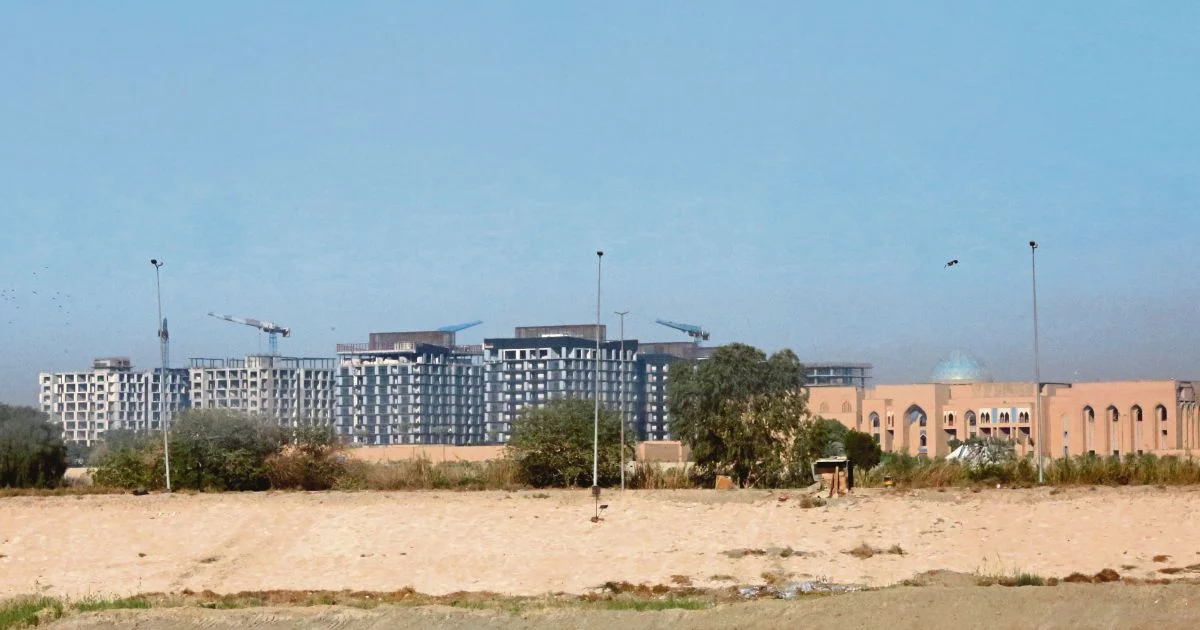
In a dramatic show of force early Sunday morning, Iraqi security personnel descended on Baghdad's fortified Green Zone to execute a coordinated operation targeting suspected corruption within the country's political establishment. The raids resulted in the detention of several members of parliament alongside other senior government officials, marking another significant chapter in Iraq's ongoing struggle against graft that continues to plague public institutions and undermine governance across the nation.
The Green Zone, also known as the International Zone, represents the heavily guarded nerve centre of Iraq's government apparatus. Located in the heart of Baghdad and surrounded by concrete barriers and security checkpoints, this exclusive enclave houses parliament, ministerial offices, and the residences of senior political figures. Its selection as the venue for Sunday's operation underscores the authorities' determination to reach even the highest echelons of power, challenging the long-standing perception that political elites operate with impunity in the fortified district.
The operation involved substantial security personnel mobilisation throughout the morning hours, with armed forces establishing cordons and controlling access points to facilitate the detention of suspects. The visible military presence and tactical deployment conveyed an unmistakable message about the seriousness with which investigators are pursuing allegations of misconduct. Such a high-profile operation in the Green Zone requires extensive planning and coordination between multiple security agencies, suggesting that investigative groundwork had preceded the dawn raids.
Corruption remains one of Iraq's most persistent institutional challenges, systematically draining state resources that should fund essential services, infrastructure development, and security operations. When politicians and government workers exploit their positions for personal gain, the consequences ripple through society, affecting ordinary Iraqis' access to electricity, clean water, healthcare, and education. The anti-corruption drive represents an attempt to address public frustration that has periodically erupted into mass protests demanding accountability and systemic reform.
The detention of parliamentarians specifically carries particular significance within Iraq's political framework. Members of parliament occupy constitutionally protected positions, and their arrest—even when justified by investigation—often triggers constitutional questions and procedural debates within legislative chambers. This tension between investigative authority and legislative privilege has historically complicated anti-corruption efforts, as some officials have attempted to invoke immunity from prosecution. The willingness to proceed with parliamentary arrests despite these complexities suggests determination from investigators backed by sufficient political will.
Iraq's anti-corruption campaigns have experienced uneven implementation historically, with momentum gaining or dissipating depending on shifting political alliances and factional interests. Previous operations targeting government malfeasance have occasionally resulted in selective prosecutions that appeared motivated by factional competition rather than principled anti-graft doctrine. Understanding whether this operation represents genuine institutional reform or tactical maneuvering within Iraq's factional political landscape remains crucial for assessing its long-term significance.
The timing of the Green Zone raids occurs within a broader regional context where governance challenges and institutional weakness create security vacuums that various armed groups exploit. Countries throughout the Middle East and Southeast Asia confronting similar corruption issues have found that systemic graft undermines counter-insurgency efforts, diverts military resources, and delegitimises government institutions. Iraq's struggle against the remnants of Islamic State extremism depends partly on maintaining capable, cohesive security institutions and government structures perceived as legitimate by citizens.
Malaysian observers monitoring developments in Iraq might recognise parallels with anti-corruption initiatives in Southeast Asia, where regional governments have similarly grappled with balancing prosecution of high-ranking officials against concerns about political manipulation or selective targeting. The institutional mechanisms through which countries investigate and adjudicate corruption cases frequently determine whether reform efforts build genuine public confidence or merely represent power struggles wearing transparency rhetoric.
The scope of Sunday's operation—encompassing multiple detentions across a sprawling government complex—suggests investigators had accumulated substantial documentation and evidence justifying simultaneous arrests. Coordinated operations of this scale typically emerge from investigations spanning months or longer, involving financial forensics, testimony gathering, and coordination with prosecutorial authorities. The public nature of the raids indicates investigators' commitment to visible accountability rather than quieter administrative procedures.
Institutional reform efforts in Iraq must navigate Iraq's complex political architecture, where sectarian and factional considerations historically influence governance and justice system operations. Building public confidence that anti-corruption initiatives target genuine misconduct rather than factional opponents requires consistent application, transparent evidentiary standards, and visible prosecution following initial arrests. Observers will scrutinise whether detainees receive fair legal proceedings and whether investigations proceed without apparent political interference.
The Green Zone operation's implications extend beyond individual prosecutions to signal broader questions about Iraq's institutional trajectory. Whether the state can systematically address corruption amongst its political class will substantially influence Iraq's capacity to provide services, maintain security, and rebuild public trust following years of conflict and dysfunction. For Iraq and comparable countries throughout the region, anti-corruption architecture represents an essential component of post-conflict stabilisation and governance strengthening.
Following the detentions, Iraqi investigative and prosecutorial authorities will navigate legal proceedings determining whether evidence supports charges and what consequences follow convictions. The coming weeks and months will reveal whether this operation inaugurates sustained anti-corruption momentum or represents another episodic crackdown lacking institutional staying power. International attention and donor community expectations regarding anti-corruption progress will additionally influence how Iraqi authorities proceed with subsequent investigation phases and potential trials.

