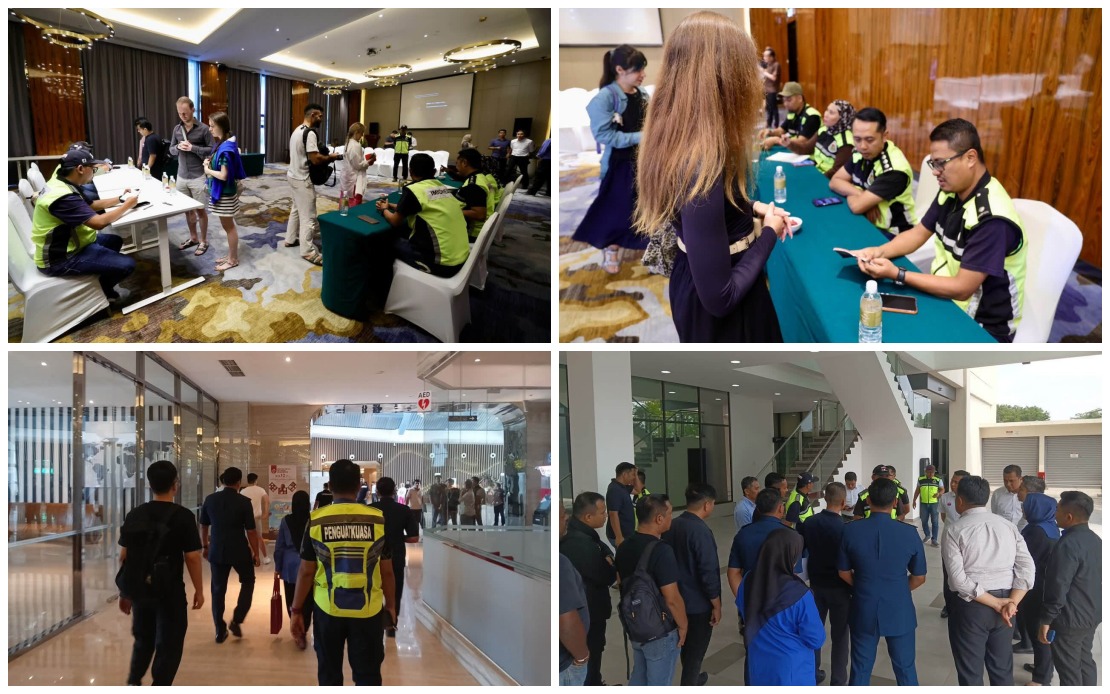
The Iskandar Puteri City Council (MBIP) has taken enforcement action against Network School in the Forest City development, issuing a formal stop-business notice after discovering that the educational operator had violated its business licence terms and was using premises in ways not approved by local authorities. Johor Menteri Besar Datuk Onn Hafiz Ghazi announced the regulatory intervention following an investigation that uncovered significant discrepancies in how the school was conducting its operations across multiple locations within the township.
The enforcement findings revealed that Network School was running from two distinct premises in Forest City. While one location held a valid office business licence, the second site was operating entirely without the required MBIP business licence despite being owned by a Malaysian citizen. This dual-location structure appears to have been central to the regulatory concerns, as authorities discovered that the company had effectively circumvented licensing requirements by splitting its operations across properties with different approval statuses.
The core violation involved the misappropriation of licensed space. Premises that had been approved specifically for office business use were being converted into active classroom environments where educational instruction and promotional activities were taking place. By operating educational programmes from properties licensed solely for office functions, the school had fundamentally breached the permitted business category restrictions that govern land and building use within the municipality. This type of use-conversion without formal approval represents a systematic departure from the conditions under which the business licence was originally granted.
In response to these findings, MBIP formally issued Stop-Business Notice IP012N260714001 against the unlicensed premises. The council simultaneously issued an Advertisement Licence Notice (6103) under Section 107(2) of the Local Government Act 1976, citing non-compliance with signboard requirements. The advertisement notice addressed physical signage that either lacked proper licensing or violated the conditions of existing permits, suggesting the school had been prominently marketing its presence without adherence to municipal advertising standards.
Menteri Besar Onn Hafiz characterised the state government's response as reflecting the seriousness with which Johor treats regulatory compliance within its jurisdictions. He indicated that MBIP will pursue comprehensive investigations into all dimensions of the violation that fall within municipal authority, with a clear message that additional enforcement action would follow if further breaches were discovered. This statement underscores a broader commitment to ensuring that business operators in Johor adhere strictly to the conditions attached to their licences and the regulatory frameworks governing land use.
A particularly significant dimension of this case involves questions about the nationality and immigration status of individuals associated with Network School's management and operations. However, Onn Hafiz clarified that matters concerning foreign nationals fall entirely outside state jurisdiction and rest with the Home Ministry. He stressed that Johor's government is actively urging the federal Home Ministry to conduct a prompt and thorough review of the individuals involved and to reach a definitive determination regarding their status and the school's future operational eligibility.
The enforcement action against Network School follows weeks of viral social media speculation about the institution's origins and objectives. Online posts had alleged connections between the school and an Israeli agenda to establish a foothold in Malaysia through investment-related educational activities. While these claims circulated widely across Malaysian social media platforms, they remained unsubstantiated by official sources until the council's investigation provided concrete evidence of regulatory violations unrelated to the nationalist allegations.
The Forest City development itself has long been a focal point of scrutiny in Malaysia, given its scale, foreign investment composition, and evolving role within Johor's economic landscape. Network School's presence within this mixed-use township amplified public attention to the facility, particularly once online communities began linking the educational operation to broader geopolitical concerns. The regulatory action now provides a factual basis for closure separate from the unverified claims that had driven initial public awareness of the school's existence.
For Malaysian residents and expatriate communities in Forest City and surrounding areas seeking educational options, this enforcement action removes one institutional option from the available landscape. Parents and guardians previously relying on or considering Network School for their children's education will need to identify alternative programmes. The closure may also prompt broader questions about oversight mechanisms for educational institutions operating within mixed-use commercial and residential developments, particularly when such facilities operate from premises not originally zoned or licensed for educational use.
The case highlights the tension between regulatory compliance and the practical realities of educational provision in rapidly developing commercial zones. As townships like Forest City attract international residents and investors, demand emerges for diverse educational programmes tailored to expatriate communities. However, this demand must navigate local authority approval processes that protect land-use integrity and public safety standards. Network School's approach of operating across multiple premises with mismatched licensing appears to represent an attempt to bypass these procedural requirements.
For authorities across Malaysia's economic zones and special development areas, the MBIP enforcement action serves as a precedent regarding the application of land-use and business licensing regulations to educational institutions. Operators in similar jurisdictions may face increased scrutiny if their operational structures similarly compartmentalise activities across properties with different approval statuses. The case also reinforces that state governments will escalate matters involving foreign national employment to federal authorities while simultaneously pursuing all remedies available within their own regulatory remit.
Moving forward, the trajectory of this matter depends substantially on the Home Ministry's review process. The federal agency must determine whether foreign nationals associated with Network School can legally remain in Malaysia and whether the institution should be permitted to resume operations under modified conditions. Until that determination is made, the stop-business notice remains in effect, effectively ending Network School's educational activities within Forest City.

