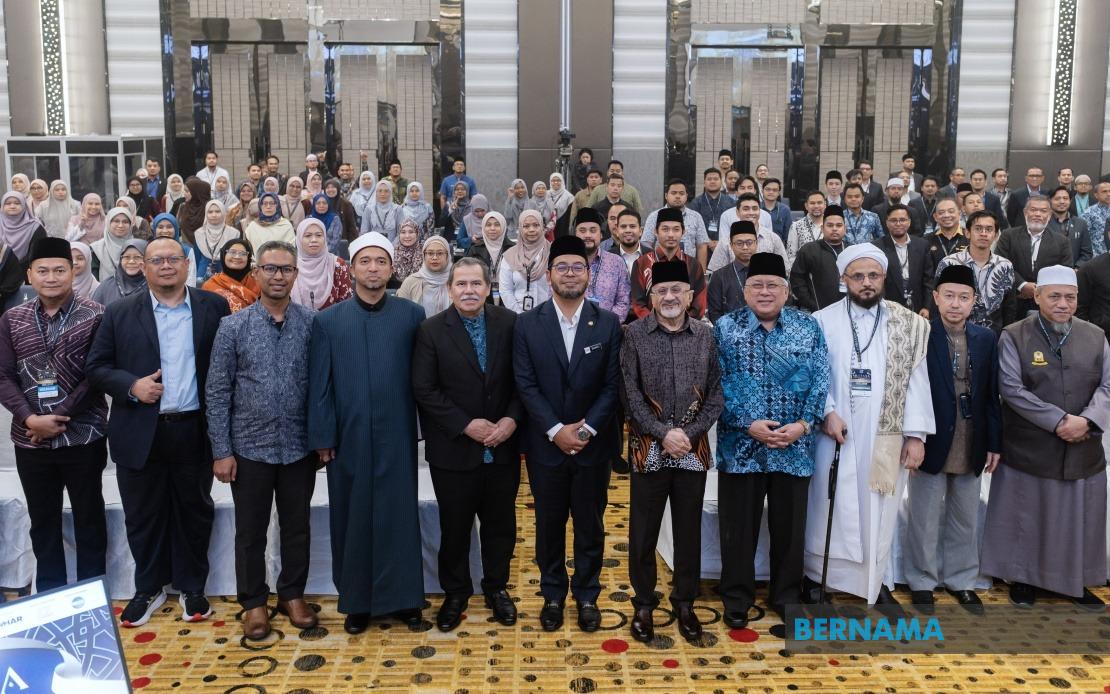
Islamic social finance represents a largely untapped resource that could fundamentally reshape Malaysia's approach to poverty reduction and inclusive economic development. Dr Zulkifli Hasan, Minister in the Prime Minister's Department (Religious Affairs), articulated this vision while addressing delegates at the MULTAQA SIDR Islamic Social Finance Conference in Kuala Lumpur, positioning the sector as integral to the country's long-term prosperity agenda. His remarks signal a notable shift in how the federal government perceives the role of faith-based financial mechanisms in addressing structural inequality and economic vulnerability across Malaysian communities.
The minister's strategic vision hinges on mainstreaming Islamic social finance through a coordinated institutional framework. Rather than treating religious financial instruments as peripheral to the broader economic landscape, the government now views them as essential components of a comprehensive anti-poverty strategy. This represents a departure from earlier approaches that often compartmentalised Islamic finance separately from mainstream economic policy, instead positioning it as capable of operating in tandem with conventional financial sectors and development programmes to achieve complementary poverty-reduction objectives.
Central to this strategy is the role of JAWHAR, the Department of Waqf, Zakat and Haj, which has been designated as the primary coordinating body responsible for elevating governance standards across Islamic organisations. The appointment reflects recognition that institutional credibility and operational transparency are prerequisite conditions for scaling Islamic social finance initiatives. By concentrating institutional oversight in a dedicated government agency, the authorities aim to establish consistent standards for financial management, accountability reporting, and community benefit delivery across the diverse landscape of Islamic NGOs operating throughout Malaysia.
Dr Zulkifli emphasised the critical importance of collaborative relationships spanning academia, government agencies, and the private sector in strengthening the Islamic social finance ecosystem. Universities and higher education institutions are envisioned as knowledge partners capable of enhancing governance practices within Islamic organisations, while the private sector can contribute capital, technological expertise, and operational efficiency. This tripartite partnership model reflects sophisticated understanding that sustainable poverty reduction requires integration of intellectual resources, financial capital, and implementation capacity distributed across multiple institutional actors rather than concentrated in any single entity.
The launch of Malaysia's Islamic Social Finance Report 2026 during the conference provided empirical grounding for these policy ambitions. The report serves as both diagnostic tool and strategic reference document, cataloguing existing developments within the Islamic social finance sector while identifying systemic challenges and untapped potential. By establishing a comprehensive baseline assessment accessible to institutions, industry practitioners, and academic researchers at both national and regional levels, the government has created a shared informational foundation that can guide evidence-based policy development and sector-wide coordination efforts.
A particularly significant aspect of Dr Zulkifli's remarks involves the conceptual repositioning of Islamic social finance as 'The Third Force' in development architecture. This terminology suggests a fundamental reconceptualisation of the sector's role, moving beyond traditional charity and consumptive welfare provision toward productive community empowerment and economic capability-building. The distinction matters considerably because it implies Islamic social finance should function as a catalytic mechanism for sustainable livelihood creation rather than merely providing temporary relief, thereby addressing root causes of poverty rather than managing its symptoms.
The governance dimension carries particular weight in the minister's framework, especially given recent controversies surrounding institutional integrity within the Islamic finance sector. Dr Zulkifli explicitly referenced the parliamentary debate concerning the Royal Commission of Inquiry report on Tabung Haji, using the occasion to underscore how governance failures and integrity breaches within major Islamic institutions can undermine public confidence in the entire sector. This connection between institutional credibility and broader religious legitimacy suggests the government recognises that financial corruption or mismanagement within Islamic organisations carries consequences extending far beyond economic losses, potentially damaging confidence in Islam itself among both domestic and international stakeholders.
For Malaysian readers and policymakers, the articulation of this anti-poverty strategy holds several significant implications. First, it signals sustained government commitment to leveraging Islamic finance mechanisms as development tools, suggesting continued policy support and resource allocation toward strengthening the sector's institutional foundations. Second, it indicates recognition that effective poverty reduction in a multi-ethnic, multi-faith society requires mobilising diverse institutional resources and funding mechanisms, with Islamic social finance positioned as complementary to rather than competitive with other development approaches. Third, it underscores the critical importance of governance reform and transparency initiatives as prerequisites for sector credibility and viability.
From a regional perspective, Malaysia's positioning of Islamic social finance as a strategic poverty-reduction instrument carries broader Southeast Asian significance. As the region's most developed Islamic finance hub, Malaysian policy innovations and institutional frameworks often establish precedents and provide models that other jurisdictions examine and potentially adapt. The emphasis on strengthening governance, establishing clear institutional roles, and integrating Islamic finance into broader development architecture may resonate with counterparts in Indonesia, Brunei, and other regional economies seeking to harness faith-based financial mechanisms for development purposes.
The challenge confronting policymakers involves translating this ambitious conceptual framework into practical, measurable outcomes. While Dr Zulkifli's vision is comprehensive and strategically sound, implementation will require sustained coordination across multiple government agencies, meaningful private sector engagement, and sustained academic research to continuously refine approaches based on empirical evidence of what actually produces poverty reduction. The appointment of JAWHAR as lead coordinating agency provides institutional structure, but the ultimate test will involve whether this framework successfully increases capital flows to productive community initiatives, measurably improves livelihood outcomes, and builds constituent trust in Islamic financial institutions.
Looking forward, the successful mainstreaming of Islamic social finance as a strategic poverty-reduction instrument depends substantially on addressing the governance and integrity concerns that Dr Zulkifli identified. Tabung Haji controversies have created legitimate questions about oversight mechanisms and accountability frameworks within major Islamic institutions. Building back public confidence will require demonstrated commitment to transparency, independent auditing, and consequences for misconduct. Without resolving these foundational credibility issues, even well-designed social finance programmes may struggle to mobilise community participation and attract private sector collaboration essential for achieving scale.

