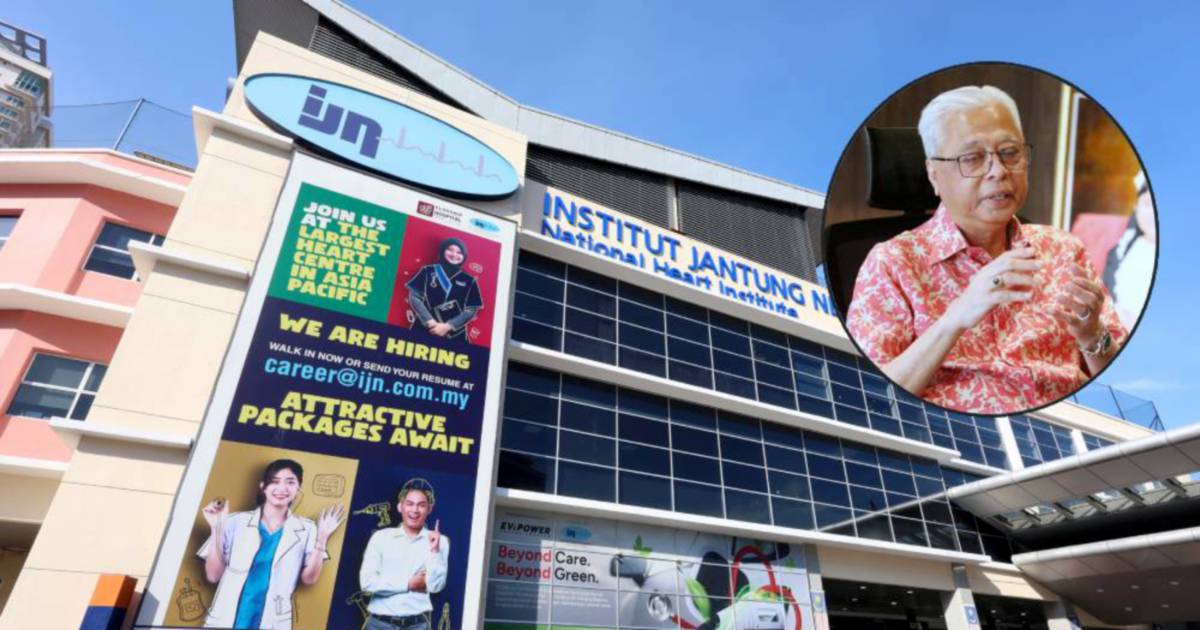
Former prime minister Datuk Seri Ismail Sabri Yaakob has completed a leadless pacemaker implantation procedure at the National Heart Institute (IJN) in Kuala Lumpur, marking a successful intervention following his recent hospitalization for heart rhythm irregularities. The surgical procedure, which took place after he was admitted to the facility for management of an abnormal heart rhythm condition, has been completed without complications.
The use of a leadless pacemaker represents a significant advancement in cardiac treatment technology compared to traditional pacemaker systems. Unlike conventional devices that require multiple leads to be threaded through blood vessels to the heart chamber, leadless pacemakers are self-contained units implanted directly into the heart tissue itself. This approach eliminates certain infection risks and complications associated with lead-dependent systems, while also reducing the physical visibility of the implant—a consideration that may be particularly relevant for a public figure.
The National Heart Institute, Malaysia's premier cardiac treatment facility, has been at the forefront of adopting advanced pacemaker technologies and has substantial experience managing high-profile cardiac patients. The selection of this institution reflects confidence in its medical expertise and facility standards. IJN has consistently upgraded its interventional cardiology capabilities and remains a regional centre of excellence for complex heart procedures.
Abnormal heart rhythm, or cardiac arrhythmia, can manifest in various forms ranging from relatively benign to potentially life-threatening. These conditions disrupt the normal electrical signalling that coordinates heartbeats, potentially leading to reduced cardiac output, fatigue, dizziness, or in severe cases, sudden cardiac events. Pacemakers function by delivering electrical impulses that regulate the heart's rhythm and ensure adequate blood circulation throughout the body. The decision to implant a device typically follows detailed diagnostic evaluation including electrocardiography, holter monitoring, and sometimes electrophysiological studies.
For a 65-year-old former chief executive—Ismail Sabri served as prime minister from August 2021 to August 2022—maintaining cardiac health becomes increasingly critical. His medical management exemplifies the importance of proactive healthcare intervention among Malaysia's political and business elite, demonstrating that seeking prompt specialized treatment remains a priority regardless of one's previous position in society. The transparent approach to disclosing his medical situation also reflects contemporary expectations for public figures to maintain open communication regarding health matters affecting their capacity to fulfill public duties.
The post-operative period will be crucial for monitoring the device's proper function and ensuring optimal integration. Medical teams typically advise patients to avoid strenuous activities during the initial healing phase, which typically spans several weeks. Ismail Sabri's medical advisors have recommended substantial rest, consistent with standard protocols following pacemaker implantation. During this recovery window, regular follow-up appointments become essential to assess device functionality and make any necessary adjustments to pacing parameters.
The implantation of a leadless pacemaker carries different implications than traditional systems regarding activity restrictions and long-term management. Patients generally face fewer limitations on upper body movement and can resume most normal activities more quickly than those with conventional pacemakers, though individual recovery trajectories vary based on overall health status and surgical considerations. The former premier will likely need to undergo periodic device checks both immediately post-procedure and at regular intervals throughout the device's projected lifespan of approximately ten to fourteen years.
This medical development occurs against Malaysia's broader healthcare landscape, where cardiovascular disease remains among the leading causes of mortality and morbidity. Advanced interventional facilities like IJN have become essential infrastructure for managing increasingly complex cardiac conditions within the region. The successful treatment of prominent individuals such as Ismail Sabri underscores public awareness regarding arrhythmia management and the availability of cutting-edge therapeutic options within Malaysia's healthcare system.
From a political perspective, the former prime minister's recent medical procedure may influence public discourse regarding succession planning and health considerations among Malaysia's political leadership. His two-year tenure as prime minister ended relatively recently, and his continued engagement with public matters remains relevant to domestic political dynamics. The transparency surrounding his hospitalization and successful treatment may serve as a positive example for other political figures navigating similar health challenges while maintaining public prominence.
Moving forward, Ismail Sabri's recovery will be monitored closely by the IJN medical team through structured follow-up protocols. The successful implantation of the leadless pacemaker represents a resolution to the acute cardiac issue that prompted his hospitalization, though ongoing cardiac health management will remain important throughout his life. His case also reinforces the critical role that Malaysia's premier cardiac facilities play in delivering world-class medical interventions that extend and improve quality of life for patients across all segments of society.

