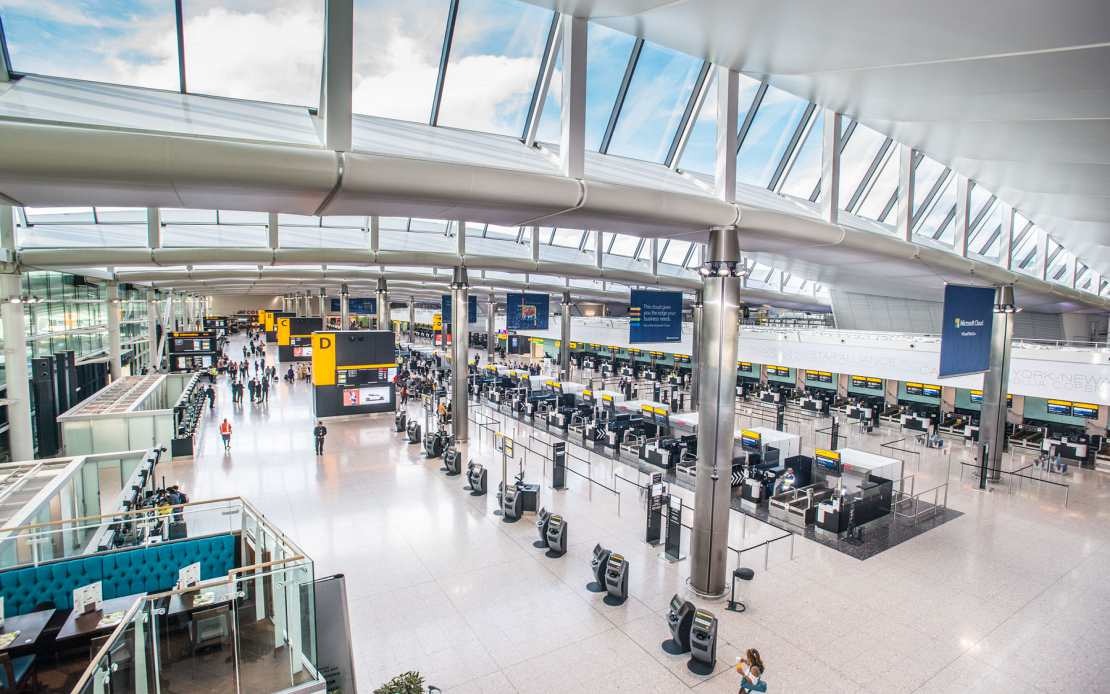
London's Heathrow Airport has ceded its position as Europe's busiest aviation hub to Istanbul's airport, marking a significant reversal that has prompted fresh urgency around expansion plans long stalled by political controversy. The Turkish facility processed 8.15 million passengers in July, surpassing Heathrow's 7.86 million during the same month, according to data released by the west London airport. This development carries implications far beyond airport rankings, touching on broader questions about European competitiveness, infrastructure investment, and the UK's connectivity to global markets—issues of particular relevance to Malaysian businesses and travellers using these major hubs.
Heathrow's loss of its long-held distinction represents a dramatic turnaround in fortunes. The airport had dominated the European rankings consistently from 1996 until 2020, when coronavirus restrictions devastated international travel. After recovering its top position in 2023, Heathrow held the title for less than two years. The latest monthly figures reveal not just a single-month anomaly but a directional trend: Heathrow's passenger count dropped 1.5 percent year-on-year during July, whilst Istanbul experienced growth of 2.3 percent, suggesting structural rather than temporary advantages favouring the Turkish rival.
The geopolitical environment has created headwinds specifically affecting Heathrow's competitive position. Passenger traffic on routes serving West Asia fell dramatically by 20.2 percent compared to the same month last year, a direct consequence of escalating tensions between the United States and Iran that have disrupted traditional travel patterns and forced rerouting of flights. This regional instability has clearly benefited Istanbul's geographical positioning as a bridge between Europe and Asia, making it an increasingly attractive transit point for global travellers. For Malaysian travellers and businesses, the shift underscores how political developments thousands of miles away can reshape aviation networks and affect connection quality.
The operational crisis at Heathrow stems from a fundamental capacity constraint. The airport currently operates its two runways at near-maximum utilization, leaving virtually no room for passenger growth or operational flexibility. This ceiling has become intolerable for both the airport operator and advocates for British economic competitiveness. Heathrow's management has seized on the latest rankings to revive its long-contentious expansion proposal, asserting that the case for building a third runway has reached irrefutable clarity. The proposed expansion would theoretically accommodate 150 million passengers annually, substantially more than current annual throughput, positioning Heathrow to reclaim and retain its European prominence.
The political machinery around Heathrow expansion has been set in motion once again through formal government channels. Transport Secretary Heidi Alexander initiated a public consultation in June on the updated national policy statement governing expansion conditions. This consultation process represents the early bureaucratic steps toward potential project approval, though political agreement remains far from certain. The previous administration had set an ambitious timeline: then-chancellor Rachel Reeves declared determination to begin groundwork during the current parliamentary term, with target completion by 2035. However, political commitment remains fragile and conditional on navigating substantial regional opposition.
Significant political resistance continues to complicate expansion prospects. Prime Minister Andy Burnham, who previously held concerns about the project, has expressed fears that Heathrow expansion would divert crucial infrastructure investment away from northern England and concentrate resources in London. This North-South divide in British politics represents a formidable obstacle: any government seeking to prioritize southern expansion faces accusations of regional favouritism at a moment when northern constituencies expect renewed investment commitments. The political economy of UK infrastructure spending thus creates genuine constraints on the expansion timeline, regardless of the project's economic merits.
Heathrow's commercial performance data offers some counterweight to expansion sceptics. The airport experienced its busiest day of the year on July 19, when 267,000 passengers passed through terminals as summer holidays commenced, demonstrating the intense seasonal demand that compressed into limited capacity. More strategically, new airline services launched at Heathrow during July signal confidence in the market, with ITA Airways initiating Italian service, Alaska Airlines beginning transatlantic routes, and Saudi Arabia's Riyadh Air commencing operations. These carrier additions indicate that restrictive capacity has not yet deterred airline investment, though further growth would require expanded facilities.
Chief Executive Thomas Woldbye framed the airport's summer performance as solid but incomplete, emphasizing that true competitive advantage requires further expansion to grow route networks and enhance passenger amenities. His statement captured the airport's strategic dilemma: current operations prove profitable and competitive in absolute terms, yet Heathrow faces gradual erosion of its relative position without capacity increases. The expansion would enable not only higher passenger volumes but also expanded connectivity to underserved routes, potentially broadening Heathrow's appeal to airlines serving leisure and business markets where competition remains intense.
From a Malaysian perspective, the shifting European aviation landscape carries concrete implications. As Southeast Asian airlines and travellers increasingly depend on European connectivity for business, education, and tourism, the question of which hub offers superior connections and frequency becomes material. Istanbul's growing dominance reflects Turkey's strategic position and investment in aviation infrastructure, whilst Heathrow's stagnation suggests that established advantages erode without ongoing capital commitment. Malaysian carriers and passengers navigating transatlantic or European routes may find themselves increasingly routed through alternative hubs if Heathrow's constrained capacity forces airline network redesigns.
The broader context involves European competitiveness in attracting aviation investment and maintaining continental connectivity leadership. Unlike other major regions that have pursued aggressive hub development—the Middle East with Dubai and Qatar, Asia-Pacific with Singapore and Hong Kong—European aviation has seen limited expansion of major facilities due to environmental concerns, local opposition, and regulatory complexity. Istanbul's gains partly reflect Turkish willingness to invest in airport infrastructure amid rapid economic growth and expanding aviation demand. Heathrow's difficulties reveal how institutional complexity and political fragmentation can constrain infrastructure development in mature democracies.
The expansion debate will likely intensify as monthly passenger data accumulates. If Istanbul maintains its new position through coming months, political pressure for Heathrow approval may grow sufficiently to overcome regional opposition. Conversely, if Heathrow rebounds and regains its ranking, the urgency for expansion diminishes, and the political opposition may successfully forestall the project indefinitely. The stakes extend beyond airport rankings to encompass UK economic positioning, regional investment distribution, and environmental policy, making resolution contentious regardless of technical or commercial merits. For global aviation stakeholders including Malaysian interests, the outcome will determine whether Europe's largest economy maintains leading hub status or gradually cedes connectivity advantages to rivals better positioned or more willing to expand capacity.

