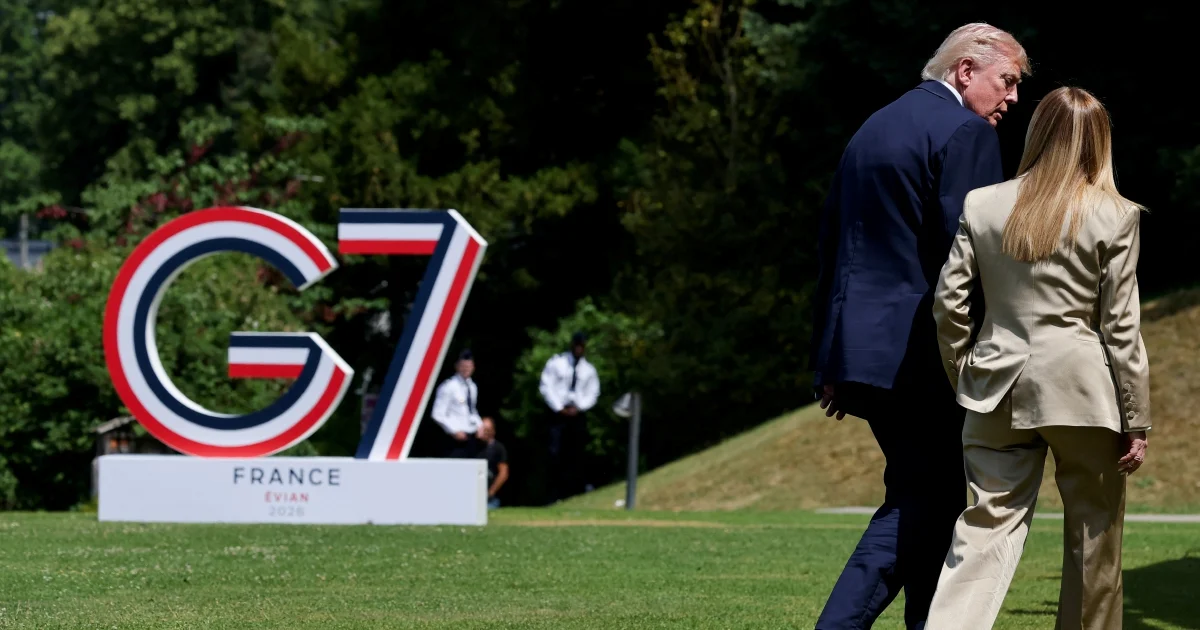
Italy's government responded with visible irritation on Friday following reported comments from US President Donald Trump that appeared to ridicule Prime Minister Giorgia Meloni, characterizing her as having sought a photo opportunity in unflattering terms. The diplomatic dust-up quickly escalated when Italy's Foreign Minister decided to postpone a planned visit to the United States, signalling the seriousness with which Rome viewed the alleged remarks.
The controversy underscores the volatile nature of contemporary great-power diplomacy, where statements—whether formally made or casually reported—can rapidly destabilize bilateral relationships, particularly between established allies. Italy and the United States maintain one of Europe's most enduring strategic partnerships, rooted in Cold War alignments and reinforced through NATO membership and shared economic interests. Any public undermining of that relationship, especially through mockery directed at a sitting prime minister, carries symbolic weight far beyond the immediate context.
Meloni, who leads Italy's right-leaning government, has positioned herself as a bridge between transatlantic institutions and emerging nationalist movements across Europe. Her relationship with Trump has been carefully calibrated, reflecting the delicate balance that many European conservative leaders must maintain between their traditional Western alliance commitments and alignment with Trump's nationalist-inflected version of American conservatism. This incident threatens that equilibrium by introducing an element of personal disrespect into what has been a largely cordial political relationship.
The cancellation of the Foreign Minister's trip represents a measured but unambiguous rebuke. Rather than engaging in tit-for-tat rhetoric—a pattern that could quickly spiral—Italy opted for a symbolic withdrawal from planned engagement. This approach suggests that Rome is attempting to register formal disapproval while preserving the fundamental bilateral relationship. Cancelling a ministerial visit carries diplomatic weight because it signals that engagement with the other party's government will be restricted until grievances are adequately addressed.
For regional observers in Southeast Asia, this episode illustrates broader patterns of instability in the Western alliance system. Just as regional powers in Asia must navigate between Chinese economic influence and American security commitments, European allies increasingly find themselves managing relationships with an unpredictable American administration. The incident demonstrates that even longstanding partnerships cannot be taken for granted when leadership becomes personalised and communications become unfiltered.
The controversy also reflects deeper questions about diplomatic decorum in the Trump era. Previous administrations typically confined criticism of allied leaders to private channels, maintaining public displays of unity as essential to alliance cohesion. Trump's apparent willingness to publicly mock a friendly head of government—whether directly or through proxies—represents a departure from these norms. This creates uncertainty for all allies about how they might be characterised or dismissed, potentially undermining the psychological foundations of collective security arrangements.
Meloni's domestic political position adds another layer to this incident. Having consolidated considerable support among Italian conservatives and positioned her party as a serious governing force, any suggestion that she is subordinate to foreign leaders—even major ones—could damage her standing at home. By protesting Trump's remarks and withdrawing diplomatic engagement, she demonstrates to her constituency that Italian dignity will not be compromised, a particularly important message in a country where nationalist sentiment remains politically significant.
The timing of the controversy matters as well. Coming at a moment when transatlantic relations face multiple pressures—including disagreements over defence spending, trade relations, and approaches to Russia—this personal friction could complicate efforts to maintain unified Western positions on critical issues. Diplomatic relationships characterised by mutual respect and restraint are more likely to produce cooperative outcomes than those poisoned by personal animosity.
Looking ahead, the incident will likely prompt other European allies to reconsider their own diplomatic strategies when engaging with the Trump administration. If public mockery of allied leaders becomes normalised, the incentive structure for maintaining alliance commitments may shift fundamentally. Countries may begin to prioritise bilateral economic or security arrangements outside of traditional multilateral frameworks, a development that could reshape the entire architecture of Western collaboration.
The Italian response—formal but not explosive—appears designed to recalibrate expectations without severing ties entirely. Whether this approach successfully restores normal relations or merely marks the beginning of a broader deterioration in ties will become clearer in coming weeks, as both governments assess whether further conversations or actions are necessary to move past this diplomatic incident.

