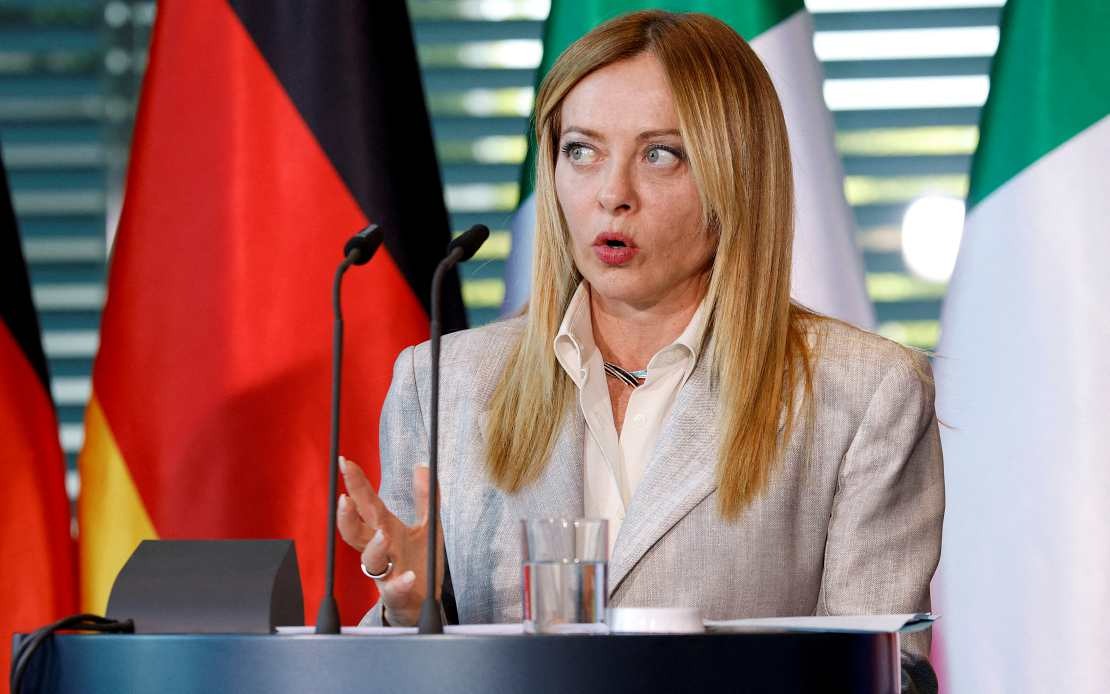
Italian Prime Minister Giorgia Meloni has reignited debate over Europe's approach to migration control by proposing the creation of migrant processing and return centres located in non-EU countries, with ambitions to operationalise the first facility as early as 2027. The initiative represents a significant escalation in Rome's hardline stance on irregular immigration and marks an attempt to reshape how the entire European Union manages asylum applications and deportations. The proposal, first reported by Italian media sources, will dominate discussions at an informal online meeting of EU home affairs ministers scheduled for Tuesday, with Italy's Interior Minister Matteo Piantedosi leading the Italian delegation.
The concept draws heavily on Italy's existing bilateral arrangement with Albania, a model that Meloni's government now seeks to replicate across multiple non-EU jurisdictions. Rome's strategy involves negotiating comprehensive agreements with third countries by year's end, with the European Union itself providing financial backing for establishing and operating these offshore facilities. This approach signals a fundamental shift in EU migration policy, moving responsibility and processing capacity beyond the bloc's formal borders and into the diplomatic sphere of willing partner nations. The arrangement would theoretically allow EU member states to process asylum claims and carry out deportations without the legal and procedural constraints that currently apply within European territory.
Support for Meloni's initiative extends across multiple EU capitals, indicating a broader consensus emerging among member states frustrated with existing migration governance frameworks. Danish Prime Minister Mette Frederiksen has publicly endorsed the proposal, while a coalition of twenty-two EU countries has collectively written to European Commission President Ursula von der Leyen and European Council President Antonio Costa, formally requesting that EU leadership seriously evaluate new protective mechanisms against what they characterise as illegal migration. This significant backing reflects mounting political pressure within the bloc, particularly among Northern and Central European governments facing domestic pressure from voters concerned about border security and asylum numbers.
Negotiations with African nations have progressed furthest, with Rwanda and Uganda currently in advanced discussions with multiple European partners. The momentum behind these talks reflects Africa's strategic positioning in Europe's migration management architecture, particularly regarding deportation agreements and third-country processing arrangements. Denmark, Austria, the Netherlands and Germany are spearheading European efforts, demonstrating that offshore migration control has become a cross-party priority transcending traditional ideological divides. Greece, another frontline nation experiencing sustained migratory pressure, similarly targets 2027 as the launch date for its own experimental offshore processing programme, indicating that multiple EU members are pursuing parallel initiatives with complementary timelines.
Italy's existing offshore infrastructure provides instructive lessons regarding the practical and financial dimensions of such arrangements. The Italian government currently operates migrant reception and detention facilities beyond its borders under Italian administrative authority, processing asylum applications while simultaneously holding undocumented individuals pending deportation. These operations function entirely at Rome's budgetary expense, independent of EU co-financing arrangements. However, the Albanian experience has proven considerably more complicated than initially envisioned, with Italian domestic courts repeatedly intervening to prohibit migrant detention and ordering individuals returned to Italian territory. This judicial obstruction reflects constitutional concerns about due process and detention standards, positioning Italian courts in direct confrontation with the executive's migration agenda.
The Albania programme's performance metrics illuminate the challenges ahead for any expanded offshore network. Between May 2025 and mid-July 2026, only 685 individuals were transferred to the Gjader centre, with fewer than 15 percent achieving actual repatriation to their countries of origin. The persistence of legal barriers within Italy's judicial system has severely constrained the programme's effectiveness, as courts have systematically challenged expedited processing procedures for nationals of designated safe countries and refused to authorise extended detention without returning migrants to Italian jurisdiction. This structural friction between Italy's executive and judiciary suggests that scaling up such arrangements internationally would encounter similar impediments, raising fundamental questions about whether offshore facilities can function as intended within European legal frameworks.
Financial sustainability represents another critical concern for policymakers contemplating expanded offshore operations. Italy's maintenance of the single Gjader centre was projected at €50 million for 2025 alone, an extraordinarily expensive arrangement yielding minimal deportation results. Scaling this model across multiple third countries through EU funding mechanisms would represent a substantial budgetary commitment with uncertain returns on investment, particularly given the judicial obstacles that have stalled the Albania experiment. The prospect of the European Union financing such infrastructure in non-member jurisdictions raises questions about accountability, oversight, and whether EU funds would be properly utilised in countries with varying governance standards.
The recent humanitarian crisis in Ceuta has crystallised the urgency driving this policy momentum. The Spanish autonomous city on the North African coast, situated directly across the Strait of Gibraltar from Morocco, experienced a catastrophic influx during late July when approximately 60,000 individuals entered within a single twenty-four-hour period. This figure represented nearly three-quarters of Ceuta's total population of approximately 85,000, overwhelming municipal services and creating acute public safety challenges. Spain's response involved deploying additional law enforcement personnel, Civil Guard units, and military troops to establish barrier operations and deter further crossings, illustrating the security dimension of Europe's migration challenge and the physical strain that sudden mass movements impose on border communities.
Mayor-President Juan Jesus Vivas's announcement of the 60,000-person influx on July 31 reflected the severity of the situation and highlighted Spain's vulnerability to organised migration from Morocco. This crisis crystallised political arguments that existing EU migration frameworks inadequately protect member states facing concentrated irregular movement, providing crucial context for Meloni's timing in advancing the offshore centre proposal. The Ceuta incident demonstrated that traditional border enforcement and reception infrastructure can be overwhelmed within hours, strengthening the case for preventive mechanisms located before migrants reach European territory. However, critics contend that offshore processing merely displaces the humanitarian challenge rather than addressing root causes of irregular migration.
For Southeast Asian observers, Italy's initiative carries significant implications regarding migration governance and state sovereignty principles. Malaysia, itself managing complex migration flows and hosting one of Asia's largest undocumented populations, faces comparable pressures and governance challenges. The Italian model—attempting to externalise migration control through bilateral arrangements with third countries—presents both potential lessons and cautionary notes. Successful implementation would require sustained international cooperation, adequate funding, and judicial systems willing to enforce expedited procedures, all prerequisites that remain problematic even within the relatively wealthy and institutionally advanced EU context.
The broader trajectory of European migration policy suggests a continent increasingly willing to explore unconventional arrangements prioritising border control and deportation efficiency over traditional asylum protection mechanisms. Whether offshore centres in Rwanda, Uganda, or other African nations ultimately materialise remains uncertain, contingent upon negotiating successful agreements, securing EU financing, and navigating both African government concerns and European judicial challenges. Yet the political momentum behind Meloni's proposal indicates that offshore processing has transitioned from fringe speculation to mainstream EU policy debate, representing a fundamental reorientation of how Europe envisions managing irregular immigration in the coming decade.

