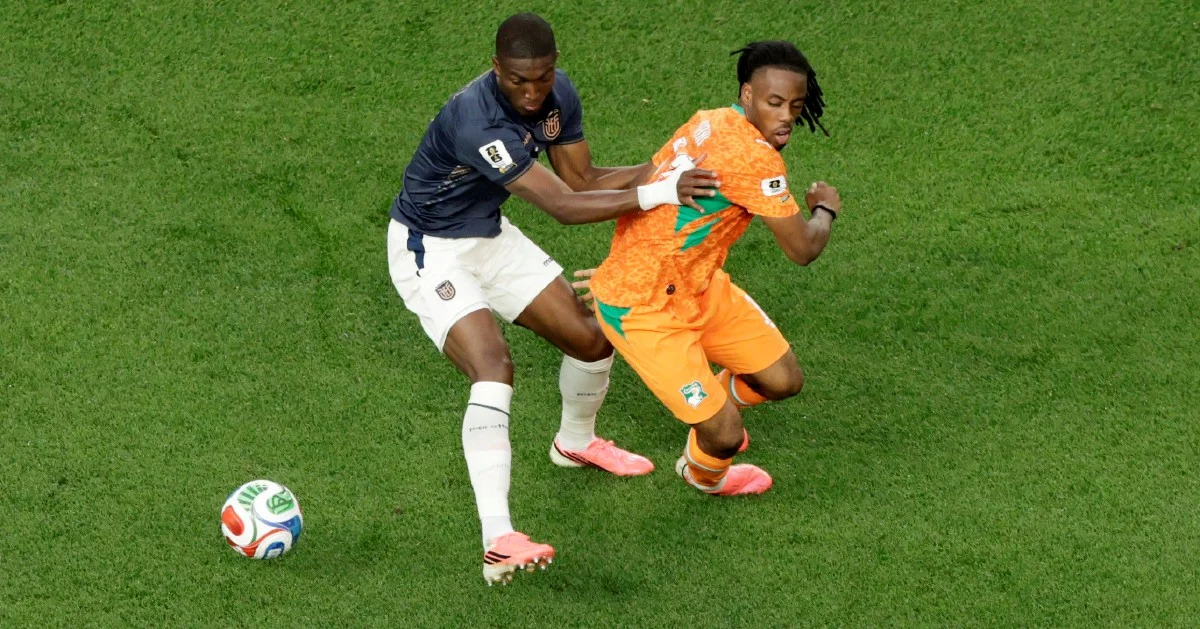
Ivory Coast's national football federation has pulled Elye Wahi from its squad for the upcoming World Cup qualifier in Canada this weekend, citing his involvement in an ongoing investigation into suspected match manipulation within France's top football division. The decision marks an unprecedented moment of institutional caution in tournament preparation, with the federation prioritising the integrity of competitive football over squad continuity at a crucial stage of qualification.
Wahi, a forward with significant potential and recent match experience at elite level, became the focus of investigative scrutiny following irregularities detected in a Ligue 1 contest. The specifics of the suspected corruption remain under examination by authorities, but the allegations carry sufficient gravity that the Ivorian Football Federation deemed his absence necessary. This intervention reflects broader concerns within African football administration about maintaining standards and demonstrating commitment to clean competition.
The timing presents considerable complications for Ivory Coast's preparation. Removing a squad player days before a major fixture against Germany—a formidable opponent ranked among Europe's strongest teams—requires justification to supporters and analysts alike. Yet the federation's willingness to absorb this sporting cost suggests the reputational damage of fielding a player under corruption investigation would prove more damaging than any competitive disadvantage from his absence.
Match-fixing investigations in European football have intensified markedly over recent years, driven by heightened scrutiny from betting regulators, UEFA enforcement bodies, and national authorities concerned about infiltration by organised crime syndicates. French authorities have demonstrated particular vigilance, implementing technological monitoring and analysis of unusual betting patterns. The involvement of a Ligue 1 player, even peripherally, triggers immediate escalation protocols that demand swift action from relevant national federations.
For Ivory Coast, this situation underscores vulnerability within African football to external pressures. Players developed through European academies and competing in high-profile leagues face exposure to match-fixing opportunities that domestic competitors might avoid. The federation's response demonstrates institutional awareness of this risk and a determination to insulate national teams from contamination by individual misconduct, establishing precedent for how similar cases should be handled.
Wahi's exclusion also reflects evolving standards of footballing governance. A decade ago, such decisions might have been deferred until formal charges emerged. Contemporary practice increasingly favours precautionary measures during preliminary investigations, acknowledging that reputational associations with corruption can damage national teams' commercial interests and international standing. For Malaysia and other Southeast Asian football federations observing this development, the message is clear: administrative responsibility now extends to vigilant vetting of player conduct beyond pitch performance.
The Germany fixture carries substantial qualification implications, making Ivory Coast's decision particularly consequential. World Cup qualification from Africa remains fiercely competitive, with minimal margin for strategic error. Each match point proves precious, yet the federation calculated that institutional integrity outweighs marginal improvements to squad composition. This prioritisation suggests growing maturity in how African football bodies approach governance, moving beyond short-term expediency toward long-term credibility.
Match-fixing investigations can extend across months or years, creating prolonged uncertainty for affected players and their national teams. Wahi faces an indeterminate period of potential exclusion pending investigation outcomes, leaving him suspended in professional limbo. For other players in similar situations across the region, such precedents establish expectations that national teams will not shield them from accountability during investigative phases.
The broader implications extend to Southeast Asian football, where match-fixing remains a persistent concern in domestic leagues. Malaysia's Football Association and its counterparts across the region can observe how institutional responses to corruption allegations require swift, decisive action even at cost to competitive ambitions. The precedent set here—that a promising player's international career can be interrupted mid-qualification—serves as deterrent and signal of serious intent to combat manipulation.
Wahi's situation also highlights dependencies created when African players develop careers primarily in European competitions rather than domestic leagues. His prominence derives from French football exposure, yet he remains subject to national team governance structures less insulated from political pressures or financial constraints that might compromise decision-making elsewhere. The Ivorian federation's autonomous choice to exclude him represents an institutional strength that not all African federations can reliably exercise.
As investigations proceed, other national teams monitoring developments will calibrate their own protocols accordingly. The sporting cost of Wahi's absence from a crucial World Cup qualifier demonstrates that federations increasingly view corruption allegations as legitimately affecting squad selection, normalising an approach that treats integrity as non-negotiable even when sacrifices prove substantial.
Ultimately, Ivory Coast's decision reflects institutional maturation and alignment with international standards of governance. Whether this approach accelerates towards successful investigation outcomes and swift resolution, or devolves into protracted uncertainty for both player and federation, the precedent itself carries significance. For Malaysian readers and regional football administrators, the message is unambiguous: match-fixing investigations trigger immediate consequences, and no player—regardless of talent or importance—can expect insulation from accountability measures.

