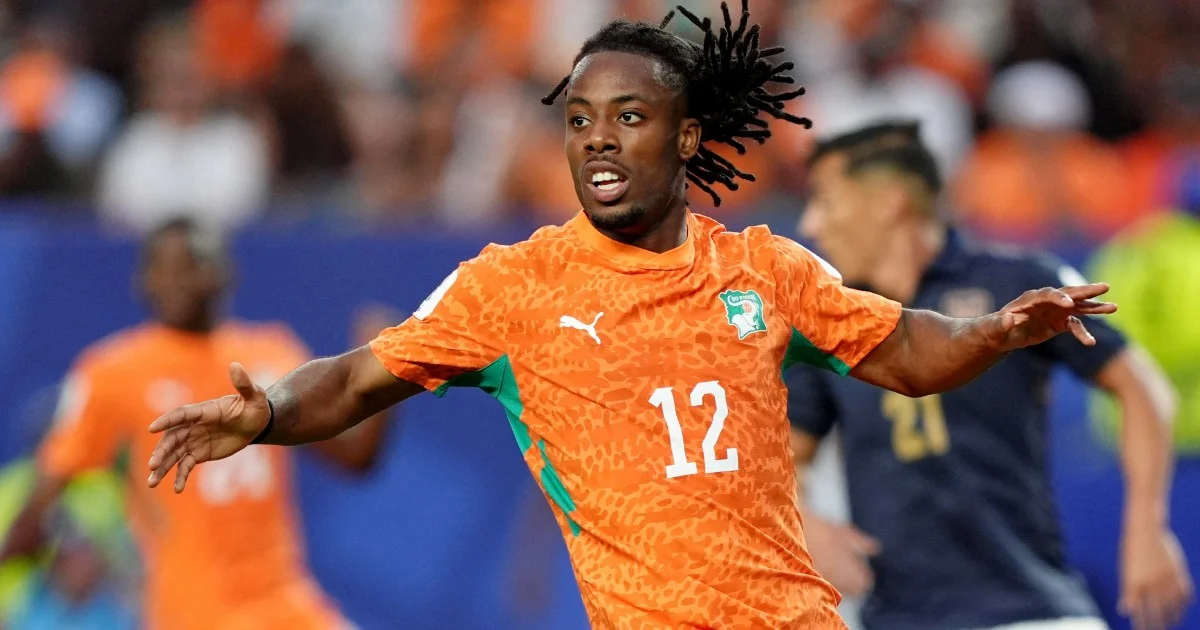
Ivory Coast forward Elye Wahi, a starting player in his nation's World Cup win over Ecuador on Sunday, has become the subject of a French criminal investigation into alleged match-fixing, with his arrest occurring in May of this year.
The revelation, which emerged through reporting by The Athletic on Wednesday, adds another concerning chapter to the persistent problem of corruption in international football. Spot-fixing—where specific moments within a match are manipulated rather than the overall result—represents a particularly insidious form of match manipulation that has become an increasing concern for footballing authorities across Europe and globally.
Wahi's involvement in the investigation raises immediate questions about the integrity of recent matches in which he has participated, particularly given the high-profile nature of the World Cup competition. The timing of his arrest in May, combined with his continued participation in major tournaments, underscores the complexities that arise when investigations run parallel to ongoing competitive fixtures and the challenge authorities face in managing such situations.
The French investigation into spot-fixing reflects broader concerns that have been mounting across European football in recent years. Such operations typically involve the coordination of betting syndicates, often operating across multiple jurisdictions, who profit from the predictability of specific in-match moments such as corner kicks, yellow cards, or throw-in outcomes. These schemes exploit the massive global sports betting market that now encompasses far more than simple match outcomes.
For Ivory Coast's national team, the situation presents a delicate predicament. The player remains available for selection and has continued to feature in competitive matches despite the arrest, suggesting that either the investigation has not yet reached a conclusive stage or that sporting bodies have not yet taken action based on preliminary findings. This raises questions about communication channels between French law enforcement and international football governance structures.
The implications extend beyond Wahi himself. Match-fixing scandals have the potential to damage the credibility of entire competitions and teams, particularly when they involve players from nations competing at the highest levels of international football. Ivory Coast's World Cup campaign carries significant importance for West African football, and any association with corruption threatens to taint the achievements of players and coaching staff who may be entirely uninvolved.
Spot-fixing investigations are notoriously complex to prosecute because they require coordination between law enforcement agencies in multiple countries, cooperation from betting companies that operate globally, and technical evidence of communication between the accused and those organizing the scheme. The lengthy investigation period before Wahi's arrest suggests authorities were building a comprehensive case, likely involving financial records, communications data, and witness testimony.
The case also illuminates the vulnerability of professional footballers to approaches from criminal syndicates. Players at all levels of professional football have reported being targeted by fixers, who exploit financial pressures, gambling debts, or family connections to coerce participation. For a forward like Wahi, whose career involves exposure to diverse betting markets across multiple countries, the risk of such approaches may be heightened.
From a Southeast Asian perspective, this investigation carries particular relevance given the region's large and growing sports betting market. Malaysia, Thailand, and other nations in the region have grappled with match-fixing scandals in both regional and domestic competitions, making the experiences of investigators in Europe and Africa directly applicable to local concerns. The methods used by French authorities to identify and build cases against individuals involved in spot-fixing could inform regional law enforcement approaches.
The investigation also underscores the ongoing need for transparency in how football authorities handle allegations of corruption involving active players. The apparent continuation of Wahi's career despite his arrest raises legitimate questions about whether all relevant parties—including the Ivorian Football Federation, FIFA, and the clubs employing such players—are adequately informed and coordinated in their responses to such situations.
As details of the investigation emerge, the footballing world will be watching closely to understand what specific matches or competitions may have been affected and what evidence authorities have compiled. The resolution of this case, whenever it arrives, will likely influence how both law enforcement and football's governing bodies approach similar situations in the future, particularly as the sophistication and scale of match-fixing operations continues to evolve globally.
For now, Wahi's status remains one of active participation in competition despite serious criminal allegations, a situation that highlights the tension between the presumption of innocence and the duty of sports bodies to protect the integrity of their competitions.