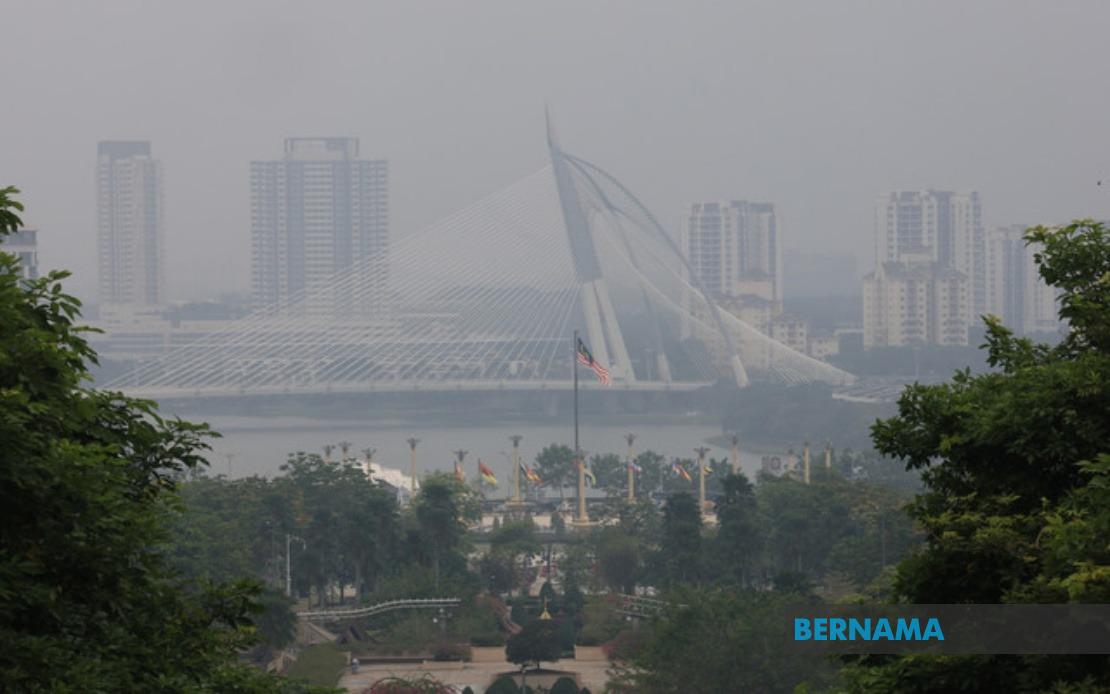
The Department of Islamic Development Malaysia (JAKIM) is convening a Solat Hajat at three prominent mosques this evening in response to the ongoing haze crisis gripping the country. The special prayer of needs, scheduled to commence after Maghrib prayers, will take place simultaneously at the National Mosque in Kuala Lumpur, the Putra Mosque in Putrajaya, and Tuanku Mizan Zainal Abidin Mosque, also in Putrajaya. The coordinated religious observance represents an institutional response to the transboundary air pollution challenge that has emerged as a recurring seasonal threat to Malaysia's environmental and public health landscape.
JAKIM director-general Datuk Dr Sirajuddin Suhaimee articulated the spiritual dimension of the initiative, emphasising that Muslims are invited to participate in seeking divine intervention and protection during this environmental trial. The appeal extends beyond institutional participation, explicitly calling upon the broader Muslim community to join in collective supplication for safeguarding the nation's populace. Dr Sirajuddin's statement underscored the multifaceted nature of the prayer's intention, encompassing protection from harm, preservation of health and safety, and the restoration of environmental conditions in regions most severely impacted by the atmospheric pollution.
The religious response reflects coordination between multiple tiers of Malaysia's governance structure and Islamic authority. The initiative aligns with a formal royal decree from Al-Sultan Abdullah Ri'ayatuddin Al-Mustafa Billah Shah, the Sultan of Pahang, who issued a call for nationwide prayer and supplication to seek Allah's assistance for those affected by the haze. This royal pronouncement carries significant weight within Malaysia's constitutional monarchy framework, where the sultans hold ceremonial and symbolic religious authority. Additionally, the effort responds to advocacy from Dr Zulkifli Hasan, Minister in the Prime Minister's Department overseeing Religious Affairs, who championed the undertaking as an appropriate institutional and community response to the ongoing crisis.
The haze phenomenon affecting Malaysia represents a complex environmental challenge with roots in transboundary pollution dynamics. As of the morning announcement, air quality monitoring had identified unhealthy Air Pollutant Index readings across 17 distinct localities distributed throughout six Malaysian states—Sarawak, Selangor, Negeri Sembilan, Johor, Melaka, and Perak—alongside the federal territories of Kuala Lumpur and Putrajaya. This geographic dispersal demonstrates the pervasive nature of the atmospheric crisis, affecting both peninsular Malaysia and the larger island of Sarawak, spanning several hundred kilometres and crossing different administrative regions with varying air quality management frameworks.
The recurrence of transboundary haze during particular seasons has become an entrenched feature of Malaysia's environmental calendar, typically coinciding with agricultural burning practices in neighbouring regions. The phenomenon intersects with broader Southeast Asian environmental governance challenges, as Malaysia frequently finds itself downwind from sources of air pollution originating beyond its immediate control. The atmospheric transport of particulate matter across national boundaries underscores regional cooperation requirements and the limitations of unilateral environmental management strategies. Previous instances have prompted diplomatic engagement and multilateral environmental protocols, yet the challenge persists as a recurring public health concern affecting millions of residents across the peninsula and East Malaysia.
Public health implications of sustained exposure to unhealthy air quality constitute a significant concern for Malaysian communities, particularly among vulnerable populations including children, elderly residents, and individuals with pre-existing respiratory conditions. Unhealthy API readings typically trigger recommendations for reduced outdoor activities and increased use of respiratory protection equipment. Healthcare facilities across affected regions experience increased demand for respiratory-related consultations and treatments during haze episodes. The cumulative health burden compounds existing atmospheric pollution challenges from vehicular emissions and industrial activities, creating complex air quality dynamics that require multisectoral intervention spanning environmental regulation, public health communication, and community behaviour modification.
The institutional response through religious channels reflects Malaysian governance's characteristic integration of Islamic principles within state functions and public communication strategies. The mobilisation of mosque facilities and religious leadership represents a mechanism for disseminating public health messaging and collective action mobilisation beyond conventional administrative channels. Religious institutions command substantial community engagement capacity in Malaysian society, enabling rapid information dissemination and participation encouragement through established congregation networks. The Solat Hajat tradition embodies a culturally resonant framework for addressing community-level crises, framing environmental challenges within spiritual and moral dimensions alongside practical mitigation approaches.
The concurrent nature of prayers at three major mosques with distinct geographical locations—encompassing the capital city's primary Islamic institution, plus two Putrajaya facilities serving the administrative centre—amplifies the symbolic significance of the national response. The National Mosque's participation carries particular weight given its status as the principal Islamic institution representing Malaysia's federal structure and Islamic heritage. Putrajaya's dual mosque involvement reflects the administrative capital's role in coordinating national-level responses to environmental crises. This distributed prayer arrangement enables simultaneous participation across multiple constituencies while maintaining ceremonial coherence through synchronised timing with the Islamic daily prayer schedule.
Looking forward, the Solat Hajat initiative exemplifies how Malaysia integrates religious observance with environmental crisis management, drawing upon institutional networks and community participation mechanisms to address transnational atmospheric pollution challenges. The coordination between religious authorities, executive leadership, and royal sanction demonstrates a comprehensive institutional approach recognising the multidimensional nature of environmental crises affecting public welfare. However, the underlying haze challenge requires sustained engagement with regional partners to address source pollution and establish effective transboundary environmental governance mechanisms beyond what religious observance alone can accomplish. The prayer initiative must complement rather than substitute for evidence-based environmental policy, regulatory enforcement, and diplomatic engagement addressing the structural causes of recurring seasonal haze affecting Malaysia and Southeast Asia more broadly.

