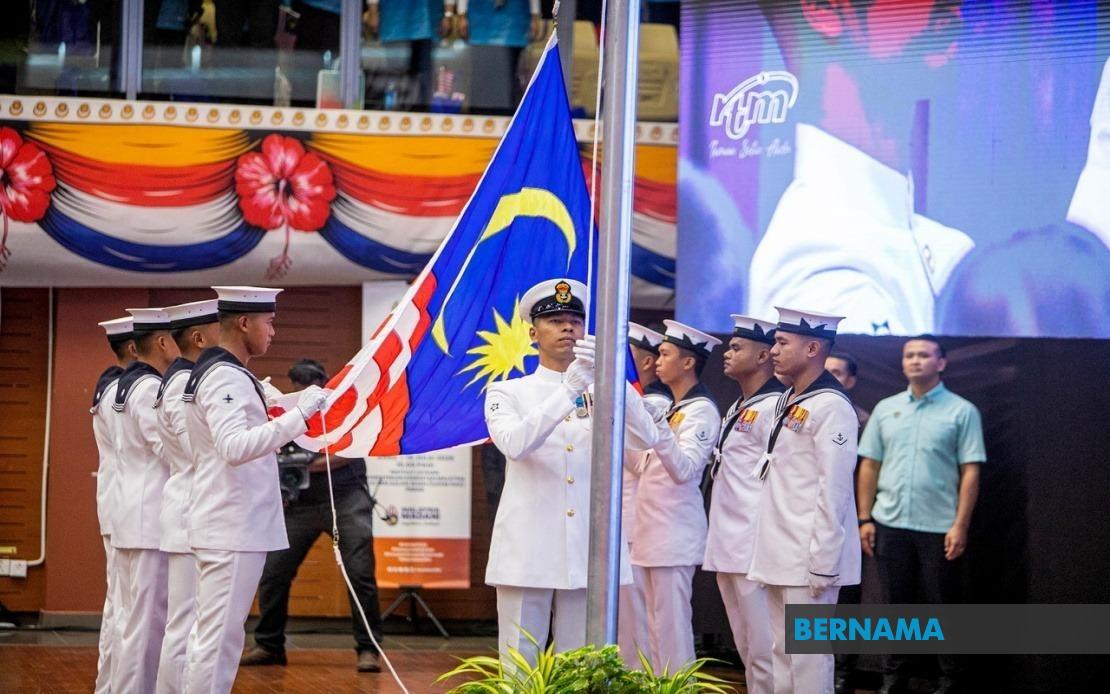
Malaysia's iconic Jalur Gemilang raising ceremony has been reinstated as a centrepiece of the nation's patriotic calendar, returning to prominence after lying dormant for two years. Prime Minister Datuk Seri Anwar Ibrahim presided over the revival at the Sultan Azlan Shah Ministry of Health Training Institute in Tanjung Rambutan, Ipoh, on July 19, marking the official commencement of the 2026 National Month celebrations and the nationwide Fly the Jalur Gemilang campaign. The ceremonial hoisting of the flag, a tradition steeped in Malaysian civic culture, signals an intentional pivot toward reinvigorating collective displays of national pride and unity during the lead-up to Independence Day festivities.
The ceremony's resurrection comes at a politically significant moment for the Malaysian government. The revival of such symbolic rituals serves multiple functions beyond mere pageantry: it demonstrates governmental commitment to strengthening national identity and cohesion at a time when divisive issues have occupied the political landscape. By choosing to resurrect this particular ceremony, the administration sends a message that restoring traditional patriotic observances remains a priority, suggesting an effort to refocus public discourse toward shared national values and collective pride rather than contentious partisan matters.
At the heart of the ceremony stood a nine-member contingent from the Royal Malaysian Navy, based at Lumut, led by Chief Petty Officer Mohamad Razif Aliff Md Yusof. These service personnel were entrusted with hoisting the Jalur Gemilang, which measured 1.82 metres by 3.65 metres, a deliberate symbolic gesture vesting the military with custodianship of the flag-raising responsibilities. This choice underscores the enduring association between Malaysia's armed forces and national symbols, reflecting a broader regional tradition of military involvement in ceremonial nation-building activities. The presence of uniformed personnel added gravitas to proceedings and reinforced messages of national security and institutional continuity.
As the flag ascended the pole, attendees sang Negaraku, the national anthem, creating a moment of collective affirmation. The accompanying recitation of the Rukun Negara pledge by ILKKM SAS trainee Muhammad Ammar Mohd Asri further embedded constitutional and civic principles into the ceremony. These layered ritual elements—flag, anthem, founding pledge—create a comprehensive patriotic statement, reminding participants and observers of Malaysia's foundational commitments to constitutional monarchy, parliamentary democracy, and multiethnic harmony. Such ceremonies, when executed publicly and transmitted through media channels, reach audiences far beyond the immediate gathering.
The Fly the Jalur Gemilang campaign itself represents a grassroots approach to national pride, encouraging ordinary Malaysians to display their national flag as a visible emblem of belonging and allegiance. Unlike centrally mandated patriotic programming, this campaign relies on voluntary citizen participation, transforming individual domestic spaces into expressions of national identity. For a multiethnic society like Malaysia, such inclusive symbolic frameworks help bridge communal divides by offering a unifying icon transcending ethnic, religious, or regional particularisms. The campaign's emphasis on voluntary participation also speaks to evolving understandings of patriotism in contemporary Malaysia, moving beyond state-imposed obligations toward encouraged civic engagement.
Compounding the ceremonial significance, musician Faizal Tahir unveiled "Aku Berjanji" as the official theme song for the 2026 National Month and Malaysia Day celebrations. Released through the Merdeka360 portal at 12.30 pm on July 19, the composition provides an accessible cultural vehicle for spreading patriotic messages across demographic and geographic boundaries. Popular music functions as a powerful vector for emotional and ideological messaging, often reaching audiences whom traditional political communications might not engage. By commissioning original compositions from established artists, the government taps into cultural authority and emotional resonance that official pronouncements alone cannot achieve.
The 2026 National Month campaign represents the most extended patriotic season in Malaysia's annual calendar, spanning from late July through mid-September. This elongated observance period encompasses Independence Day on August 31 and Malaysia Day on September 16, both dates carrying profound historical significance. The extended campaign allows for sustained engagement with patriotic themes and provides opportunities for diverse programmatic activities—educational initiatives, cultural performances, community service projects—that collectively reinforce messages of national unity and shared identity. For younger Malaysians especially, these repeated exposures help cement civic consciousness during formative years.
The two-year hiatus preceding this ceremony's reinstatement warrants contextual scrutiny. Whether the gap resulted from pandemic-related disruptions, budgetary constraints, or policy shifts remains unclear from available information, yet its duration suggests the ceremonial was deprioritised during a specific period. Its revival now signals renewed emphasis on symbolic nation-building activities, possibly reflecting assessments that collective identity reinforcement deserves higher priority. This recalibration may indicate governmental recognition that patriotic symbolism and ceremonial occasions retain meaningful influence over public sentiment and national cohesion.
For regional observers, Malaysia's renewed emphasis on national patriotic ceremonies offers interesting comparisons with neighbouring countries' approaches to civic identity and state-sanctioned symbolism. Singapore's rigorous flag protocols, Indonesia's Pancasila indoctrination efforts, and Thailand's strict lèse-majesté traditions all represent distinct models for embedding national identity into public consciousness. Malaysia's approach through voluntary campaigns and cultural programming reflects particular democratic commitments while addressing the specific challenges of maintaining unity across Malaysia's diverse population. The Jalur Gemilang raising ceremony, modest in scale yet significant in symbolism, exemplifies this calibrated approach.
Moving forward, the ceremony's restoration establishes a restored annual fixture in Malaysia's civic calendar. Consistent reiteration of such occasions helps normalise patriotic expression and integrates national identity work into expected seasonal rhythms. For international observers and Malaysian diaspora communities abroad, these ceremonial moments provide confirmation of Malaysia's institutional continuity and governmental commitment to foundational national principles. The ceremony, then, functions simultaneously as internal civic reinforcement and external representation of institutional stability and national pride.

