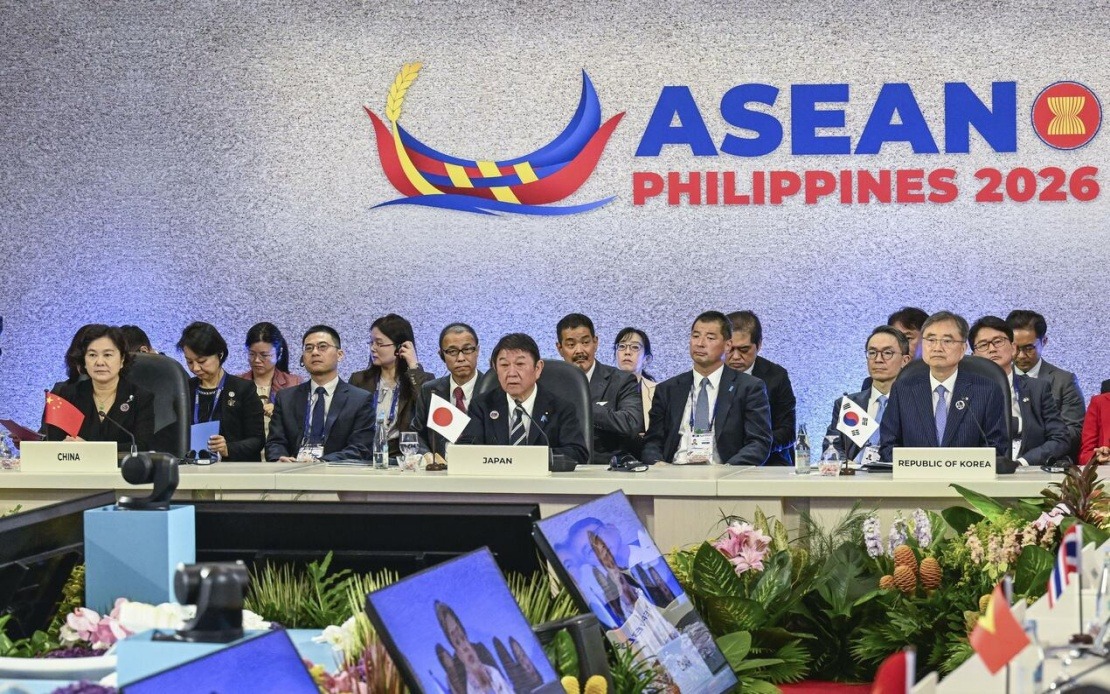
Japan has signalled its intention to deepen regional cooperation with ASEAN, China, and South Korea across critical areas including energy resilience and the fight against digital fraud, marking a significant step in multilateral engagement at a time of considerable geopolitical complexity. The commitment emerged from a foreign ministers' meeting convened in Manila, where Japanese Foreign Minister Toshimitsu Motegi articulated Tokyo's vision for bolstering practical partnerships that extend beyond traditional diplomatic channels to address the interconnected challenges facing East Asia.
Motegi's presence at the gathering underscored Japan's commitment to the ASEAN-plus-three framework, a cooperative structure born from the ashes of the 1997 Asian financial crisis and designed to foster economic and political coordination among ten Southeast Asian nations alongside Japan, China, and South Korea. The framework remains one of the region's most enduring institutional mechanisms, reflecting a recognition that shared prosperity and stability demand collaborative approaches to transnational challenges. By actively engaging within this structure, Japan reinforces its belief that multilateral platforms, rather than zero-sum competition, offer the most viable pathway to addressing shared vulnerabilities.
The emphasis on energy security reflects pressing regional concerns emerging from recent geopolitical tensions in West Asia, which have reverberated through global supply chains and raised fresh questions about the reliability of energy corridors upon which Southeast Asian economies depend. Japan's proposal to strengthen energy supply networks addresses this vulnerability head-on, recognising that no single nation can insulate itself from global energy shocks. For Malaysian readers, this commitment carries particular relevance, as the country's economy remains sensitive to fluctuations in energy costs and the stability of regional trade routes through which much of the world's fuel transits.
China's participation, represented at the ministerial level by Vice Foreign Minister Hua Chunying in place of Foreign Minister Wang Yi, demonstrated Beijing's continued investment in ASEAN-plus-three mechanisms despite broader strategic tensions in the region. This diplomatic positioning suggests that even amid great power competition, institutional channels for practical cooperation remain valuable and actively utilised. The attendance of South Korean Foreign Minister Cho Hyun completed a trilateral representation that encapsulates the modern East Asian strategic environment, where countries must simultaneously manage competitive impulses and collaborative imperatives.
Motegi articulated a compelling economic argument for deepened cooperation, noting that the combined GDP of ASEAN-plus-three member states now exceeds one quarter of global economic output. This statistic carries profound implications for how regional nations perceive their collective agency on the world stage. The grouping's scale affords considerable leverage in international negotiations and standard-setting processes, from trade architecture to technology governance. Southeast Asian nations, including Malaysia, benefit from this aggregated economic weight, which can amplify their voices in forums where individual country size might otherwise limit influence.
Japan's explicit endorsement of ASEAN centrality and the ASEAN Outlook on the Indo-Pacific represents a carefully calibrated diplomatic position that aligns Tokyo's strategic vision with frameworks that Southeast Asian nations regard as protective of their autonomy and agency. The AOIP, adopted by ASEAN to preserve the region's capacity for independent foreign policy manoeuvring, resonates with countries anxious about being compelled to choose sides in great power competition. By endorsing ASEAN centrality, Japan signals respect for the bloc's commitment to navigating between major powers while maintaining strategic flexibility—a principle that carries particular weight for Malaysian policymakers navigating a complex neighbourhood.
Motegi's assertion that Tokyo's free and open Indo-Pacific vision shares fundamental principles with AOIP reflects Japan's sophisticated understanding that its strategic interests are best served not through coercive alignment but through demonstrating practical convergence with Southeast Asian preferences. This approach acknowledges that ASEAN nations value strategic autonomy above the security guarantees or economic inducements that major powers might offer. By framing cooperation as complementary rather than contradictory, Japan positions itself as a partner respectful of regional sensibilities rather than a power seeking to subordinate Southeast Asian interests to its own strategic calculus.
The focus on combating online scams addresses a threat that has emerged as a genuinely transnational challenge, particularly acute in Southeast Asia where rapid digitalisation has outpaced regulatory capacity in many jurisdictions. Criminal networks operating across borders exploit jurisdictional gaps and varying levels of technological sophistication among national law enforcement agencies. Malaysia, with its substantial digital economy and large online user base, faces particular vulnerability to such schemes. Regional cooperation on this front promises practical benefits through enhanced information sharing, joint investigations, and harmonised regulatory approaches that can disrupt criminal operations more effectively than individual nation-state efforts.
The meeting's significance extends beyond the immediate pledges announced, reflecting broader trends in how East Asian states are adapting to a multipolar era where traditional security alliances must coexist with pragmatic multilateral frameworks addressing transnational issues. The ASEAN-plus-three mechanism, despite being sometimes overshadowed by higher-profile forums, continues to provide valuable space for sustained dialogue among major regional actors. For Southeast Asian nations including Malaysia, maintaining and strengthening such platforms helps ensure that regional interests are not determined solely by bilateral relationships with major powers but emerge from sustained multilateral conversation.
Japan's engagement also carries implications for how Tokyo perceives its broader regional role in coming years. Rather than withdrawing into bilateral arrangements or exclusively pursuing partnerships with ideologically aligned democracies, Tokyo's continued investment in ASEAN-plus-three cooperation suggests recognition that regional stability requires sustained engagement across the political spectrum. This pragmatism reflects Japan's understanding that its prosperity depends on a functioning regional order encompassing all significant East Asian economies, regardless of their domestic systems or immediate political alignments.
Looking forward, the concrete implementation of these pledges will determine their strategic significance. Energy cooperation frameworks will need to translate into actual infrastructure investments, regulatory harmonisation, and perhaps joint strategic reserves that enhance regional resilience. Similarly, cybercrime cooperation must move beyond institutional arrangements to yield tangible improvements in investigation success rates and criminal apprehension. The October summit in Malaysia will provide an opportunity to assess progress and identify areas requiring deepened commitment or institutional innovation to address the challenges confronting this economically vital but geopolitically complex region.

