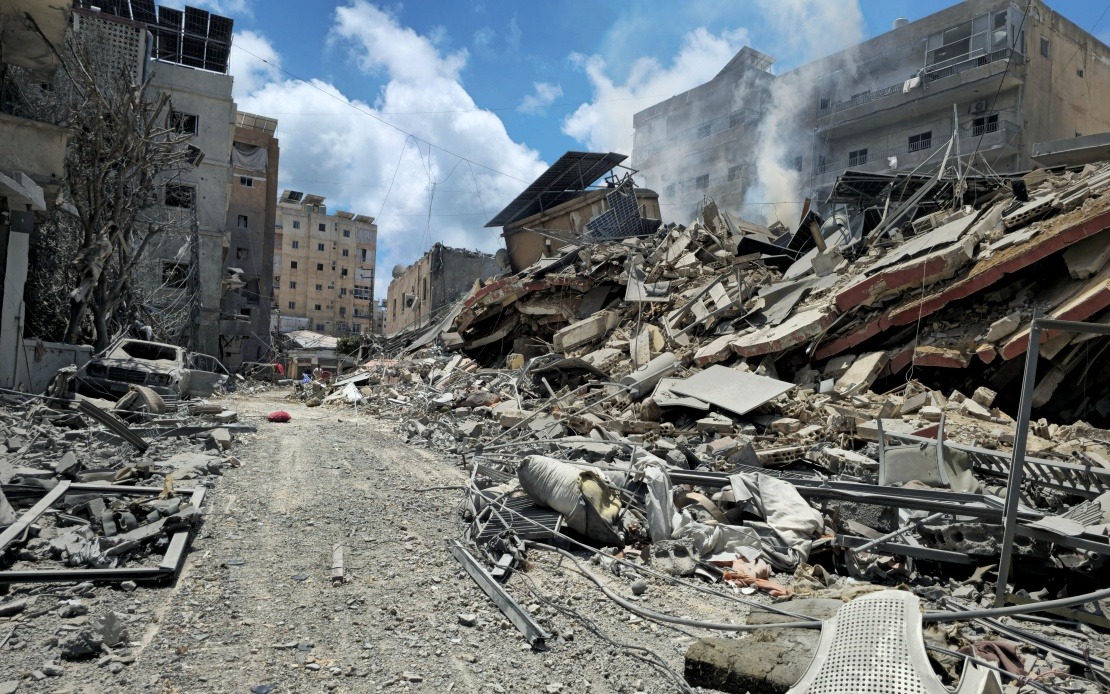
Japan has committed US$15 million in emergency grant assistance to support humanitarian needs across three crisis-affected regions in West Asia, according to an announcement by Foreign Minister Toshimitsu Motegi on Friday. The allocation reflects Tokyo's strategic concern for regional stability and its historical humanitarian engagement in the Middle East, a zone critical to Japan's energy security and international standing. The breakdown targets Iran with approximately US$10 million, Lebanon with around US$4 million, and Palestinians in the West Bank with US$1 million, demonstrating Japan's tiered approach to addressing humanitarian emergencies based on assessed severity and population needs.
The Japanese government will channel the financial support through established international organisations rather than direct bilateral transfers, a mechanism that allows for coordinated delivery and accountability while maintaining diplomatic sensitivity around recipients and donors. This operational structure ensures that aid reaches vulnerable populations through trusted humanitarian channels experienced in navigating complex political environments. By routing assistance through multilateral institutions, Japan reduces friction with various stakeholders while upholding universal humanitarian principles that transcend political divisions in the region.
Motegi emphasised during the announcement that stability and peace in the Middle East represent vital interests for Japan, a statement that carries substantial weight given Tokyo's economic dependence on Middle Eastern oil and gas supplies. This declaration signals Japanese recognition that regional instability—whether driven by conflict, humanitarian collapse, or political breakdown—ultimately affects Japan's own economic security and global positioning. Japan's willingness to deploy financial resources underscores its commitment to preventive diplomacy and humanitarian burden-sharing in a region where rival powers compete for influence.
The aid package will finance essential supplies including food, medical equipment, and other critical humanitarian provisions. These categories address immediate survival needs in contexts where conflict disruption, economic collapse, or displacement have fractured normal supply chains and overwhelmed local capacity. In Iran, where economic sanctions and recent regional tensions have strained resources, food security represents an acute concern affecting vulnerable populations including children and the elderly. Lebanese civilians face overlapping crises—economic meltdown, political dysfunction, and humanitarian needs—making medical supplies and nutritional support genuinely life-saving interventions.
For Palestinians in the West Bank, sustained humanitarian assistance remains essential as recurring conflict cycles and restricted economic activity perpetuate poverty and limit access to basic services. The US$1 million allocation, while modest in absolute terms, signals Japanese solidarity with civilian populations caught between competing political forces and affirms Tokyo's position as a development partner rather than a partisan actor in Middle Eastern disputes. Japan's consistent humanitarian engagement with Palestinian communities has built goodwill across Arab populations and positioned Japan favourably in international humanitarian rankings.
Motegi's statement that Japan will continue collaborating with relevant countries and international organisations reflects Tokyo's multilateral orientation and reluctance to pursue unilateral Middle East policies. This approach aligns with Japan's broader foreign policy preference for working through established institutions and consensus-building rather than direct intervention or confrontational diplomacy. By emphasizing partnership, Japan signals that it views humanitarian relief as a shared responsibility requiring coordinated effort from developed nations and global institutions.
The timing of this announcement comes amid persistent regional tensions that have disrupted humanitarian access, strained already-fragile healthcare systems, and displaced populations across multiple countries. Japan's response demonstrates that despite trade disputes and strategic competition with other powers, humanitarian imperatives transcend great-power politics. For Southeast Asian nations, Japan's engagement in Middle Eastern stability provides a regional precedent: prosperity and security depend on preventing humanitarian catastrophe and supporting inclusive international responses to regional crises.
From a Malaysian perspective, Japan's initiative carries particular relevance. Malaysia, with substantial economic ties to Iran and significant Palestinian diaspora communities, shares interests in both regional stability and civilian welfare. Japan's measured approach—providing assistance without demanding political concessions—offers a model for regional actors seeking to balance humanitarian concern with diplomatic pragmatism. Additionally, Malaysia's role as a developing nation and Muslim-majority country gives it particular standing to observe and potentially coordinate with Japanese efforts in supporting affected populations.
The allocation also reflects Japan's broader recalibration of Middle East policy following decades of relatively limited engagement compared to Western powers. As China expands its influence through Belt and Road initiatives and infrastructure investments across West Asia, Japan's humanitarian diplomacy serves as soft-power counterweight emphasising values-based engagement. This strategic dimension does not diminish the genuine humanitarian motivation but contextualises Japan's assistance within broader patterns of great-power competition for regional influence and trust.
Looking forward, Japan's commitment suggests sustained engagement rather than one-off aid. The country has historical experience managing complex humanitarian operations in fractured environments and possesses technical capacity for monitoring aid distribution and ensuring effectiveness. Whether through Japanese NGOs, UN agencies, or other mechanisms, Tokyo's institutional networks position it to contribute meaningfully to humanitarian coordination despite political obstacles. For Southeast Asian observers, Japan's persistence in supporting humanitarian imperatives despite regional complexity offers lessons in balancing national interests with global responsibilities.

