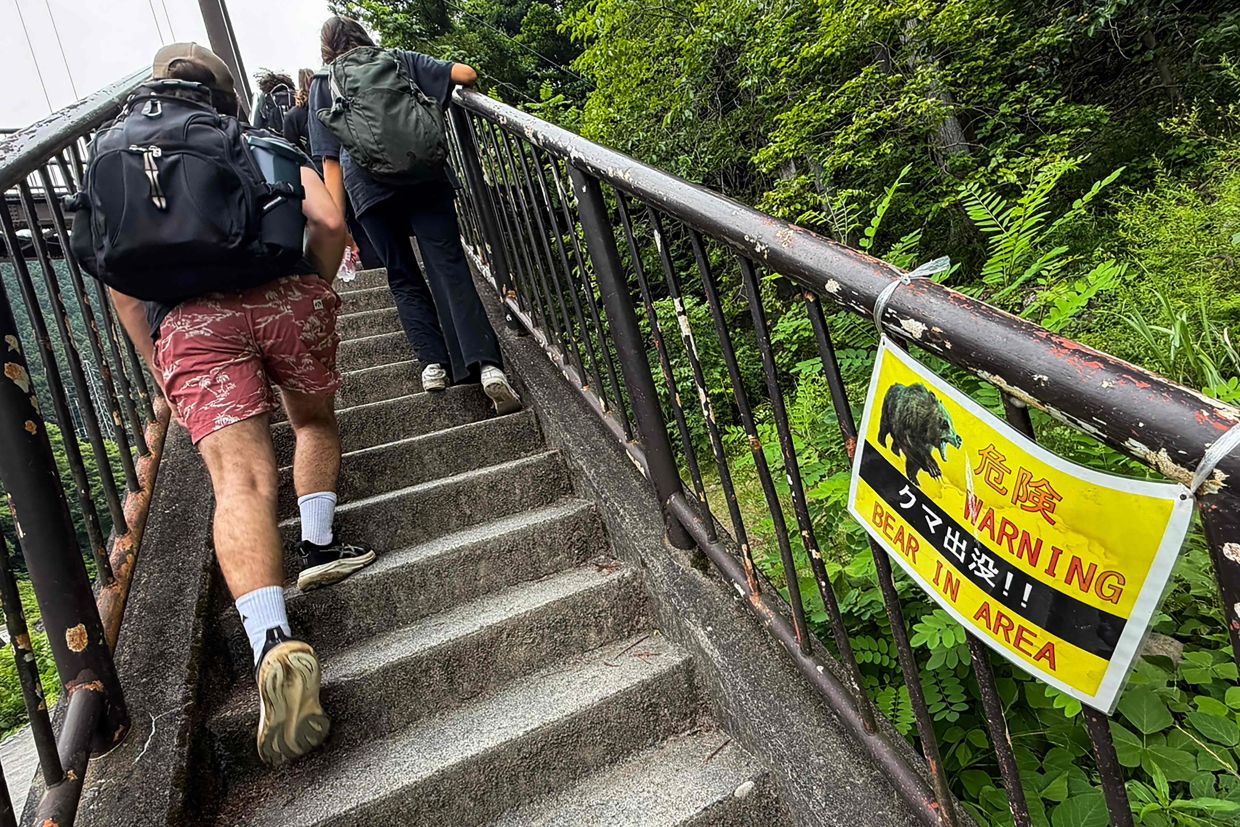
Japan's environment ministry has launched an ambitious wildlife monitoring initiative, installing hundreds of surveillance cameras across its mountainous regions in response to a dramatic spike in bear-related fatalities. The nationwide survey marks a significant policy shift aimed at better understanding bear population dynamics and preventing further human casualties. Officials revealed the deployment strategy this week as authorities grapple with an escalating crisis that has claimed at least five lives in the northern Tohoku region since April alone.
The urgency of the situation is underscored by alarming statistics. Japan recorded 13 fatal bear attacks across the country during the last fiscal year, representing a troubling increase in human-wildlife conflict. The clustering of recent deaths in Tohoku has particularly unnerved residents, who now live under the shadow of constant threat. Daily news reports documenting bear sightings at shopping centres, public parks, and school grounds have amplified public anxiety, creating a sense of siege in normally tranquil communities.
Environment ministry official Yu Takahashi explained that the new monitoring system represents a fundamental departure from previous approaches. Historically, individual local governments conducted their own surveys using inconsistent methodologies and timelines, resulting in fragmented and unreliable population data. The centralised camera network aims to establish standardised monitoring protocols that will generate accurate, comparable information about bear movements and population density across different regions. This systematic approach is essential for developing evidence-based management strategies rather than reactive crisis response.
The technical implementation reflects careful scientific design. Officials plan to deploy more than 800 cameras across the country, beginning with six major bear populations in Tohoku before gradually extending the survey nationwide over four years. The cameras are positioned at strategic locations baited with jars of honey mixed with wine, placed at approximately head height to encourage bears to stand upright. When bears rear onto their hind legs to sniff the sweet bait, the cameras capture images of each animal's distinctive white chest markings, enabling researchers to identify individuals and track movement patterns.
The underlying causes of increasing bear-human conflict reflect broader demographic and environmental shifts across rural Japan. Scientists attribute rising bear numbers partly to declining rural populations, as fewer people living in mountainous regions means less human activity to deter wildlife. Mountains comprise approximately 80 percent of Japan's landmass, creating vast habitats where bear populations can expand relatively unchecked. As rural communities shrink due to migration to urban centres, natural predation control mechanisms have weakened, allowing bear populations to grow beyond sustainable levels.
The consequences of this population explosion are increasingly visible in Japan's cities and towns. Bears have begun venturing far beyond their traditional mountain strongholds, infiltrating urban peripheries and occasionally penetrating deep into populated areas. In June, authorities in Utsunomiya, located north of Tokyo, required four days and the combined efforts of dozens of police officers, professional hunters, and city officials to trap a single bear roaming city streets. The incident forced widespread school closures, illustrating how wildlife intrusions can disrupt normal functioning of entire communities.
Some recent incidents highlight the intelligence and unpredictability of bears in unfamiliar environments. One bear that attacked workers at two factories in Fukushima demonstrated remarkable problem-solving abilities, opening windows and manipulating water taps before evading capture for extended periods. Such incidents suggest that standard deterrence measures may prove inadequate against increasingly bold animals, necessitating more sophisticated management approaches.
Accidental incidents underscore the heightened state of alert pervading affected regions. This week, a 22-year-old Vietnamese national was arrested on obstruction of business charges after inadvertently discharging anti-bear spray in a post office in Nagoya city. The incident, which required hospital treatment for five people exposed to the chemical irritant, demonstrates how fear-driven precautions can themselves create public safety risks. The young man apologised to authorities, explaining he had activated the spray unintentionally while handling the canister.
The seasonal dimension of bear attacks compounds management challenges. As bears emerge from hibernation in spring and early summer, they experience heightened nutritional demands and venture into populated areas searching for food sources. Recent months have witnessed a pronounced spike in urban sightings as animals emerge ravenous from their winter dens. This seasonal pattern requires authorities to implement enhanced alert systems and public education campaigns during high-risk periods.
Public safety recommendations now form an essential component of life in bear country. Authorities advise residents to avoid solo mountain visits and to carry bear spray containing capsaicin, the chemical compound responsible for chilli peppers' heat, which creates burning sensations when sprayed. Bells attached to bags alert bears to human presence, encouraging avoidance. These simple precautions reflect recognition that coexistence requires behavioural adaptation by human populations rather than elimination of bear populations.
Possible additional fatalities threaten to escalate the crisis further. Authorities are currently investigating a suspected sixth death after discovering a man's body bearing bite marks in a mountainous Tohoku location. Confirmation of this incident would elevate the official death toll and intensify pressure on policymakers to accelerate response measures. The combination of record fatalities, increasing urban encroachments, and apparent intelligence displayed by some individual bears suggests that Japan faces a genuinely novel wildlife management challenge requiring sustained institutional commitment and innovative solutions.
The camera deployment programme represents a rational first step toward understanding what remains largely mysterious about Japanese bear behaviour and population dynamics. However, monitoring alone cannot resolve the underlying mismatch between expanding bear populations and shrinking rural human presence. Long-term solutions will likely require landscape-scale interventions addressing habitat management, rural depopulation trends, and potentially culling controversial policies. For now, Japanese residents living in bear country must navigate an uneasy existence, combining precautions with uncertainty as their government gathers data to inform future protective measures.

