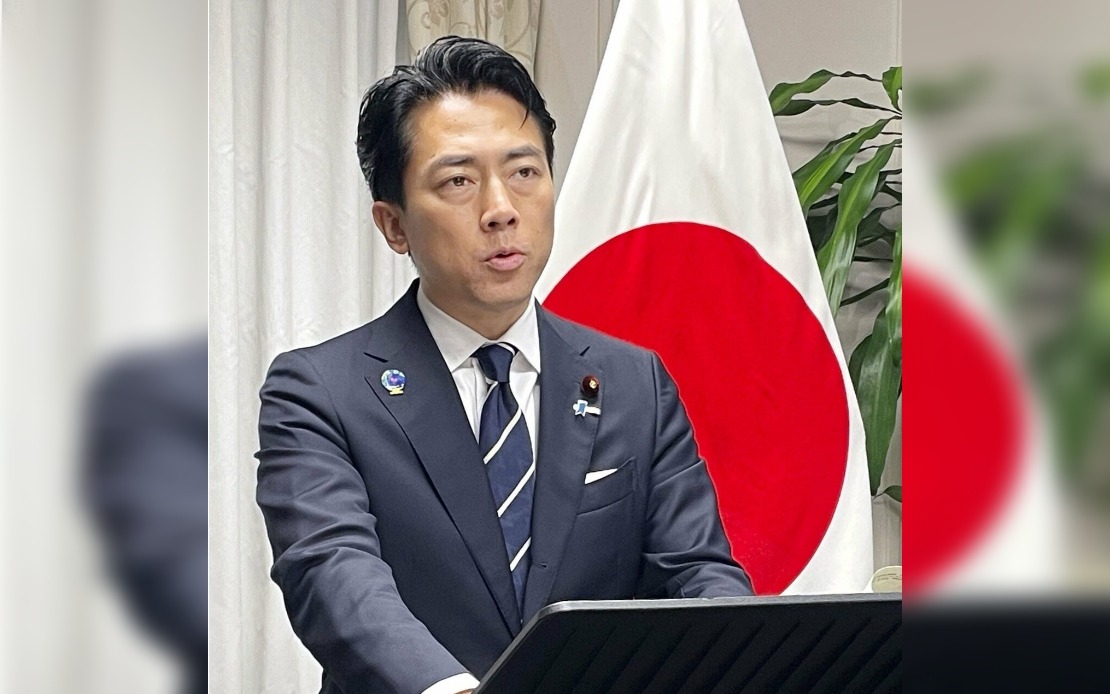
Japan's Defence Minister Shinjiro Koizumi has ignited a contentious conversation by urging his country to engage in substantive debate over nuclear weapons, signalling a potential shift in Tokyo's decades-long commitment to maintaining a non-nuclear posture. Speaking in an online programme released on Friday, Koizumi framed the discussion as unavoidable given the evolving security environment and strategic recalibrations underway among allied nations, particularly in Europe. His remarks come as the Japanese government prepares to revise three critical national security documents by the end of the year, suggesting that the nuclear question may feature prominently in Tokyo's updated strategic framework.
The Defence Minister's intervention reflects mounting anxiety within Japan's defence establishment about the country's long-term security architecture. Koizumi pointed to the policy trajectories of France and Finland as exemplars of how developed democracies are reassessing their nuclear posture in response to regional threats. France, under President Emmanuel Macron, announced in March plans to expand its nuclear warhead stockpile, while Finland's parliament approved legislation in June that would permit nuclear weapons deployment on Finnish territory. These developments underscore a broader European recalibration triggered by Russia's invasion of Ukraine and the perceived erosion of security guarantees that underpinned the post-Cold War order.
Japan's position remains distinctive and symbolically weighted. As the sole nation to endure nuclear bombardment—the atomic attacks on Hiroshima and Nagasaki in August 1945—the country has anchored its post-war identity to a principled rejection of nuclear weapons development, possession, or stationing on Japanese soil. This "three non-nuclear principles" doctrine has operated as a cornerstone of Japanese pacifism and shaped regional perceptions of Tokyo as a responsible actor committed to non-proliferation norms. However, Koizumi's suggestion that certain topics have become effectively taboo reflects frustration among security hawks who believe Japan's strategic flexibility has become constrained by historical legacies that no longer reflect contemporary realities.
The deteriorating security context in East Asia provides the immediate catalyst for this reconsideration. Japan faces an increasingly assertive China, North Korea's accelerating missile and nuclear programmes, and Russia's military posture along its northern borders. The credibility of the United States nuclear umbrella—upon which Japan fundamentally relies for its security—has become a matter of quiet concern within Tokyo's policy circles, particularly as American political polarisation raises questions about the sustainability of forward security commitments. Koizumi argued that Japan cannot maintain an ostrich-like approach to nuclear deterrence when adversaries are modernising arsenals and strategic doctrines continue to evolve.
This conversation has already proven inflammatory within Japanese politics. In December of the previous year, a government source involved in formulating security policy under then-Prime Minister Fumio Kishida's administration publicly suggested that Japan should contemplate nuclear weapons acquisition. The statement provoked immediate criticism from opposition parties and diplomatic protests from neighbouring countries, demonstrating the political minefield surrounding any serious contemplation of nuclear weapons development. Additionally, former Defence Minister Itsunori Onodera ventured into similar territory late last year by advocating for substantive examination of Japan's non-nuclear principles, further widening the crack in the traditional consensus.
Koizumi's framing deserves closer examination for what it reveals about shifting elite attitudes in Tokyo. By characterising the current prohibition on discussion as itself problematic—rather than disputing the merits of non-proliferation—he redefines the debate's parameters. This rhetorical move suggests that what opponents might view as strategic prudence, Koizumi and his allies perceive as intellectual and policy paralysis. The Defence Minister contends that Japan must create political and intellectual space to examine options that might previously have been dismissed as heretical, even if any actual policy change remains distant or unlikely.
For Southeast Asian nations, this Japanese reconsideration carries significant implications. The region has long benefited from Japan's security role anchored to non-nuclear principles, which provided reassurance that Tokyo would not pursue destabilising military competition with China. A Japan that entertains nuclear weapons development could fundamentally alter the region's strategic psychology, potentially triggering cascading concerns about proliferation and arms competition. Malaysia and other ASEAN members maintain their commitment to the Southeast Asian Nuclear-Weapon-Free Zone established through the Treaty of Bangkok, making Japanese nuclear ambitions a matter of genuine regional concern.
The timing of Koizumi's statements also warrants scrutiny. Japan's December revision of its National Security Strategy will reportedly emphasise deterrence, counter-strike capabilities, and elevated defence spending. Introducing nuclear weapons considerations into public discourse ahead of these bureaucratic exercises suggests that government officials wish to gauge political and public receptivity to more hawkish strategic postures. By floating the idea publicly through a Defence Minister with less direct responsibility for diplomatic consequences than the Prime Minister, Tokyo appears to be testing domestic and international tolerance for a nuclear policy reconsideration.
International responses have been muted, though telling. Neither Washington nor regional capitals have rushed to endorse Japanese nuclear weapons development, yet neither have they categorically rejected discussion of the topic. This diplomatic restraint reflects recognition that Japan's security concerns are legitimate whilst simultaneously avoiding any statement that might be interpreted as encouraging proliferation. The Biden administration has traditionally reaffirmed its extended deterrence commitment to Japan, though some American strategists have privately questioned whether this commitment remains credible given simultaneous American nuclear commitments to South Korea and NATO allies.
The broader context encompasses Japan's evolving strategic identity in an era of great power competition. Once content to remain a security consumer within the American alliance system, Japan increasingly views itself as a potential security provider for the region. This identity shift, combined with historical grievances over burden-sharing arrangements, creates intellectual space for reconsidering taboo subjects. Koizumi's intervention thus represents not merely a policy position but a generational assertion that post-war constraints should yield to contemporary strategic requirements.
Moving forward, observers should distinguish between genuine policy reconsideration and rhetorical positioning. Japan maintains complex diplomatic relationships with China, Russia, and South Korea—all nuclear powers with whom Tokyo maintains significant economic ties. Actual nuclear weapons development would impose severe diplomatic costs and potentially trigger security dilemmas with regional neighbours. More likely, Koizumi's advocacy presages Japanese acquisition of enhanced conventional strike capabilities and upgraded air defence systems, coupled with rhetorical emphasis on strategic autonomy and extended deterrence. The nuclear debate may ultimately function as philosophical cover for conventional rearmament that would achieve similar deterrent effects without incurring nuclear proliferation costs.

