Japan has signalled its intention to substantially deepen defence and security cooperation with Malaysia, reflecting Tokyo's broader strategic pivot towards Southeast Asia as geopolitical tensions reshape the Indo-Pacific region. Speaking at the 72nd Japan Self-Defence Forces Day Reception in Kuala Lumpur on Wednesday, Japan's Ambassador Noriyuki Shikata underscored his country's commitment to elevating bilateral ties across multiple security domains, building on momentum generated by Prime Minister Datuk Seri Anwar Ibrahim's recent visit to Japan earlier this month.
The timing of this announcement carries particular significance for Malaysia and the broader region. Both Tokyo and Kuala Lumpur have moved to formalise their relationship as a Comprehensive Strategic Partnership in 2023, a designation that reflects the mutual strategic value both nations assign to their partnership. During Anwar's visit, Prime Minister Sanae Takaichi and the Malaysian premier reaffirmed their shared commitment to strengthening defence and security cooperation, positioning these areas as central pillars of their bilateral engagement. This renewed emphasis comes as regional powers navigate an increasingly complex security landscape characterised by territorial disputes, maritime tensions, and the strategic competition between major powers.
A cornerstone of the deepening partnership involves alignment between Japan's Free and Open Indo-Pacific (FOIP) vision and ASEAN's own Indo-Pacific outlook. This convergence is not merely rhetorical; it reflects a genuine attempt by both Japan and Malaysia to shape the region's strategic architecture around principles of stability, rule of law, and inclusive prosperity. For Malaysia, embracing Japan's FOIP framework while maintaining its role within ASEAN provides diplomatic flexibility and practical benefits as it navigates competing interests from major powers. The alignment signals to other Southeast Asian nations that Japan's vision complements rather than conflicts with ASEAN's preferences for strategic autonomy.
Maritime security cooperation has emerged as the most tangible expression of this partnership. The bilateral exercise MALPAN, conducted regularly by Japan's Maritime Self-Defence Force and the Royal Malaysian Navy in strategically vital waters including the South China Sea and Strait of Malacca, serves as the practical foundation for deeper ties. In April, these exercises were expanded to include the Royal Malaysian Air Force, broadening the scope of coordination across military domains. These exercises do more than build familiarity between naval and air forces; they serve as mechanisms for testing interoperability, developing shared operational procedures, and reinforcing mutual understanding of each country's strategic priorities.
The Official Security Assistance (OSA) programme, launched by Japan in 2023 with Malaysia among the inaugural recipients, demonstrates Tokyo's commitment to translating diplomatic pledges into concrete material support. The first tranche of assistance, delivered in 2024, included unmanned aerial vehicles and rescue boats—equipment selected for their utility in maritime domain awareness and humanitarian operations. Under the 2025 iteration of the programme, Japan has committed to providing ceasefire monitoring equipment to the ASEAN Observer Team and a diving support vessel specifically designated for the Royal Malaysian Navy. These contributions are carefully calibrated to enhance Malaysia's capacity in areas aligned with regional security priorities while avoiding provocative gestures that might unnecessarily escalate tensions with other powers.
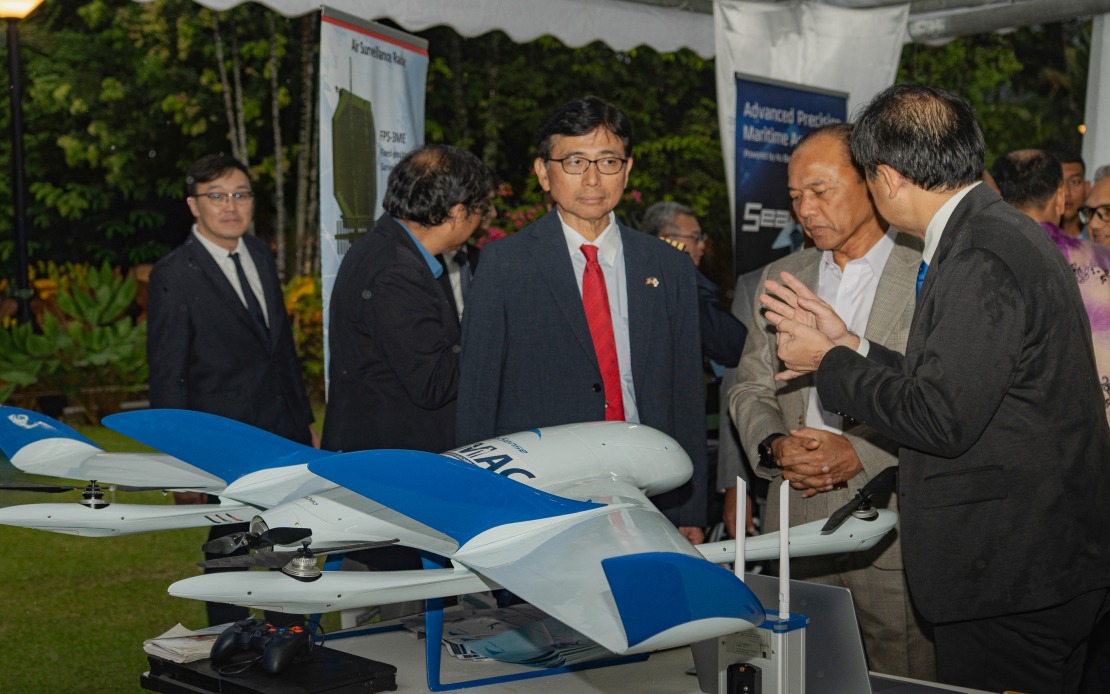
Defence industry engagement represents another dimension of this expanding partnership. The participation of ten Japanese companies in Defence Services Asia 2026, Kuala Lumpur's biennial defence exhibition, signals corporate interest in the Malaysian market and highlights the commercial dimensions of security cooperation. More significantly, Japan and Malaysia used the Defence Services Asia platform to sign a Terms of Reference establishing a bilateral defence industry dialogue. This institutional framework promises to facilitate future technology transfers, joint development initiatives, and deeper integration of defence manufacturing capabilities—areas that could yield long-term strategic and economic benefits for both nations.
For Malaysia, this security partnership with Japan offers several strategic advantages. As a middle power navigating the intensifying competition between the United States and China in Southeast Asia, Malaysia benefits from deepening ties with Japan, a technologically advanced democracy with significant military capabilities. The relationship allows Malaysia to enhance its maritime security capacity without appearing to take an explicitly anti-China stance, a critical consideration for a nation that maintains substantial economic ties with Beijing. Japan's emphasis on stability, international law, and open sea lanes resonates with Malaysia's traditional foreign policy orientation and provides diplomatic cover for security measures that might otherwise attract criticism.
The focus on de-escalation and upholding international law in Japan's security messaging also aligns with Malaysia's interests, particularly regarding disputes in the South China Sea where Kuala Lumpur holds claims but has adopted a cautious diplomatic approach. By working with Japan on these principles, Malaysia reinforces its own position without being forced to choose sides in the broader US-China rivalry. The emphasis on keeping sea lanes open and secure resonates directly with Malaysia's economic interests, as the Strait of Malacca remains one of the world's most critical chokepoints for global trade.
Armed Forces chief General Tan Sri Malek Razak Sulaiman's attendance at the ambassador's speech underscored the Malaysian military establishment's support for the deepening partnership. This military buy-in is essential for translating diplomatic agreements into operational reality. The presence of senior defence leadership at high-profile defence diplomacy events signals institutional commitment and helps ensure that cooperation frameworks translate into practical training, capability development, and sustained interoperability improvements.
Looking ahead, Ambassador Shikata identified the approaching 70th anniversary of Malaysia-Japan diplomatic relations as a symbolic milestone around which both nations intend to organise additional cooperation initiatives. This historical framing elevates the partnership beyond immediate geopolitical considerations, suggesting an institutional relationship designed for long-term stability. The ambassador's explicit commitment to advancing cooperation across all fields, with special emphasis on defence and security, indicates that Tokyo views Malaysia as a central element in its broader Indo-Pacific strategy.
The implications for Southeast Asia extend beyond bilateral concerns. Japan's visible commitment to enhanced security partnership with Malaysia could influence how other ASEAN members calibrate their own defence relationships with Tokyo. Several Southeast Asian nations face similar security challenges and strategic dilemmas, and Japan's approach—emphasising technology transfer, capacity building, and aligned strategic principles—offers an attractive model that respects sovereignty while advancing mutual interests. As regional tensions persist and the strategic environment continues to shift, the Japan-Malaysia partnership exemplifies how middle powers can build resilient security relationships that enhance regional stability without requiring explicit military alliances.
The substantive nature of the announced cooperation, encompassing exercise participation, equipment provision, industry dialogue, and humanitarian capabilities, suggests this partnership operates beyond the level of rhetoric or aspirational statements common in diplomatic discourse. For Malaysian policymakers and security professionals, the expanding relationship with Japan offers practical tools for addressing maritime security challenges, technological advancement, and regional stability—objectives that transcend any single bilateral relationship and speak to Malaysia's broader role in shaping an increasingly complex Indo-Pacific region.

