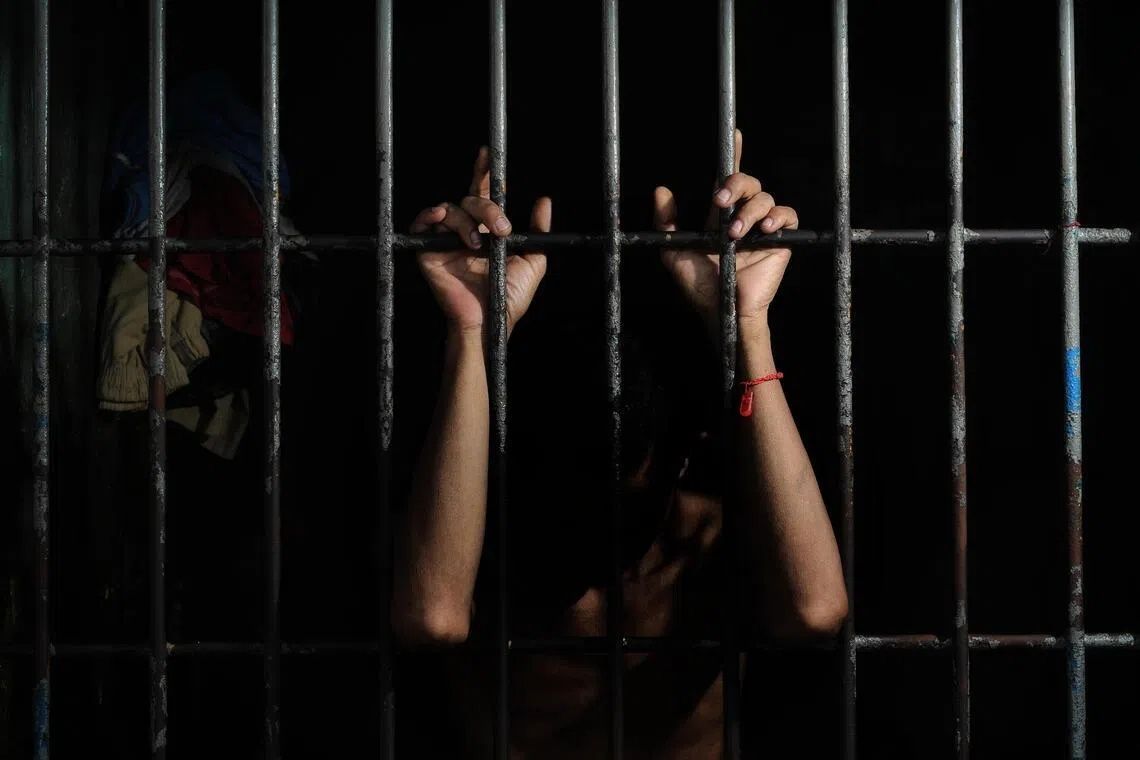
A grieving mother has turned to Japan's courts seeking accountability and redress after her teenage daughter's death, in a case that exemplifies the troubling practice of "hostage justice" within the country's criminal system. The lawsuit, filed at Kobe District Court in western Japan in June, represents another stark reminder of how the nation's harsh detention and interrogation procedures can inflict devastating consequences on the innocent. The girl, referred to as Runa in legal documents, died in December at just 20 kilograms — an alarming weight that reflected severe malnutrition — merely five months after enduring eighteen harrowing days in police custody. Her mother's quest for answers and justice underscores a growing movement to reform a justice system that international human rights organisations have repeatedly criticised for prioritising confessions over genuine investigation.
The events leading to Runa's detention began in June of the previous year when she was arrested at her workplace, a care facility for people with disabilities in Hyogo Prefecture. Authorities accused her of assaulting one of the residents during a Valentine's Day celebration. However, Runa consistently maintained her innocence throughout her ordeal, insisting that she had merely attempted to prevent the patient from biting another resident by gently applying pressure to their chin. Despite her clear denials and the questionable nature of the allegation, she was held in custody for eighteen consecutive days before prosecutors ultimately decided to drop all charges against her entirely. The decision to release her came without prosecution, effectively acknowledging that no crime had occurred — yet the damage to her physical and psychological health had already been catastrophic.
During those eighteen days in detention, Runa faced conditions and pressure designed to extract a confession rather than establish facts. She was denied contact with her family, permitted only to communicate with her legal representatives, and subjected to repeated interrogations where authorities actively pressured her to admit to an assault she had not committed. Court documents detail how investigators employed psychological coercion, repeatedly asking leading questions such as "You did it, didn't you? Just tell the truth," as recorded in Runa's own detention journal. Even more troubling, interrogators threatened her with placement in a reformatory and told her she would never see her mother again unless she confessed to the alleged crime. These tactics are symptomatic of a broader systemic problem in Japan's criminal justice approach, where confessions have become the linchpin of prosecution strategy rather than corroborating evidence.
The concept of "hostage justice" that Runa's case exemplifies refers to Japan's practice of holding suspects in prolonged pre-trial detention, often with the implicit understanding that release hinges upon confession. Critics argue that the Japanese criminal justice system does not adequately presume innocence, instead placing the burden on suspects to prove their innocence through cooperation and admission. When individuals exercise their right to remain silent or to deny charges, they frequently face extended detention periods that effectively punish the exercise of constitutional rights. This creates a coercive environment where maintaining innocence becomes exponentially more difficult and psychologically damaging, particularly for vulnerable individuals such as teenagers or those without resources for robust legal defence.
Runa's lawyer, Masahiro Sasaki, has raised fundamental questions about the legality and proportionality of her arrest and detention. He notes that the alleged assault was described as "extremely trifling" in nature — a minor intervention to prevent harm to another patient — hardly the basis for subjecting a sixteen-year-old to such severe measures. Japanese law stipulates that detention of minors should only be pursued when absolutely necessary, yet authorities twice requested extensions of Runa's detention while simultaneously blocking her lawyer's attempts to petition a judge for her release. The prosecutors' actions suggest a system operating with significant discretion and limited external oversight, where the desire to secure a confession can override legal safeguards designed to protect children and the innocent.
The psychological and physical toll of Runa's detention proved irreversible. Following her release, she was diagnosed with acute stress disorder, eating disorder, and post-traumatic stress disorder — clinical manifestations of the trauma she had experienced during interrogation and confinement. Her mother describes the moment of seeing her after release as profoundly shocking, noting that her daughter was virtually unrecognisable. The steady deterioration continued, and within five months, Runa's emaciated body gave way. Her death represents not merely a personal tragedy but a systemic failure — an innocent young person subjected to psychological and physical abuse through detention, ultimately losing her life as a consequence of that state action.
The compensation sought in this case — 100 million yen, equivalent to approximately US$623,000 — reflects the severity of harm inflicted and the permanent loss of life. However, money cannot restore what was lost or provide the truth the mother desperately seeks. Her public statement that she wants to understand what happened to her daughter, why she was arrested, and why the system allowed her to die after proving her innocent, speaks to a deeper demand for accountability and systemic change. This lawsuit is not merely a financial claim but a broader indictment of how Japanese authorities conduct criminal investigations and detention practices.
Runa's tragedy joins a growing catalogue of cases that have drawn scrutiny to "hostage justice" from international human rights organisations and domestic reform advocates. Perhaps the most prominent recent example involves Iwao Hakamada, who spent decades on death row following convictions that were quashed in 2024. Japan's Supreme Court determined that his confessions, which formed a crucial basis for his convictions, had been obtained through what the court explicitly described as "inhumane" interrogations. Hakamada's exoneration, decades too late to restore his lost years, underscores how reliance on coerced confessions can lead not merely to wrongful detention but to catastrophic miscarriages of justice including death sentences.
The Kobe District Public Prosecutors Office has declined to comment on this case, stating they have not yet received formal notification of the complaint — a response that exemplifies the institutional resistance to transparency and accountability that characterises the current system. Without meaningful consequences for prosecutorial overreach, without reforms to interrogation practices, and without genuine protections for suspects' rights, cases like Runa's will likely continue to emerge. Her mother's pursuit of justice represents not only a personal grievance but a necessary pressure point for systemic reform in how Japan conducts criminal investigations and protects vulnerable individuals from state abuse.
For Southeast Asian observers and policymakers, Runa's case serves as a cautionary illustration of how even developed democracies can perpetuate unjust practices within their criminal justice systems. The reliance on confessions, the extended detention of suspects, and the limited protection afforded to minors present risks that transcend national boundaries. As countries across the region continue developing their own criminal justice frameworks, the Japanese experience — both its failures and the reform efforts now underway — offers important lessons about the necessity of robust protections for suspects' rights, independent judicial oversight of detention decisions, and mechanisms to prevent the abuse of state power in the name of securing convictions.

