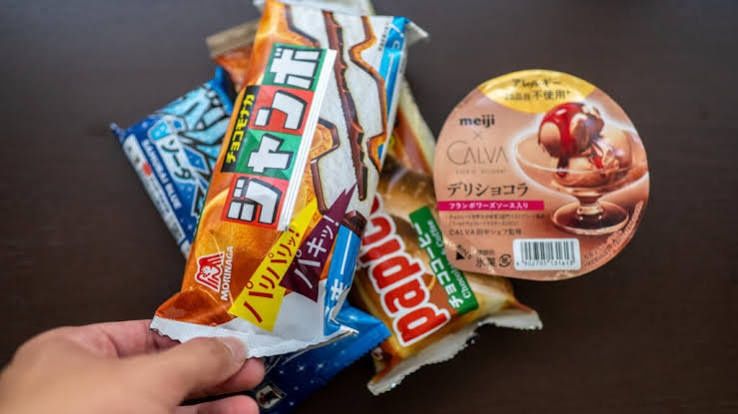
Japanese competition authorities have intensified enforcement action in the consumer goods sector, conducting simultaneous raids on six of the country's largest ice cream producers over allegations of systematic price collusion. The Japan Fair Trade Commission targeted the headquarters of Meiji Co., Morinaga Milk Industry Co., Lotte Co., Ezaki Glico Co., Morinaga & Co., and Akagi Nyugyo Co. on Tuesday, according to company statements and sources familiar with the investigation. The action represents a significant regulatory crackdown on what authorities suspect was a long-running conspiracy to manipulate retail prices in a market experiencing exceptional growth.
According to sources close to the investigation, company officials are believed to have maintained ongoing communication through email correspondence and periodic meetings to orchestrate the timing and magnitude of successive price increases. This alleged coordination reportedly extended over a period of years, with particular intensity since approximately 2022, when the suspected cartel began implementing annual price hikes. The pattern observed by investigators shows remarkable synchronicity across firms typically regarded as fierce commercial competitors, suggesting a level of collusion that undermines normal market dynamics and consumer choice.
The timing of the investigation coincides with a period of exceptional demand in Japan's ice cream sector. During the fiscal year ending in March, ice cream sales reached a historic high exceeding 660 billion yen, driven partly by Japan's sweltering summer conditions—the hottest since records commenced in 1989. This record-breaking sales environment raises questions about whether manufacturers capitalized on seasonal demand surges to implement price increases that extended beyond justified cost pressures, according to reporting from Kyodo News. The JFTC is specifically examining whether the companies exploited inflationary conditions as a pretext for price adjustments that substantially exceeded increases in raw material expenses.
For Malaysian and Southeast Asian observers, this investigation underscores the importance of robust antitrust enforcement in preventing monopolistic practices within consumer goods markets. Japan's approach reflects international best practices in competition law, where regulators proactively monitor synchronous pricing behaviour that may indicate illegal coordination rather than independent commercial decision-making. The ice cream sector, despite appearing trivial, represents a substantial retail market where anti-competitive conduct directly affects household budgets and consumer welfare across income levels.
The investigation methodology employed by the JFTC—examining documentary evidence of communications and scrutinizing pricing patterns for suspicious uniformity—provides a template increasingly adopted by competition authorities throughout Asia-Pacific. Such investigations require sophisticated data analysis and cross-firm comparison to establish the circumstantial evidence supporting cartel allegations. The simultaneous nature of the raids prevents firms from destroying evidence or alerting co-conspirators, a tactic that has proven effective in high-profile enforcement actions globally.
All six companies have formally acknowledged the regulatory visits, with five issuing statements confirming their cooperation with investigators. Natsuyo Suzuki of Akagi Nyugyo provided direct confirmation that the firm would collaborate fully with the JFTC throughout the inquiry process. This public commitment to cooperation, while potentially mitigating factors in eventual enforcement decisions, also demonstrates the serious consequences firms face when competition authorities initiate formal investigations of this magnitude.
The potential consequences for the implicated companies are substantial and multifaceted. Should the JFTC establish that a cartel existed, the watchdog possesses authority to mandate corrective business practices modifications and impose financial penalties. Unlike some jurisdictions where corporate fines are capped at modest percentages of revenue, Japanese antitrust law provides for meaningful financial sanctions designed to eliminate illegal profits and deter future misconduct. Additionally, firms may face reputational damage, reduced consumer trust, and potential shareholder scrutiny regarding governance failures that permitted such conduct.
This enforcement action also reflects broader concerns about inflation dynamics in Japan's consumer economy. As the nation emerged from deflationary conditions that persisted for decades, authorities have grown increasingly vigilant regarding potential abuse of pricing power during transitional inflationary periods. Regulators recognize that competitive markets should constrain excessive price increases, whereas coordinated conduct enables firms to shift inflationary burdens disproportionately onto consumers. The ice cream sector investigation thus serves as a warning signal to other industries that synchronized price behaviour will attract regulatory attention.
The case assumes particular significance given Japan's demographic and economic characteristics. With an ageing population and modestly growing consumer confidence, maintaining accessible pricing for routine household items including ice cream contributes to quality-of-life measures and consumer discretionary spending patterns. Price-fixing in such markets thus has distributional implications beyond simple economics, affecting vulnerable population segments with limited ability to absorb sustained price increases.
Regional competition authorities across Southeast Asia have increasingly adopted similar investigative approaches following Japan's pioneering enforcement actions. Malaysia's Competition Commission, Thailand's Trade Competition Commission, and Indonesia's Business Competition Supervisory Commission have all intensified monitoring of potential cartel conduct in consumer goods sectors. The Japanese investigation therefore carries precedential value throughout the region, demonstrating that even established, reputable corporations operating in seemingly benign sectors face meaningful enforcement risks when engaging in price coordination.
The investigation's conclusion will carry important implications for industry conduct standards. If the JFTC establishes the cartel's existence, manufacturers throughout Japan and potentially across Asia-Pacific will recognize that competition authorities possess both the technical sophistication and enforcement commitment to detect and sanction price-fixing conspiracies. Conversely, if companies successfully demonstrate that synchronized pricing reflected independent responses to identical market conditions, the outcome would signal narrower cartel liability standards. Such precedential clarity matters considerably for multinational corporations and regional suppliers operating across multiple jurisdictions with differing competition law frameworks.