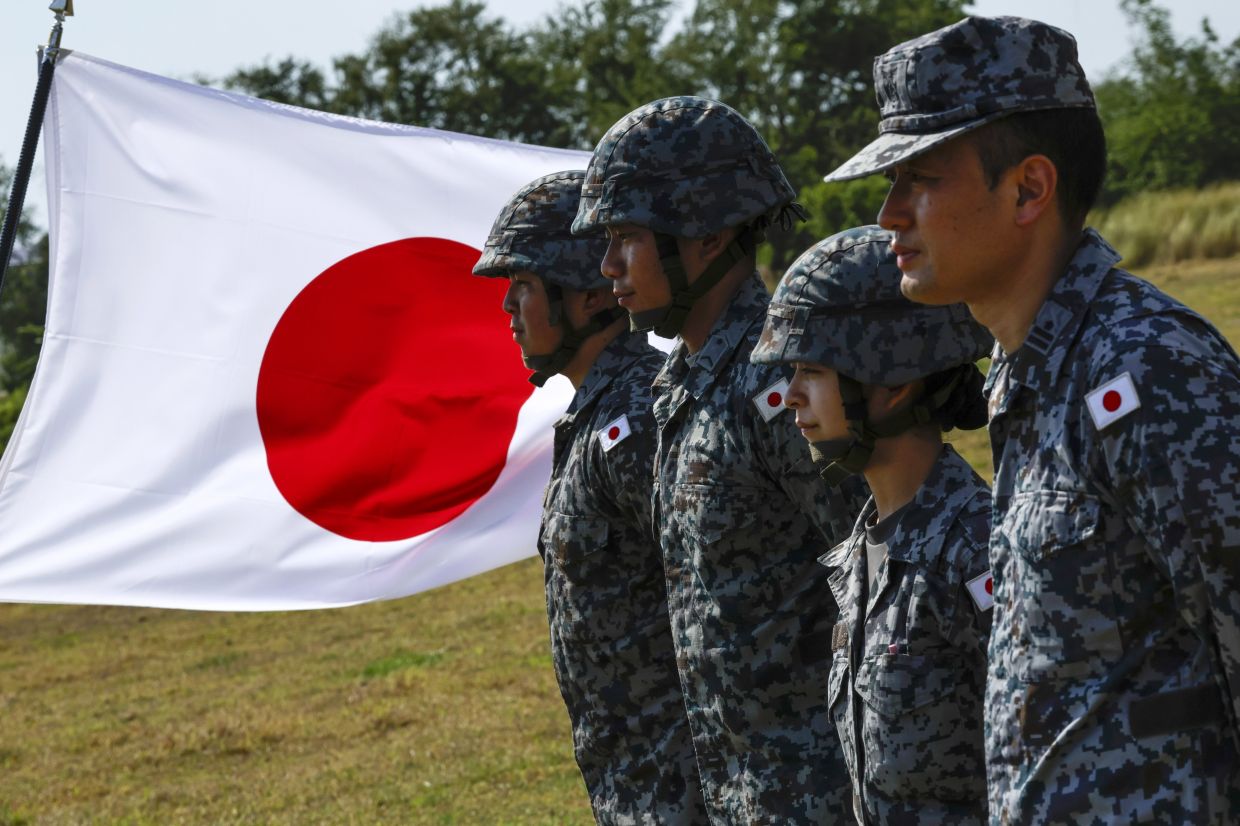
Japan's efforts to construct a comprehensive security architecture across the Indo-Pacific region are facing subtle but significant challenges, despite recent high-profile diplomatic successes. At the Shangri-La Dialogue security forum in Singapore last month, Japanese Defence Minister Koizumi Shinjiro dominated proceedings on the final day, signalling Tokyo's determination to shape regional security conversations. Yet beneath the headlines lay deeper anxieties about American reliability and Japan's capacity to lead regional defence initiatives without appearing to isolate Beijing or frighten smaller nations wary of Cold War dynamics.
The cancellation of a scheduled panel on China's regional partnerships during the same forum inadvertently highlighted Tokyo's growing influence over regional security discourse. Rather than allowing Beijing a platform to articulate its vision for Asia-Pacific stability, the session was shelved—a move that underscored Japan's diplomatic assertiveness but also exposed the fraught nature of contemporary regional politics, where open debate about China's role remains contentious. For Malaysia and other Southeast Asian nations navigating between great powers, such developments signal both opportunity and risk as the region's security landscape becomes increasingly structured around competing visions of order.
Koizumi's orchestrated public meeting with US Defence Secretary Pete Hegseth during the forum sent a calculated message to regional audiences that Washington remains fully committed to Asia. However, the very need for such reassurance reveals the profound uncertainty gripping Tokyo about America's staying power. This anxiety stems from multiple sources: Donald Trump's demands that allies dramatically increase defence spending, his administration's imposition of steep tariffs on strategic partners including India, and broader questions about whether Washington will sustain its Indo-Pacific presence at current levels. For Malaysia and other regional players, Japan's nervousness about US reliability should sound familiar—it mirrors their own concerns about hedging between superpowers.
Japan's emerging military posture extends beyond diplomatic manoeuvres. Last year, Tokyo floated the controversial idea of developing nuclear-powered attack submarines, a proposal that would shatter Japan's carefully maintained nuclear taboo established after World War II. This shift signals how seriously Japan now views the threat posed by China's rapidly modernising naval capabilities. The proposal remains sensitive domestically and regionally, but its very emergence demonstrates how profoundly China's military expansion has recalibrated Tokyo's strategic calculations. Southeast Asian nations, particularly those with territorial disputes in the South China Sea, understand this dynamic intimately—they too face pressure to strengthen military capabilities while managing public opinion about defence spending.
Rather than attempting to match China's defence budgets directly, Japan is constructing a multilayered security framework that distributes responsibility across multiple partners. This approach recognises a fundamental reality: Tokyo lacks the financial resources to compete alone with Beijing's military build-up. Instead, Japan is weaving together security partnerships, development assistance, and infrastructure investment into what analysts describe as a cohesive toolkit for regional resilience. Recent examples include Japan's warm reception of New Zealand's upgraded Mogami-class frigate deployment and ongoing defence cooperation with traditional partners. These initiatives create practical security relationships that extend beyond ceremonial declarations of solidarity.
Prime Minister Sanae Takaichi's unveiling of an updated Free and Open Indo-Pacific framework in May represents a significant recalibration of Japan's regional strategy. Departing from former Prime Minister Shinzo Abe's 2016 emphasis on abstract principles like the rule of law, the new approach grounds itself in tangible tools: undersea cable security, energy supply chain resilience, and maritime domain awareness. This pragmatic shift acknowledges that many Southeast Asian and Pacific Island nations prioritise economic development and infrastructure over explicit security competition with China. Malaysia, for instance, desperately needs upgraded port facilities and reliable energy supplies—precisely what Japan's revamped framework offers.
At the heart of Japan's evolving strategy lies the Official Security Assistance programme, a financing mechanism that circumvents Japan's historical prohibition on military aid. By channelling defence support through this framework rather than traditional official development assistance, Tokyo has created space for direct engagement with partner nations' military institutions. The programme has expanded dramatically in just three years, growing from four recipient countries receiving 2 billion yen to twelve nations receiving 18.1 billion yen. This expansion includes provisions for advanced radar systems and drone technology—sophisticated capabilities that smaller nations cannot easily acquire through market mechanisms or from China without geopolitical complications.
The infrastructure dimension of Japan's strategy deserves particular scrutiny. By funding ports, airports, and undersea cables, Tokyo delivers demonstrable development benefits while simultaneously creating assets with clear strategic applications. A modernised port can serve both commercial shipping and coast guard operations; upgraded airports facilitate civilian transport and defence logistics; undersea cables ensure communications redundancy valuable for both commerce and military coordination. This dual-use approach proves politically palatable for recipient governments, which can justify the investments to their publics as economic measures rather than military buildups. For Malaysia, where public debt levels constrain defence spending, such initiatives offer attractive alternatives to direct arms purchases.
Japan's lifting of restrictions on lethal weapons exports in April represents a watershed moment in its post-war defence posture. Tokyo can now sell advanced military systems to seventeen nations, including six ASEAN members: the Philippines, Malaysia, Indonesia, Vietnam, Thailand, and Singapore. The agreement between Tokyo and Jakarta in early June to negotiate potential exports of Asagiri-class destroyers to Indonesia exemplifies this new era. These transactions carry profound implications for regional military balances, introducing Japanese naval technology into Southeast Asian arsenals while creating commercial opportunities for Japan's defence industry. Yet they also risk stoking naval arms races, particularly in contested waters.
The commercial dimension of Japan's defence strategy should not be overlooked. By providing development assistance and security cooperation, Tokyo simultaneously creates proving grounds for Japanese military technology and expands opportunities for defence industry exports. This approach generates economic returns while advancing strategic objectives—a combination that appeals to Japan's fiscally constrained government. Associate Professor Kei Koga from Singapore's Nanyang Technological University notes that overseas partnerships allow Japanese defence contractors to demonstrate capabilities and build market positions internationally. For Malaysia and other potential customers, this means access to cutting-edge systems, though it also means Japan has commercial interests in sustaining regional military competitions.
Complementing military and security cooperation, Japan launched the US$10 billion Power Asia initiative in April, targeting energy security challenges amid instability in the Strait of Hormuz. This initiative recognises that military security remains incomplete without energy resilience—a lesson particularly relevant for Malaysia, which depends heavily on hydrocarbon imports. By helping regional partners diversify energy sources and build strategic reserves, Japan addresses vulnerabilities that China might otherwise exploit. The programme illustrates how contemporary regional security transcends traditional military domains to encompass economic interdependence and resource competition.
Expert analysis suggests Japan faces a delicate balancing act. Professor Stephen Nagy from International Christian University emphasises that Tokyo's fundamental driver is hedging against regional instability and potential American unreliability while maintaining open sea lanes and protecting smaller states from coercion. Yet this requires avoiding explicit anti-China framing that might provoke Beijing or frighten partners into defection. Scholar Pratnashree Basu notes that Japan recognises Southeast Asian states prioritise development alongside security, necessitating integrated approaches combining military assistance with infrastructure financing and energy transition support. This holistic vision proves more sustainable than raw military competition.
Ultimately, Japan's emerging strategy reflects broader regional anxieties about power transitions and great power reliability. By constructing interlocking security partnerships, channelling defence assistance, and strategically deploying infrastructure investment, Tokyo pursues what might be characterised as competitive hedging—simultaneously balancing against China, reassuring partners about American commitment, and positioning itself as an alternative security provider. For Malaysia and other Southeast Asian nations, Japan's initiatives offer attractive options for strengthening capabilities without forced choice between Washington and Beijing. Whether Tokyo can sustain this complex equilibrium while China's military advantages continue expanding remains the crucial question shaping Indo-Pacific stability for the next decade.

