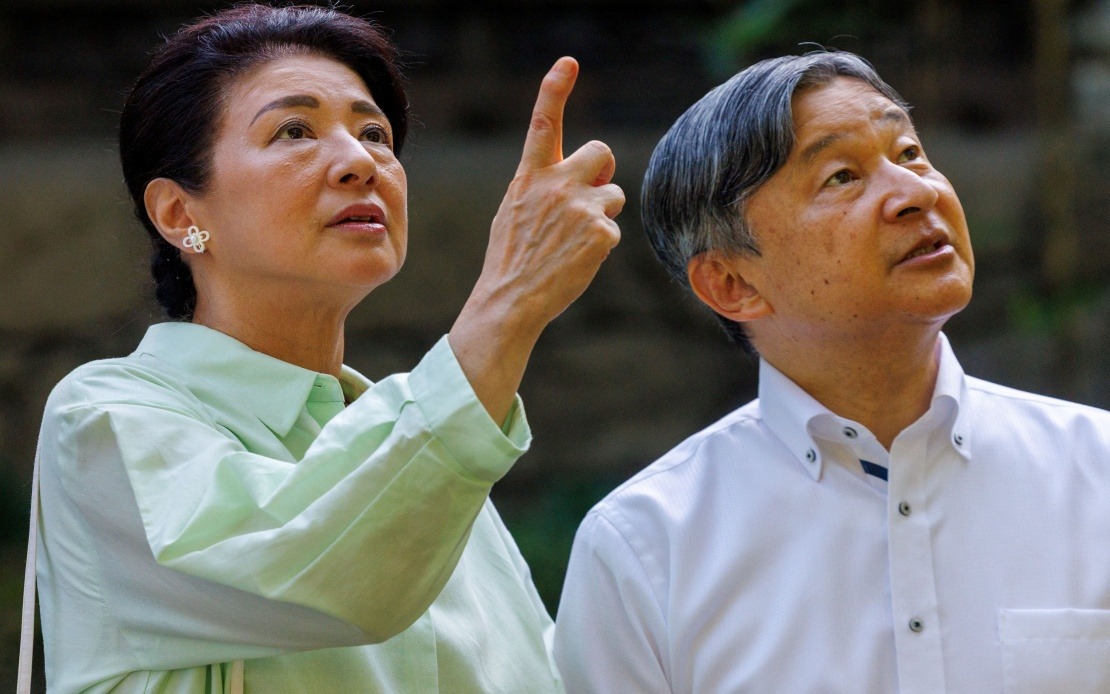
Japan's government has taken a significant step toward stabilizing the imperial succession by greenlighting a legislative package designed to address the accelerating depletion of eligible heirs to the Chrysanthemum Throne. The Cabinet's approval on Tuesday marks the culmination of deliberations spanning multiple years and reflects mounting pressure to act as the number of potential successors dwindles to a precarious level. Prime Minister Sanae Takaichi's administration, working alongside the Japan Innovation Party as coalition partner, intends to push the revised Imperial House Law through parliament before the current legislative session concludes on July 17, signalling the government's determination to resolve an issue that has increasingly dominated public discourse and constitutional discussions.
The legislative package rests on two foundational reforms that attempt to balance imperial tradition with demographic necessity. First, it would create a pathway to reintegrate male descendants from eleven branch families that were stripped of imperial status following the end of World War II, allowing young males aged fifteen or above who carry male-line descent from emperors to be adopted into the imperial household. Second, the bill would permit female members of the imperial family to maintain their imperial status even after marrying commoners—a radical departure from centuries of patrilineal convention. These measures respond directly to alarming succession realities: Emperor Naruhito currently has only three viable heirs, with his younger brother Crown Prince Fumihito at sixty years old, his nephew Prince Hisahito at nineteen, and his aging uncle Prince Hitachi at ninety representing the entire pipeline of succession.
The proposal maintains the government's conservative commitment to male-only succession while attempting creative solutions through adoption mechanisms. Under the framework, adopted males would be barred from ascending the throne themselves, yet their male descendants would become eligible to inherit the imperial position—a compromise that preserves patrilineal continuity whilst technically widening the pool of potential heirs through family reintegration. This distinction reflects deeper ideological tensions within Japanese politics between those who view the male-line succession system as sacrosanct and those increasingly persuaded by demographic and democratic arguments for female succession. The eleven branch families in question trace their lineage to a common imperial ancestor from approximately six hundred years ago, making their reintegration theoretically consistent with historical precedent, though the 1947 decision to exclude them was itself controversial and motivated by post-war occupation directives.
Historically, the 1947 Imperial House Law represented a watershed moment when American-led occupation authorities restructured imperial succession as part of broader constitutional reform. At that time, fifty-one members from the eleven branch families lost their royal status, whilst the three families descended from Emperor Hirohito's brothers managed to retain theirs under the occupation regime. This selective treatment has created the contemporary succession crisis, as these retained families have themselves experienced generational decline. The current legislative effort thus attempts to partially reverse decisions made nearly eighty years ago, though it remains constrained by the same patrilineal assumptions that governed post-war reformulation.
Notably absent from the government's proposal is any consideration of allowing female succession or recognition of matrilineal descent from emperors—a conspicuous omission that contrasts sharply with demonstrated public sentiment. A Kyodo News poll conducted in May found that eighty-three percent of respondents support the concept of a female emperor, suggesting substantial popular backing for more radical reform than the government has chosen to pursue. This disconnect reflects the profound conservatism of the ruling Liberal Democratic Party, which has historically resisted fundamental changes to imperial succession structures despite external and internal pressures. The cross-party consensus meetings held among all thirteen parliamentary groups discussed various succession options, yet the government ultimately constructed its legislative package without meaningfully addressing female succession possibilities, effectively sidelining public opinion as irrelevant to constitutional architecture.
The exclusion of female succession from this legislative package virtually guarantees contentious Diet deliberations ahead, as opposition parties and progressive lawmakers will likely challenge the government's ideological constraints. The LDP's determination to preserve the male and paternal-line emperor system despite declining male heirs creates an inherent logical tension that opponents will exploit—the government is willing to adopt unrelated males to maintain patrilineality, yet unwilling to consider the far simpler alternative of female succession that commanding majorities of voters endorse. This positioning may prove politically costly as parliamentary debate intensifies through mid-July.
For Southeast Asian observers, Japan's imperial succession challenges carry particular resonance given regional histories of monarchical systems navigating modernization and demographic change. Malaysia itself maintains constitutional monarchy with complex succession provisions and periodic debates regarding succession rules and royal prerogatives. Thailand's deeply sacred approach to the monarchy offers another regional comparison point where succession issues carry enormous constitutional and cultural weight. Japan's struggle to balance traditional institutional continuity with democratic and practical imperatives illuminates broader patterns across East and Southeast Asia regarding how inherited ceremonial systems adapt to contemporary governance challenges.
The practical implications of the adoption mechanism deserve careful examination, as it would effectively reinject imperial lineage into families that had been excluded from imperial status for nearly eight decades. Reintegrating branch family males raises questions about their contemporary connection to imperial identity, the costs of imperial status, and whether formal adoption provides adequate legitimacy for restored succession eligibility. The government's deliberate restriction preventing adopted individuals from directly ascending the throne represents an attempt to preserve some notion of inherited legitimacy, yet this constraint becomes logically strained when their biological descendants would become fully eligible emperors. Critics may argue this represents an incomplete or unsatisfactory compromise rather than a genuine solution.
Legislative momentum appears strong, with the ruling coalition commanding sufficient parliamentary majorities to enact the bill before the current session's expiration. However, the legislative approval represents only the first phase of what may become prolonged constitutional and social debate regarding imperial succession's future trajectory. The bill's passage would temporarily address the immediate succession crisis by broadening the pool of eligible heirs, potentially buying several decades before successor depletion becomes acute again. Yet without addressing female succession or matrilineal eligibility, the legislation may ultimately prove merely a temporary palliative rather than a fundamental solution to structural succession challenges facing the world's oldest continuous monarchy.
The timing and context of this legislative push reflect deepening urgency within Japan's political and policy establishment regarding imperial sustainability. Emperor Naruhito himself has previously expressed concerns about imperial family size and succession stability, lending the matter quasi-imperial endorsement that strengthens governmental resolve. As Japan confronts severe demographic decline across its general population, the imperial household faces an intensified version of these national challenges, creating an unusual convergence of institutional and demographic imperatives for reform. The Cabinet's approval represents acknowledgment that something approximating fundamental change has become unavoidable, even if the specific form of change remains constrained by ideological preferences and historical assumptions about how imperial succession should operate.

