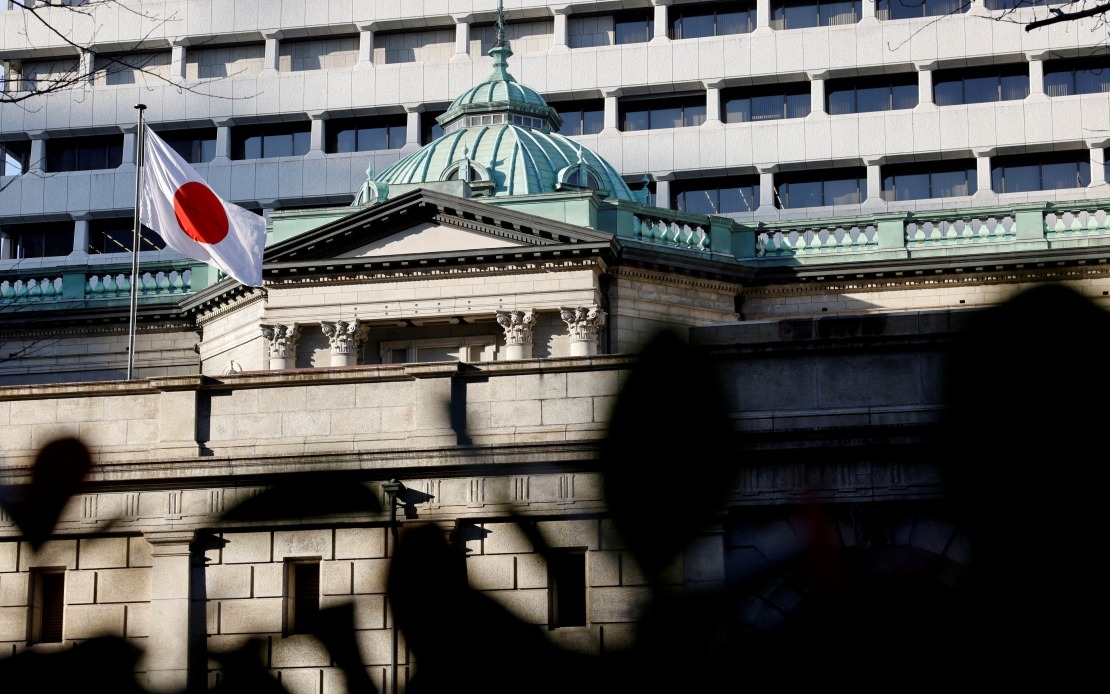
Japan's recent enactment of a law prohibiting the desecration of its national flag has thrust the country into an increasingly polarized international conversation about where governments should draw the line between defending national identity and preserving fundamental freedoms. The legislation has provoked concern among critics who view it as a potential vehicle for strengthening right-wing ideology in a nation still grappling with its historical relationship to nationalism. Social media commentators have specifically targeted Prime Minister Sanae Takaichi's administration, suggesting the law represents an attempt to cultivate what they characterise as Japanese supremacism and extreme nationalist sentiment.
This Japanese development arrives at a moment when democracies and authoritarian states alike are reassessing how they treat symbolic acts of political dissent. The approach nations take to flag desecration reveals deeper philosophical commitments—whether governments prioritize protecting state symbols as expressions of collective identity, or whether they privilege individual liberty to challenge those symbols as a cornerstone of democratic society. Japan's positioning itself alongside countries with far more restrictive approaches, a shift that warrants close examination for what it signals about regional trends in Southeast Asia and the wider Indo-Pacific.
Germany's experience offers one of Europe's most stringent models. Violations of German law protecting the national flag can result in imprisonment for up to three years or substantial fines, with sentences extending to five years when the intent is demonstrably to undermine constitutional principles. This reflects post-war German sensibilities about controlling symbols that could be weaponised by extremist movements. Interestingly, Germany's own relationship with flag symbolism has been complicated by history. West Germany exercised considerable restraint in displaying its flag following the nation's division after the Second World War, viewing overt nationalism with deep suspicion. That caution began shifting only after Germany's 2006 World Cup hosting prompted a cultural recalibration. In recent years, however, German flag imagery has become increasingly associated with anti-immigration populist movements, leading some observers to view it as having been captured by forces espousing exclusionary ideologies.
France takes a similarly protective stance with its tricolor, enshrining legal safeguards against public destruction or disrespectful treatment of the national standard. The French flag carries symbolic weight beyond mere nationalism—it embodies the republican ideals of liberty, equality, and fraternity that form the philosophical bedrock of the Fifth Republic. Consequently, French law treats desecration as an affront not merely to national pride but to fundamental democratic values themselves. This framing suggests that protecting the flag means protecting the principles it represents, a distinction that shapes how French citizens understand citizenship and collective belonging.
China's approach demonstrates how authoritarian systems employ flag protection laws as tools for broader social control. Chinese law prescribes penalties of up to three years imprisonment for flag-related offenses, enforced within a context of systematic patriotic education initiatives. The daily flag-raising ceremony at Beijing's Tiananmen Square, conducted at sunrise, serves as a state-choreographed performance of national unity and allegiance. The enforcement mechanism operates with striking severity—a 2017 case in Tianjin resulted in a two-year sentence for a man who slashed 66 flags at a residential complex, while in Qinghai Province another individual faced administrative detention merely for using the national flag as a curtain. These cases illustrate how comprehensive China's apparatus for flag protection extends into everyday life.
Iran occupies a different position, lacking explicit statutory provisions against flag desecration despite the flag's incorporation of the word "Allah," which theoretically invokes religious blasphemy protections. Nevertheless, leadership has signalled intentions to strengthen penalties following anti-government protests in recent months. The strategic calculus in Iran appears constrained by the regime's simultaneous need to project national unity amid geopolitical tensions with the United States. This tension between suppressing dissent and maintaining cohesion reflects the vulnerability authoritarian systems feel when national symbols become focal points for popular resistance.
The United States presents a fundamentally different model rooted in its foundational constitutional commitments. As an immigrant nation built on diverse populations, the American flag has functioned historically as an instrument of national integration rather than exclusion. During the Vietnam War era, flag burning emerged as a potent protest tactic that challenged state power through symbolic action. The pivotal 1989 Supreme Court decision established that such desecration constitutes protected expression under the First Amendment, enshrining a constitutional principle that prioritizes free speech over symbol protection. This jurisprudence reflects an American philosophical tradition viewing government restrictions on political expression, however offensive, as more dangerous than the offense itself. Notably, former President Donald Trump's subsequent executive order demanding Justice Department prosecution of flag desecration and related acts represented a notable dissent from this established constitutional interpretation, signalling potential shifts in American attitudes toward symbol protection.
South Korea has similarly moved toward establishing stronger protections, with lawmakers advancing proposals for a dedicated "flag day" and existing law prescribing sentences up to five years for flag desecration undertaken with intent to insult the state. South Korean civil liberties advocates argue such provisions infringe on freedom of expression, raising questions about how democracies in East Asia are calibrating competing values as regional tensions intensify and nationalist movements gain political salience.
For Malaysian observers, Japan's legislative development carries particular significance given Malaysia's position as a Southeast Asian democracy with its own complex history of managing religious and national symbolism. Malaysia has long navigated the challenge of protecting Islam's privileged constitutional position while preserving space for plural expression. The principle underlying flag protection laws—that certain symbols deserve heightened legal safeguards as expressions of collective identity—resonates within Malaysian constitutional frameworks. Yet Malaysia's experience also demonstrates how strictly enforced symbol-protection laws can become tools for suppressing legitimate dissent, a cautionary precedent worth examining as Japan and other regional democracies contemplate similar restrictions.
The global divergence in flag protection regimes ultimately reflects fundamental disagreements about governance philosophy. Nations prioritising symbol protection often justify restrictions as necessary for maintaining social cohesion and preventing the erosion of national identity in pluralistic contexts. Conversely, jurisdictions prioritising expression rights argue that democratic health depends precisely on protecting offensive speech and symbolic challenges to authority. Japan's new legislation suggests a tilt toward the former camp, aligning the country with more restrictive global peers at a moment when questions about the relationship between nationalism and democracy have become increasingly urgent throughout the Indo-Pacific region.

