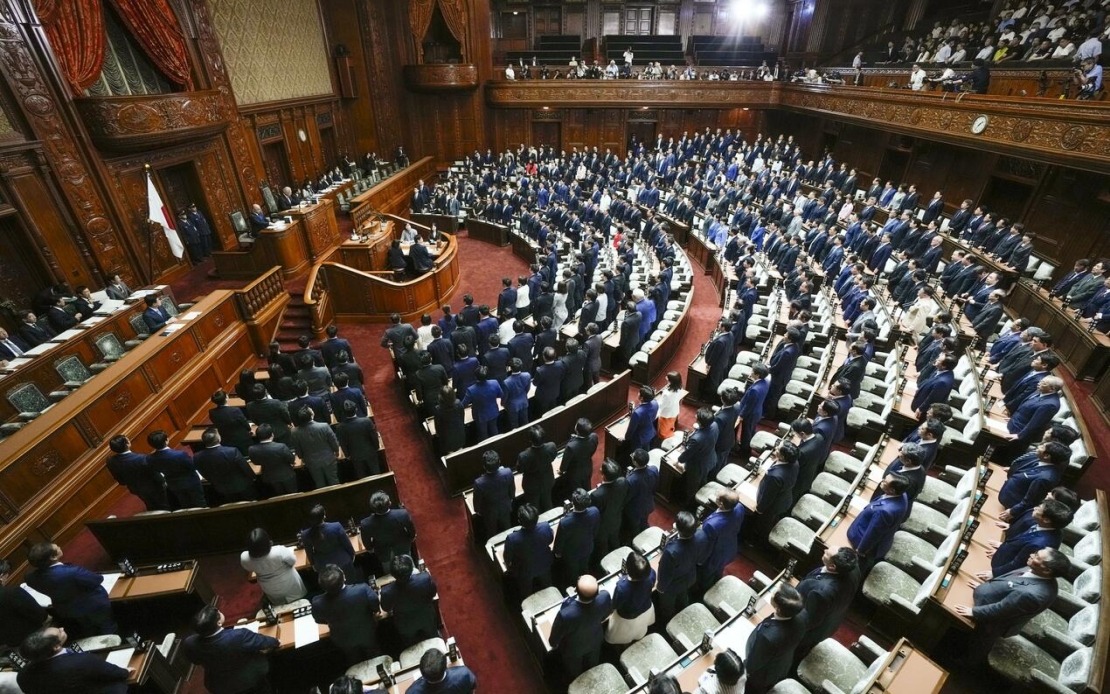
Japan's House of Representatives has cleared a sweeping overhaul of the Imperial House Law in a single day of debate, marking the first substantial revision to the 1947 legislation governing succession to the throne. The accelerated passage on Friday represents a significant political victory for Prime Minister Sanae Takaichi's coalition government, which had struggled with parliamentary obstruction over the preceding weeks as opposition parties withheld cooperation on multiple legislative fronts.
The swift approval came after a parliamentary deadlock that had delayed substantive debate on the imperial succession question since late June. Opposition forces had boycotted discussions on several key government bills, citing concerns about the ruling bloc's aggressive parliamentary tactics and demanding intensive policy debate sessions with the prime minister herself. The logjam broke only after the government conceded ground on other contentious legislation, creating political space for the imperial law revision to advance without further delay.
The legislation addresses a demographic crisis within the imperial family that has accumulated over decades. The number of eligible male successors capable of ascending the Chrysanthemum Throne has dwindled substantially, while the overall size of the imperial family continues to contract as female members lose their status upon marrying outside the imperial circle. These trends have raised persistent questions about the long-term viability of the succession system and prompted calls for fundamental reform from legal scholars, policy experts, and segments of the Japanese public.
Two central mechanisms constitute the bill's approach to these challenges. First, it permits adoption of males aged 15 and older who descend through male lineage from the 11 former imperial branch families that were severed during the post-World War II occupation era. This represents a dramatic departure from existing practice, which strictly prohibited adoptions into the imperial family. Second, the law would allow female imperial members to retain their status even after marrying commoners, reversing a rule that has effectively diminished the family's ranks with each generation.
However, the legislation incorporates a deliberate asymmetry in its approach. While adopted males themselves remain permanently barred from becoming emperor, their male-line descendants would gain eligibility to ascend the throne. This distinction preserves a hierarchical distinction between natural and adopted imperial lineage, potentially reflecting deeper cultural sensibilities about direct succession. The bill's architects included this provision despite its absence from preliminary expert proposals, generating criticism from opposition legislators who questioned whether such distinctions remained justified.
Notably absent from the final legislation is any provision addressing the possibility of female or maternal-line succession to the throne. Public opinion surveys have consistently shown majority support for allowing women to become empress, and several prominent policy proposals had advocated for this change. Yet the government's final bill steers entirely clear of this question, effectively shelving what some observers view as a necessary longer-term solution to the succession problem. This omission suggests that institutional resistance to female succession remains formidable within both the government and the imperial household itself.
The bill's design reflects compromises hammered out through consultations with all 13 parliamentary parties and groups, facilitated by the speakers and vice speakers of both chambers. This collaborative drafting process aimed to build consensus around measures focused narrowly on ensuring adequate family numbers rather than pursuing fundamental transformation of succession principles. Yet the government's subsequent additions to the framework suggest that consensus has limits, and that the ruling coalition felt empowered to move beyond agreed parameters once parliamentary dysfunction had been resolved.
The revision represents a cornerstone commitment within the coalition agreement that elevated Takaichi to the premiership in October, alongside the Japan Innovation Party. Imperial succession reform featured prominently among the agreements that cemented the partnership between the two parties, indicating its importance to both groups' political agendas. For Takaichi personally, successful passage provides early legislative momentum and demonstrates her government's capacity to navigate parliamentary opposition, though the rapid timeline also invited accusations of insufficient deliberation.
With lower house approval secured, attention now shifts to the House of Councillors, where the ruling coalition commands more than two-thirds of seats—the supermajority threshold required to override any upper chamber rejection. Government and coalition leaders have signalled their intention to complete parliamentary passage during the current session, which concludes on July 17. This compressed timeline suggests confidence that upper house opposition cannot impede enactment, though final votes remain pending and procedural complications could still delay implementation.
The political context surrounding the vote underscores broader tensions within Japan's parliamentary system. Opposition parties have employed procedural blocking tactics to demand greater accountability from the government, particularly regarding allegations of illicit online campaign activities. The imperial succession debate became entangled in these broader disputes over parliamentary conduct and executive power, despite the technical separation between succession policy and governance controversies. The government's concessions on other bills—including abandonment of plans to reduce lower house seats during the current session—effectively traded away leverage on those issues to secure progress on imperial reform.
For regional observers in Southeast Asia, Japan's imperial succession debate offers insights into how mature democracies navigate questions of institutional tradition and constitutional modernity. The tension between respecting century-old succession principles and adapting them to contemporary demographic and social realities parallels challenges that other nations with constitutional monarchies face. Malaysia's own hereditary sultanate system, with its complex rotation among rulers and succession mechanics, presents analogous questions about balancing tradition with practical governance requirements, though on a different constitutional foundation.
The passage of imperial succession reform also demonstrates Japan's capacity to update foundational legal frameworks even when doing so generates political friction. Unlike some societies that treat succession questions as fundamentally beyond legislative reach, Japan's political system permits—indeed, requires—periodic reconsideration of these matters through parliamentary deliberation. Whether future governments will prove similarly willing to confront remaining succession questions, particularly regarding female accession, remains uncertain but will shape imperial institution's trajectory through the coming decades.

