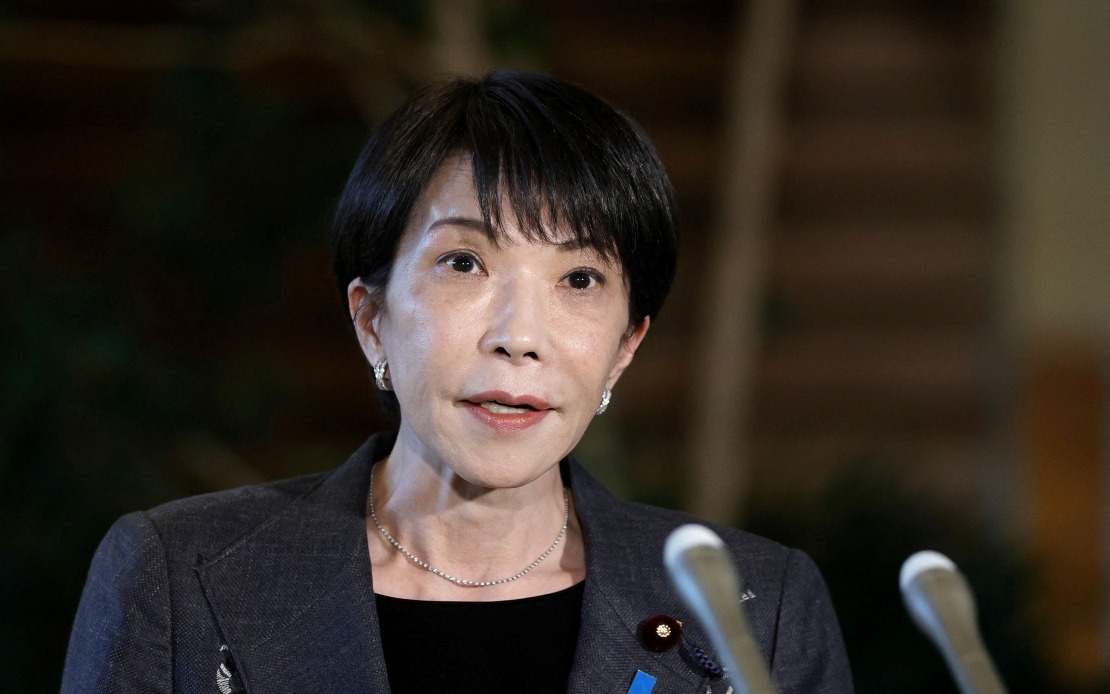
Japan's newly appointed Prime Minister Sanae Takaichi has given her clearest assurance yet that the government will reverse a proposed temporary reduction in consumption tax on food products once the two-year trial period expires. Speaking during parliamentary proceedings on Monday, Takaichi stated unambiguously that the tax rate would return to its standard 8% level in 2029, effectively closing the door on what had been an election campaign promise to eliminate the tax entirely on essential foods.
The commitment represents a significant recalibration of the ruling Liberal Democratic Party's fiscal strategy. During February's general election campaign, the LDP and its coalition partner the Japan Innovation Party had pledged to cut food consumption tax to zero, a popular measure designed to ease household burdens amid stubborn inflation pressures. However, the party's taxation and social security council recently refined this proposal, settling instead on reducing the rate to just 1% rather than eliminating it completely. This shift reflects mounting concerns about Japan's already precarious fiscal position and the practical complications involved in implementing a zero-rate tax across the nation's retail infrastructure.
The opposition Democratic Party for the People pressed Takaichi on this very issue during parliamentary questioning, with lawmaker Ken Tanaka pointing out the political difficulties inherent in reversing tax cuts. Once lowered, Tanaka argued, restoring the rate would inevitably be perceived by the public as a tax increase, likely triggering significant resistance. Takaichi's direct response—affirming that the government would indeed restore the full rate after two years—suggests the administration is willing to absorb this political risk in exchange for fiscal credibility and longer-term budget stability.
The 1% rate compromise emerged partly from technical constraints that caught policymakers' attention during implementation planning. Adjusting point-of-sale systems across Japan's vast retail network to accommodate a zero rate would require considerably more time than originally anticipated, making a gradual implementation through the 1% intermediate step more feasible. This practical consideration added weight to the argument for the revised approach, transforming what might appear as a watered-down promise into a workable policy framework.
To honour the spirit of the original campaign pledge while maintaining the 1% tax rate, the government has proposed supplementary cash transfers totalling 600 billion yen annually—equivalent to the tax revenue that would be collected at the 1% rate. This creative solution attempts to deliver genuine relief to households without permanently sacrificing government revenue, effectively making the food tax burden feel like zero from consumers' perspective while preserving fiscal resources. The approach demonstrates sophisticated policymaking aimed at balancing competing priorities, though whether voters will view it as fulfilling their original expectations remains uncertain.
Japan's fiscal situation has grown increasingly urgent, a factor driving much of the government's caution regarding permanent tax cuts. The nation already carries debt levels among the highest in the developed world relative to GDP, and recent market pressures have become impossible to ignore. Japanese government bond yields have climbed to their highest levels in decades, signalling investor concern about long-term sustainability. Simultaneously, the yen has remained weak against major currencies, creating additional pressures on import costs and complicating efforts to combat inflation through monetary policy alone.
Among Group of Seven economies, Japan's fiscal position is widely acknowledged as the most challenging, a distinction that weighs heavily on policymakers' calculations. Finance officials worry that a permanent elimination of food tax revenue—particularly given current economic headwinds—could trigger broader market concerns about Japan's debt trajectory and potentially force more painful fiscal adjustments down the line. The two-year sunset clause on the reduced rate therefore serves a dual purpose: it provides meaningful near-term relief to consumers facing inflation while preserving the option to restore full revenue collection once conditions improve.
Takaichi has indicated eagerness to move the proposal forward quickly, signalling that she intends to implement the reduction as soon as the national council on taxation and social security completes its formal deliberations and presents an interim report later this month. This suggests the government views swift action as politically important, perhaps recognizing that delivering some form of relief to struggling households relatively soon could help sustain public support for the broader policy framework. The urgency also reflects broader pressures within Japanese politics, where inflation remains a salient public concern despite improving economic data in recent months.
The policy direction reveals a fundamental tension in contemporary Japanese politics between responding to immediate household economic stress and maintaining fiscal credibility for long-term stability. By committing upfront to the tax restoration, Takaichi appears to be signalling that her government will not use the inflation relief as a pretext for permanent revenue reduction, a message clearly directed at both domestic voters and international investors scrutinizing Japan's fiscal plans. Whether this transparency and commitment to reversal actually persuades markets or merely sets up more difficult political conversations in 2029 remains an open question that regional economists will be watching closely.

