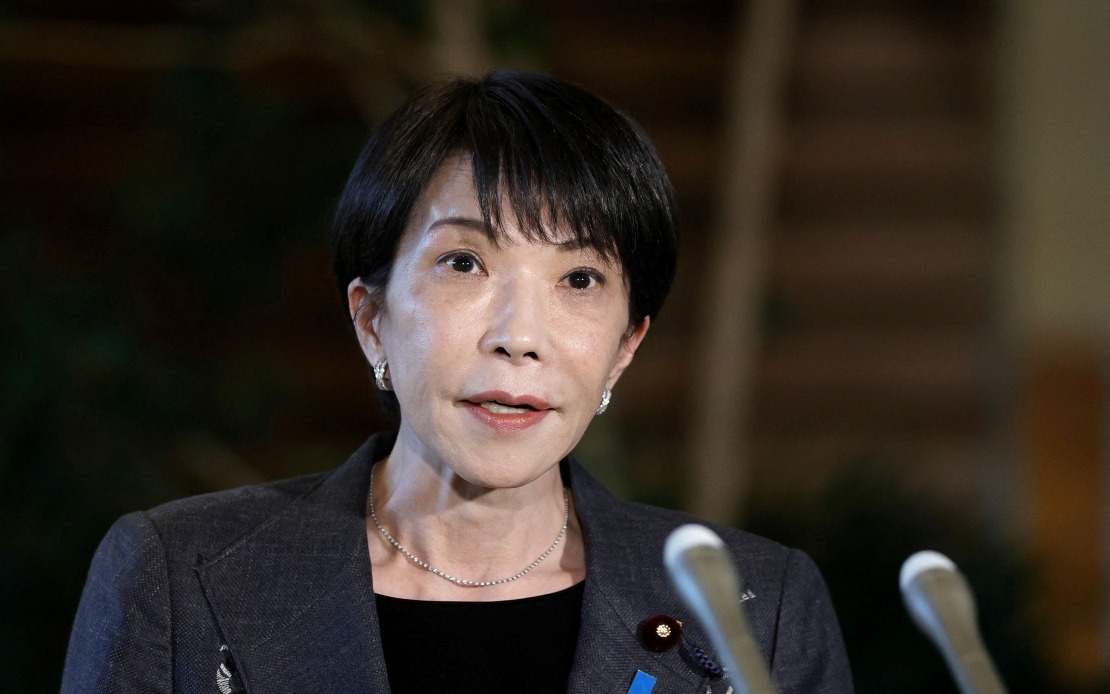
Japanese Prime Minister Sanae Takaichi marked the 81st anniversary of World War II's conclusion on Saturday by forwarding a ritual offering to the Yasukuni shrine in Tokyo, demonstrating the enduring tension between honouring Japan's military heritage and managing diplomatic relations across East Asia. Rather than making a direct appearance at the controversial site—a decision likely influenced by her elevated position as premier—Takaichi arranged for the payment to be made from her personal funds in her capacity as leader of the ruling Liberal Democratic Party, according to party officials. This manoeuvre allows the conservative politician to acknowledge the shrine's significance while attempting to circumvent the international controversy that typically accompanies high-level visits to the site.
The distinctions in how Japan's leadership marked the anniversary reflect careful calibration within government circles regarding how to balance nationalist sentiment with regional diplomacy. Defence Minister Shinjiro Koizumi became the first sitting defence chief in confirmed records to visit the shrine on the actual anniversary date since Minoru Kihara's visit on August 15, 2024. Kihara, now serving as chief Cabinet secretary in Takaichi's administration, has thus maintained a consistent pattern of honouring the site. Additionally, Hitoshi Kikawada, who serves as state minister overseeing issues related to the Northern Territories—the disputed islands off Hokkaido that remain a flashpoint in Japan's relationship with Russia—also made the pilgrimage, underscoring how the shrine visit intersects with broader geopolitical concerns.
The Yasukuni shrine sits at the heart of recurring diplomatic friction because it venerates 14 wartime leaders who were formally enshrined as deities in 1978, a majority of them convicted as Class-A war criminals under the Tokyo tribunal proceedings. Among these are General Hideki Tojo, who served as wartime prime minister and was executed in 1948 for crimes against peace. This institutional connection between religious reverence and individuals prosecuted for military aggression creates persistent sensitivity in Beijing and Seoul, where memories of Japanese occupation and colonisation remain deeply embedded in national consciousness and political discourse. China experienced extensive territorial occupation during the war years, while the Korean Peninsula endured 35 years of colonial administration ending only in 1945.
The decision by Takaichi to avoid a personal visit represents a departure from her own pre-premiership behaviour, when she regularly visited Yasukuni during seasonal festivals and on the war anniversary itself. The shift signals how the office of prime minister carries different diplomatic implications than serving as party president or opposition figure. Her pragmatic approach of sending money rather than appearing in person illustrates the competing pressures facing Japan's conservative leadership: maintaining credibility with domestic constituencies that view the shrine as an important symbol of national pride and military service, while simultaneously avoiding actions that provoke sharp diplomatic responses from neighbouring powers. China and South Korea have repeatedly condemned such visits as attempts to whitewash or glorify a militaristic past.
Several other senior figures from the Liberal Democratic Party also made their own visits to the shrine, including Secretary General Shunichi Suzuki, Haruko Arimura heading the General Council, and Yasutoshi Nishimura directing the Election Strategy Committee. These parallel actions suggest that shrine visitation remains an acceptable and even expected practice for certain echelons of the party's hierarchy, particularly those focused on party management and electoral considerations. The pattern reflects how Yasukuni visits function as a form of political positioning within Japanese domestic politics, where demonstrating commitment to national commemorations appeals to traditionalist voters and party supporters.
Understanding the significance of these choices requires recognition of Japan's post-war constitutional framework, which explicitly renounces warfare and positions the nation as committed to pacifism. Paradoxically, Japan has steadily expanded its defence capabilities and military spending in recent years, justifying these measures as necessary responses to what government officials characterise as an increasingly severe security environment. The apparent contradiction between constitutional pacifism and military expansion has generated ongoing domestic debate, with Yasukuni visits and discussions of wartime responsibility becoming focal points in these broader conversations about Japan's security identity and its relationship to its past.
For regional observers, particularly Malaysian and Southeast Asian readers, these Japanese domestic political gestures carry implications extending beyond ceremonial significance. Japan's relationship with China and South Korea, both crucial trading partners and strategic neighbours, influences broader East Asian stability. Malaysia, as a nation navigating its own complex history and balancing act between major powers, can recognise how domestic political commemorations become international issues when they touch on unresolved historical grievances. The Korean Peninsula and China's contemporary relationship with Japan remain shaped by wartime experiences, meaning that symbols like Yasukuni shrine visits carry weight far beyond their ritual aspects.
The timing of these gestures occurs against a backdrop of Japan actively strengthening military ties with democratic allies, including the United States and increasingly with countries in Southeast Asia. Diplomatic sensitivities around how Japan addresses its wartime record thus intersect with contemporary security partnerships and strategic positioning in the Indo-Pacific region. Countries assessing their alignment with various powers must consider not only current policies and military capabilities but also how nations like Japan articulate and commemorate their historical narratives, as these can influence international relations and regional tensions.
The methodical approach Takaichi has adopted—avoiding personal visits while maintaining ritual connections through monetary offerings—represents a pragmatic compromise that may appeal to domestic constituencies without triggering the most severe international backlash. However, such middle-ground positions rarely satisfy all parties; critics in China and South Korea may view any offering as equally problematic regardless of format, while domestic constituencies in Japan may perceive restraint as inadequate acknowledgement of national heritage. This perpetual tension ensures that Yasukuni shrine and war commemoration practices remain contentious features of Japanese politics and diplomacy for the foreseeable future.

