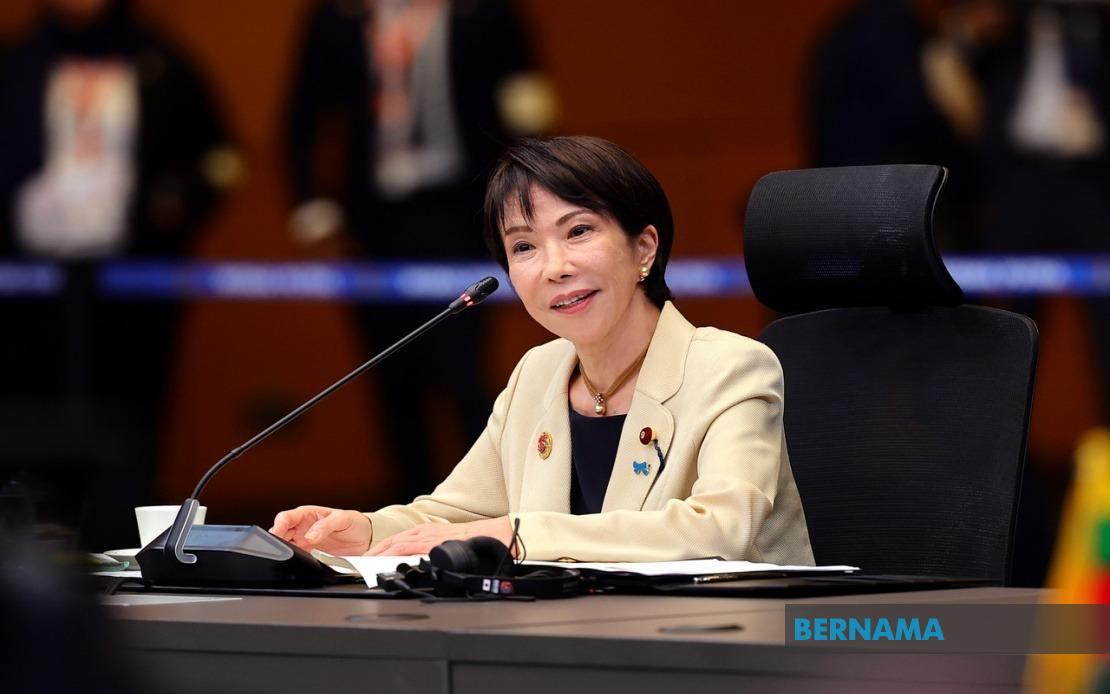
Japanese Prime Minister Sanae Takaichi has directly appealed to Oman's Sultan Haitham bin Tariq al-Said to safeguard unrestricted maritime commerce through the Strait of Hormuz, one of the world's most critical energy chokepoints. The appeal came during a Monday telephone discussion between the two leaders, delivered at a moment when diplomatic channels between Washington and Tehran have become increasingly constrained over the underlying geopolitical conflict.
The Strait of Hormuz represents a vital artery for global trade, with roughly one-fifth of the world's petroleum passing through its narrow waters annually. For Japan, which depends heavily on imported energy resources to fuel its industrial economy, the security and accessibility of this passage carries exceptional strategic importance. Takaichi's direct intervention signals Tokyo's growing anxiety about the potential for further disruptions to the flow of goods and fuel through this contested waterway.
Oman, a sultanate located on the Arabian Peninsula with coastlines along both the Gulf of Oman and the Arabian Sea, has historically positioned itself as a pragmatic intermediary in regional disputes. The country maintains diplomatic relationships across the spectrum of Middle Eastern actors, including Iran, and has previously hosted secret negotiations between adversarial parties. According to reports from Kyodo News, Oman is currently engaged in consultations with Iran regarding maritime traffic arrangements, suggesting that Muscat may be exploring diplomatic solutions to the broader regional tensions.
During their conversation, the Sultan indicated that Oman would carefully weigh the perspectives and interests of all nations that depend on the Strait of Hormuz for their maritime commerce, Takaichi explained to journalists at her Tokyo office. This measured response suggests Oman recognizes its responsibility as a stakeholder in regional stability while attempting to balance competing interests from multiple quarters. The statement underscores Muscat's role as a potential mediator rather than an advocate for any single party in the broader dispute.
The timing of this diplomatic exchange reflects deepening concerns within Tokyo about the trajectory of US-Iranian relations. Negotiations between Washington and Tehran have become substantially more difficult following the collapse of the Joint Comprehensive Plan of Action framework, and recent months have witnessed escalating military posturing in the region. Japan, which traditionally maintains close security ties with the United States while simultaneously conducting significant trade with Iran, finds itself navigating an increasingly delicate diplomatic balancing act.
For Southeast Asian nations like Malaysia, which similarly depend on unimpeded maritime passage through the region's sea lanes, Takaichi's initiative carries direct relevance. The Strait of Hormuz lies along crucial shipping routes that connect Asian markets to Middle Eastern energy suppliers and European markets. Any sustained disruption to traffic through this passage would reverberate across regional economies, affecting everything from fuel prices to manufacturing costs and supply chain reliability.
Takaichi's intervention also reflects a broader pattern of Japan reasserting its diplomatic voice on regional security matters. Under her leadership, Tokyo has moved to strengthen its engagement with Middle Eastern actors and to amplify its concerns about maritime security in strategically important waterways. This represents a subtle shift from Japan's traditionally more reserved approach to Middle Eastern politics, driven by the country's fundamental vulnerability to energy supply interruptions.
Oman's willingness to serve as an intermediary in these discussions stems partly from its own economic interests and partly from its historical role as a bridge-builder in the Gulf region. The sultanate understands that sustained regional instability threatens its own development aspirations and commercial networks. By engaging with both Japan and Iran, Oman positions itself as a responsible stakeholder committed to preserving international law and freedom of navigation principles.
The conversation between Takaichi and Sultan Haitham underscores how the US-Iranian impasse continues to create ripple effects far beyond the immediate bilateral relationship. Countries across Asia, Europe, and Africa all have compelling reasons to prefer stability and predictability in the Strait of Hormuz, and many are quietly signalling their concerns to regional powers that might influence the trajectory of events. Japan's public appeal represents a more direct advocacy than some other nations have undertaken, reflecting Tokyo's particular vulnerability to energy price shocks and supply disruptions.
Moving forward, Oman may find itself increasingly courted by multiple powers seeking to influence the outcome of regional disputes. The sultanate's ability to maintain its credibility as an impartial broker will depend on its capacity to genuinely listen to all parties while resisting pressure to take sides in ways that would undermine its mediating function. For Japan and other trading nations, the hope is that such diplomatic channels might eventually contribute to de-escalation and a restoration of the international agreements that previously governed the region's geopolitical relationships.

